
Table of Contents
Your doctor just told you to get a scan — but didn’t explain whether it should be a CT or an MRI. Most people leave the clinic without really knowing the difference. And that matters: in a CT scan vs MRI comparison, the two tests work on completely different principles, image different structures, and can vary in cost by hundreds of dollars depending on insurance coverage.
① CT uses X-rays to quickly image bones, bleeding, and organs — ideal for emergencies.
② MRI uses magnetic fields (zero radiation) for precise imaging of soft tissue, nerves, and ligaments.
③ In South Korea, national health insurance (NHI) coverage and out-of-pocket costs differ significantly between the two.
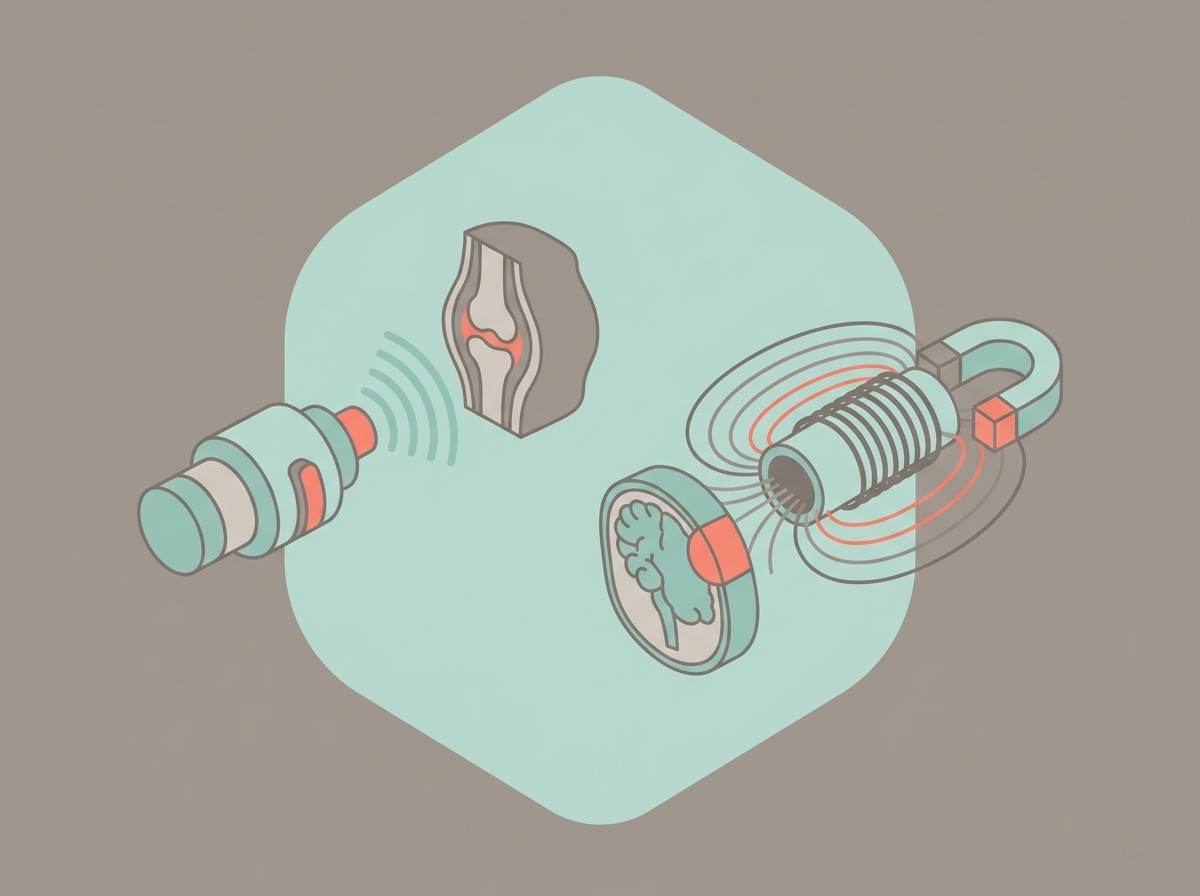
CT Scan vs MRI: What Is the Difference?
A CT scan (Computed Tomography) is a medical imaging test that rotates X-ray beams around your body and uses a computer to reconstruct detailed cross-sectional images.
An MRI (Magnetic Resonance Imaging) is a scan that uses strong magnetic fields and radio waves — no radiation — to create highly detailed images of the body’s internal structures.
The most important practical difference is radiation exposure. A CT scan delivers roughly 2–8 mSv depending on the body area scanned — comparable to one to three years of natural background radiation. An MRI involves zero radiation, making it preferable for children, pregnant patients, and anyone needing repeated scans over time.
Source: RadiologyInfo.org, “Radiation Dose in X-Ray and CT Exams,” 2024
| Feature | CT Scan | MRI |
|---|---|---|
| Technology | X-rays (ionizing radiation) | Magnetic fields + radio waves |
| Radiation exposure | Yes (2–8 mSv) | None |
| Scan duration | 10–20 minutes | 20–60 minutes |
| Best for | Bones, bleeding, organs | Soft tissue, nerves, ligaments |
| Noise | Quiet | Very loud (repetitive knocking) |
| Relative cost | Lower | Higher |
✅ Tell staff about any metal implants: pacemaker, cochlear implant, joint replacement
✅ Disclose any allergy to contrast dye (iodine for CT; gadolinium for MRI)
✅ Inform your doctor if you are pregnant or may be pregnant
✅ Report any kidney problems — required if contrast dye is planned
Certain implanted devices — including pacemakers, cochlear implants, and some metal aneurysm clips — may be contraindicated for MRI. Always inform your healthcare provider before scheduling a scan.
When is a CT scan the better choice?
When weighing CT scan vs MRI, CT is usually the first scan ordered in emergency situations — and any time you need a fast, detailed view of bones or suspected bleeding.
Because CT scans are fast, widely available, and relatively affordable, they’re the default tool in emergency departments worldwide. Here are the most common situations where CT is preferred:
- Bone fractures after trauma such as car accidents or falls
- Brain bleeding — hemorrhagic stroke, subarachnoid hemorrhage
- Lung nodule detection and low-dose lung cancer screening CT
- Assessment of abdominal organs: liver, kidney, pancreas
- Cancer staging: measuring tumor size and checking for metastases
① Speed: a full-body CT takes under 20 minutes — critical when time is short.
② Bone and calcification imaging: CT shows bony detail that MRI can’t match.
③ Lung imaging: air-filled structures appear clearly on CT.
Source: MD Anderson Cancer Center, “CT Scan vs. MRI: What’s the Difference?”
When is an MRI the better choice?
In the CT scan vs MRI decision, MRI is the preferred scan whenever your doctor needs a precise look at soft tissue — including spinal discs, ligaments, nerves, and the brain’s white matter.
MRI’s key advantage is contrast resolution: its ability to distinguish between different types of soft tissue far exceeds CT’s. That’s why it’s the standard of care across neurology, orthopedics, and oncology for these conditions:
- Herniated disc (lumbar or cervical) and spinal stenosis
- Torn ligaments and cartilage in the knee and shoulder
- Early stroke detection using diffusion-weighted imaging (DWI) within 6 hours
- Brain tumors, encephalitis, and multiple sclerosis
- Prostate cancer, uterine and ovarian conditions
① Superior soft-tissue contrast — discs, ligaments, and nerves appear clearly.
② Zero radiation — safe for repeated imaging and radiation-sensitive patients.
③ DWI sequences can detect early stroke lesions that standard CT misses.
MRI machines are narrow, tunnel-shaped tubes. If you experience claustrophobia, let your care team know before the appointment. Options include mild sedation or an open MRI scanner with a wider bore.
How do CT and MRI costs compare — and what does insurance cover in South Korea?
In a CT scan vs MRI cost comparison for South Korea, whether national health insurance (NHI) applies can change your out-of-pocket cost by a factor of 3 to 5 or more.
South Korea operates a mandatory National Health Insurance (NHI / 건강보험) system that covers most medically necessary imaging when ordered by a physician. CT scans are covered in most diagnostic cases. MRI coverage has expanded significantly — since March 2025, herniated discs, spinal stenosis, and degenerative knee and shoulder conditions are now insured under NHI.
Source: Korea Policy Briefing, “Brain MRI Cost Reduction Policy”; Modoodoc MRI Price Guide (2026)
| Body part | CT (NHI-covered) | MRI (NHI-covered) | MRI (non-covered) |
|---|---|---|---|
| Brain | ₩30,000–150,000 (~$22–110) | ₩100,000–200,000 (~$73–145) | ₩400,000–750,000 (~$290–545) |
| Spine | ₩50,000–150,000 (~$36–110) | ₩150,000–300,000 (~$109–218) | ₩300,000–700,000 (~$218–510) |
| Abdomen | ₩80,000–280,000 (~$58–203) | — | ₩300,000–800,000 (~$218–580) |
| Lung | ₩70,000–230,000 (~$51–167) | — | — |
※ Costs vary by hospital level (clinic / general / tertiary hospital), M
Continuing EN version from the cut-off point:
RI field strength (1.5T / 3.0T), and region. Source: Modoodoc (2026), Banksalad CT and MRI cost guides (2024–2025)
South Korea’s silson insurance (실손보험 — Korean private indemnity health insurance that reimburses out-of-pocket medical costs) covers a portion of non-insured imaging costs. Depending on your policy generation (1st–4th), you pay 10–30% and claim the rest. Confirm coverage details with your insurer before the scan.
For more guides on medical exams and procedures in South Korea, visit our Exams and Procedures Guide.
Frequently Asked Questions
1. Which is more accurate — CT scan vs MRI?
Neither is universally more accurate. CT is faster and more accurate for bones, fractures, and acute bleeding. MRI is far superior for soft tissue: discs, ligaments, nerves, and brain lesions. Your doctor will order the scan that best matches your symptoms and clinical question. Consult your physician before making any decisions.
2. Is the radiation from a CT scan dangerous?
A single CT scan delivers roughly 2–8 mSv — comparable to one to three years of natural background radiation. For most adults, one CT scan poses a very low risk. That said, unnecessary repeated scans are best avoided. If you have concerns, speak with your physician or radiologist before the procedure.
3. Why does an MRI take so much longer than a CT?
MRI acquires multiple image sequences by applying magnetic field gradients step by step from different angles. CT, by contrast, captures data in seconds by rotating an X-ray tube rapidly around the body. Depending on the area scanned and the protocol used, an MRI takes 20–60 minutes — sometimes longer if contrast is administered.
4. Can I claim non-covered MRI costs under private insurance in South Korea?
In most cases, yes. If you hold silson insurance (private indemnity health insurance), non-covered MRI costs are generally claimable. Your co-payment (10–30%) depends on your policy generation. Always confirm coverage with your insurer and keep your medical receipts and diagnostic documentation for the claim.
References
- RadiologyInfo.org (Radiological Society of North America), “Radiation Dose in X-Ray and CT Exams,” 2024. Link
- Mayo Clinic, “What’s the difference between a brain CT scan and a brain MRI?,” 2024. Link
- MD Anderson Cancer Center, “CT Scan vs. MRI: What’s the Difference?,” 2024. Link
- Healthline, “CT Scans vs. MRIs: Differences, Benefits, and Risks,” 2024. Link
- Modoodoc, “MRI Price Guide (2026).” Link
- Korea Policy Briefing (대한민국 정책브리핑), “Brain and cerebrovascular MRI cost reduction.” Link
Leave a Reply