A long Chuseok (추석) holiday — Korea’s autumn harvest festival — spent with family should leave you feeling refreshed.
For a lot of people, it does the opposite. Right after the break ends, headaches, stomach trouble, and an odd sense of exhaustion often show up instead.
Long-distance travel, holiday food prep, and back-to-back family gatherings pile stress onto your body in a short window. In Korea, this cluster of symptoms even has its own name: myeongjeol syndrome (명절증후군), or “holiday syndrome.”
This guide covers post-holiday fatigue recovery after Chuseok — why headaches and indigestion strike, what causes post-holiday fatigue, and practical ways to bounce back. We’ll also flag the signs that mean it’s time to see a doctor.
What Is Holiday Syndrome (Myeongjeol Syndrome)?
Holiday syndrome is a cluster of physical and mental symptoms — headaches, indigestion, low energy — caused by stress and fatigue building up around a holiday. It isn’t an official diagnosis, but it’s a widely used term in Korea, where extended-family holiday gatherings are a strong tradition.
Health information from a major Korean hospital describes holiday syndrome as a range of symptoms tied to holiday-related stress, including headaches, indigestion, back pain, muscle aches, and fatigue, along with emotional symptoms like low mood, anxiety, and exhaustion. (Source: Samsung Medical Center health information)
| Category | Common Symptoms |
|---|---|
| Physical | Headache, indigestion, muscle/back pain, body aches, fatigue |
| Emotional | Low energy, irritability, low mood, anxiety, poor sleep |
Holiday syndrome isn’t a single disease — it’s an umbrella term for symptoms caused by overlapping holiday stress and fatigue. Most people feel better within about a week.
Why Do Headaches and Indigestion Happen After the Holidays?
Post-holiday headaches and indigestion usually come from disrupted sleep, travel fatigue, and overeating or drinking all at once.
Early departures and late nights during the holiday throw off your sleep rhythm. Muscle tension and mild dehydration build up along the way, and that combination often shows up as a headache.
Holiday meals also tend to be rich — think fried pancakes (jeon), meat, and rice cakes. Eating a lot of these in a short window strains your stomach and can trigger indigestion.
Ongoing stress is well documented to cause headaches, muscle tension, stomach upset, and fatigue. These symptoms tend to show up more during the holidays, when your routine changes so quickly. (Source: Mayo Clinic)
Headaches are often driven by muscle tension, poor sleep, and dehydration, while indigestion usually comes from overeating and drinking. Regular meals and enough water may help.
Why Do I Feel So Exhausted After the Holidays?
Post-holiday fatigue happens because your body hasn’t caught up yet with a routine that got thrown off during the break.
When sleep and mealtimes turn irregular for several days, your body’s autonomic balance can slip. Add the physical work of holiday food prep and the emotional toll of extended family time, and that exhaustion can deepen.
Health authorities in different countries point to the same pattern: ongoing stress can throw off your autonomic nervous system, showing up as fatigue, low energy, and headaches. (Source: Korea Disease Control and Prevention Agency; Japan’s Ministry of Health, Labour and Welfare e-Health Net)
If low energy or low mood lasts more than two weeks, or it’s getting in the way of daily life, don’t just wait it out — see a doctor.
How Can I Start Post-Holiday Fatigue Recovery?
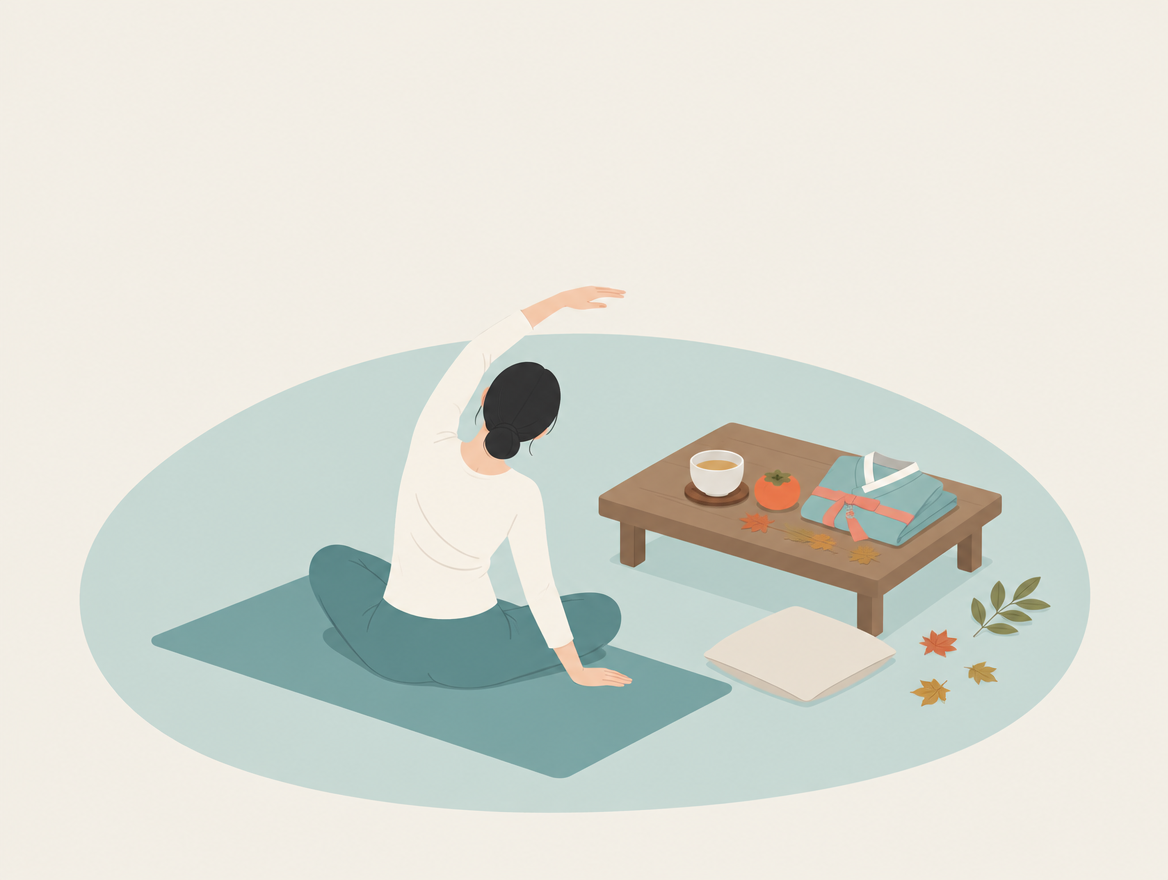
The key to post-holiday fatigue recovery is easing your routine back to normal in steps, not all at once.
Health officials note that post-holiday symptoms typically appear three to four days after the break ends, and most resolve within about two weeks once you adjust your habits. (Source: Yunnan Provincial Health Commission, 2024)
- Go to bed 1-2 hours earlier than usual to reset your sleep rhythm
- Take a light 20-30 minute walk or stretch each day
- Swap rich holiday food for vegetables and whole grains
- Drink enough water to support digestion and circulation
- Talk through or journal about any family tension instead of bottling it up
If your symptoms don’t improve with these steps, don’t push through it — check in with a doctor. In Korea, a visit to a local internal medicine clinic is covered under National Health Insurance (NHI, Korea’s public health insurance system), which keeps out-of-pocket costs relatively low. For more on related conditions, browse our Disease Encyclopedia. (Internal link: recommended to replace once a related article is published)
✅ Did you go to bed earlier than usual?
✅ Did you drink enough water and move a little?
✅ Have your symptoms lasted less than two weeks?
Frequently Asked Questions
1. How long does holiday syndrome last?
For most people, symptoms ease up naturally within about a week. If they last more than two weeks or make daily life difficult, it’s worth talking to a doctor.
2. Is holiday syndrome the same as depression?
No. Holiday syndrome is a temporary stress response that usually resolves on its own. If low energy or low mood sticks around for a long time, it could point to something like depression, so it’s best to get checked out.
3. Are there foods that help with recovery?
Lighter foods — vegetables, whole grains, and fermented foods — tend to be easier on digestion than rich holiday dishes. No single food fixes the symptoms on its own; a balanced diet is what actually helps.
4. Do I need to see a doctor if symptoms are severe?
If headaches or indigestion are severe or last more than two weeks, it’s safer to see an internal medicine or family medicine doctor. If exhaustion is severe and comes with low mood, consider talking to a psychiatrist too.
References
(Samsung Medical Center), “Holiday Syndrome: The Bitter Side of a Happy Holiday” (원제: 설이 싫어요! 씁쓸한 명절의 단면, 명절증후군). Link
(Korea Disease Control and Prevention Agency), “Stress” (원제: 스트레스). Link
(Mayo Clinic), “Stress symptoms: Effects on your body and behavior”. Link
(Yunnan Provincial Health Commission), “Still Recovering From Post-Holiday Syndrome? Here’s How to Cope” (原题: “节后综合征”还没缓过来?这些方法来缓解), 2024. Link
(Japan’s Ministry of Health, Labour and Welfare, e-Health Net), “Responding to Physical and Mental Distress” (原題: 心身の不調への対応). Link
This article is for general informational purposes only and is not a substitute for professional medical advice, diagnosis, or treatment. Please consult a qualified healthcare provider if you have health concerns.