Author: medimaster

  • Mold Removal After a Flood: 5 Steps to Protect Your Lungs

    Mold Removal After a Flood: 5 Steps to Protect Your Lungs

    SummaryMold removal after a flood, explained in 5 clear steps. Learn how post-flood mold triggers respiratory illness and mold allergy or asthma symptoms.

    The rain finally stops and the water recedes — it’s tempting to breathe a sigh of relief.
    But the real problem is just getting started.

    Damp walls and floors can grow mold within a day or two, and breathing in those spores can trigger coughing, congestion, and worse asthma symptoms.
    Knowing safe mold removal after a flood is the first step to protecting your family’s lungs.

    Below, you’ll learn how fast mold grows after a flood, how to remove it safely step by step, the respiratory illnesses and mold allergy and asthma symptoms linked to flood damage, and the warning signs that mean it’s time to see a doctor.

    (Image placeholder — replace with an original photo)

    침수 후 곰팡이 제거 방법을 5단계로 정리했습니다. 태풍이나 집중호우로 물에 잠긴 집은 24~48시간 안에 곰팡이가 번질 수 있어 빠른 조치가 중요합니다. 곰팡이 알레르기 천식 증상과 병원에 가야 할 신호까지 확인하세요.

    How fast does mold grow after a flood, and why does it matter?

    Mold can start growing within 24 to 48 hours after a flood. That’s why drying out and ventilating your home quickly matters so much.

    Mold is a microorganism that spreads by releasing spores on damp surfaces. After a typhoon or heavy flooding, water seeps into wallpaper, flooring, carpet, and even the inside of furniture. Within a day or two, mold can start spreading in places you can’t see — inside walls, under flooring.

    The World Health Organization (WHO) explains that indoor dampness and mold raise the risk of respiratory symptoms, allergies, and asthma. Because there’s no safe exposure threshold, any visible mold or musty smell should be dealt with right away (Source: WHO, Guidelines for Indoor Air Quality: Dampness and Mould, 2009).

    Key Point
    Mold can appear within 24-48 hours after flooding
    Lower indoor humidity as fast as possible (Source: CDC, 2024)

    How does mold removal after a flood work, step by step?

    Drain the water, ventilate, put on protective gear, scrub hard surfaces with detergent and dry them, and plan to discard most porous materials — that’s the basic process for removing mold once flooding hits your home.

    Removing mold safely after a flood means following a cleanup process that includes drying, ventilation, disinfecting, and disposal. Here’s the order:

    1. Open all doors and windows to ventilate, and pump out standing water as fast as possible.
    2. Use fans and dehumidifiers to dry everything out within 48 hours.
    3. Scrub hard surfaces — tile, glass, metal — with detergent and water, then dry completely.
    4. Porous materials like carpet, wallpaper, insulation, and ceiling tiles usually need to be thrown out, since mold can grow inside where you can’t clean it.
    5. If you use bleach, follow the label’s dilution ratio, ventilate the area, and never mix it with other cleaning products.

    (Source: CDC, Homeowner’s and Renter’s Guide to Mold Cleanup After Disasters, 2024)

    Checklist
    ✅ N95 respirator or better
    ✅ Rubber gloves and boots
    ✅ Goggles
    ✅ Detergent, brush, bucket
    Caution
    If you have asthma, mold allergies, a weakened immune system, or chronic lung disease, don’t do the cleanup yourself — have someone else handle it or hire a professional (Source: CDC).

    If you see a doctor for symptoms after cleanup, that visit is covered under South Korea’s National Health Insurance (건강보험, Korea’s mandatory public health insurance system) — though hiring a company to physically remove mold from your home counts as a repair, not medical care, so it isn’t covered.

    You can find more on illnesses linked to flooding in our Disease Encyclopedia category. (Internal link: to be replaced once related articles are published)


    What respiratory illnesses can mold exposure cause? (Mold allergy and asthma symptoms)

    Coughing, itchy eyes, sneezing, and a stuffy nose are common mold allergy symptoms, and if you have asthma, mold exposure can trigger shortness of breath and wheezing.

    A mold allergy is an overreaction of your immune system to mold spores. Mayo Clinic notes that if you have both a mold allergy and asthma, exposure to spores can narrow your airways and, in some people, trigger a severe asthma attack (Source: Mayo Clinic, 2024).

    Cleveland Clinic adds that itchy eyes, sneezing, congestion, or coughing in damp or musty environments are signs worth paying attention to (Source: Cleveland Clinic).

    Key Point
    Common mold allergy symptoms: coughing, sneezing, stuffy nose, itchy eyes
    With asthma: shortness of breath, chest tightness, and wheezing can worsen

    Should I see a doctor if coughing continues after mold cleanup?

    If congestion, sneezing, coughing, or shortness of breath continues or worsens after cleanup, it’s safer to see a doctor.

    Keeping indoor humidity low also helps prevent mold from coming back. Here’s what different health agencies recommend.

    Agency Recommended indoor humidity
    CDC (US) Below 50%
    KDCA (South Korea) 30-60% range
    Caution
    See a doctor if you notice
    ✅ Stuffy nose, sneezing, or watery eyes lasting more than 2 weeks
    ✅ Shortness of breath or wheezing
    ✅ Existing asthma or rhinitis getting worse (Source: Mayo Clinic)

    Frequently Asked Questions

    1. When is it safe to go back into a flooded home to start cleaning?
    Wait until the floodwater has fully receded, then open doors and windows to ventilate before you go in. If mold covers a large area, it’s better to consult a professional than to tackle it alone.

    2. Can I use bleach to remove mold?
    Bleach works on hard surfaces like tile, but always ventilate the area, follow the label’s dilution ratio, and never mix it with other cleaning products.

    3. How can I tell a mold allergy from a common cold?
    A cold usually clears up in one to two weeks, while mold allergy symptoms tend to persist or worsen while you’re in a damp indoor space. See a doctor if symptoms drag on.

    4. Can I keep flood-soaked carpet or wallpaper?
    If it was wet for more than 24 to 48 hours, mold may have grown inside where you can’t see it, so replacing it is usually recommended (Source: CDC).

    5. Who should not do mold cleanup themselves?
    If you have asthma, mold allergies, a weakened immune system, or chronic lung disease, it’s safer to have another family member or a professional handle the cleanup (Source: CDC).

    References

    Centers for Disease Control and Prevention (CDC), “Homeowner’s and Renter’s Guide to Mold Cleanup After Disasters,” 2024. Link

    World Health Organization (WHO), “Guidelines for Indoor Air Quality: Dampness and Mould,” 2009. Link

    Mayo Clinic, “Mold allergy – Symptoms and causes,” 2024. Link

    Korea Disease Control and Prevention Agency (KDCA), National Health Information Portal, “Asthma” (천식). Link

    U.S. Environmental Protection Agency (EPA), “Ten Things You Should Know About Mold.” Link

    This article is for general informational purposes only and is not a substitute for professional medical advice, diagnosis, or treatment. Please consult a qualified healthcare provider if you have health concerns.

  • Mycoplasma Pneumonia Outbreak 2026: 3 Facts for Parents

    Mycoplasma Pneumonia Outbreak 2026: 3 Facts for Parents

    SummaryMycoplasma pneumonia outbreak trends in 2026, child symptoms, and rising macrolide resistance, explained with CDC and Mayo Clinic sources, plus prevention tips.

    In 2024, South Korea logged 27,285 reported cases of mycoplasma pneumonia — the biggest outbreak on record there.

    Health officials lifted the epidemic alert in early 2025, but new lab data released in 2026 shows over 80% of local strains now resist first-line antibiotics.

    That’s put the mycoplasma pneumonia outbreak back in the spotlight, especially for parents.

    Below, we break down current outbreak trends, walking pneumonia symptoms in children, macrolide resistance data, and prevention tips — based on CDC, Mayo Clinic, and Korean health authority reports.

    마이코플라즈마 폐렴 유행 현황과 소아 마이코플라즈마 폐렴 증상, 마이코플라즈마 항생제 내성 이슈를 질병관리청 자료로 정리했습니다. 예방수칙과 병원 방문 시점도 확인하세요.

    Is the mycoplasma pneumonia outbreak returning in 2026?

    Not a brand-new surge exactly — but resistance data released in 2026 has revived concern after 2024’s record outbreak.

    Mycoplasma pneumonia is a lung infection caused by Mycoplasma pneumoniae, an atypical bacterium that spreads through respiratory droplets.

    South Korea’s health authority (KDCA) declared its first-ever epidemic alert for this infection on June 24, 2024.

    Hospital admissions peaked at 1,179 patients that August, then dropped steadily.

    Once cases stayed below the 250-patient threshold for four straight weeks, the alert was lifted on February 7, 2025.

    The infection tends to circulate in 3-to-4-year cycles, so health officials are watching closely for the next wave.

    Similar trends showed up in the US too — CDC data found pediatric hospitalization rates in 2024 were far higher than the 2018–2023 average.

    Source: KDCA, CDC, 2025-2026

    Key Point
    South Korea: 27,285 cases reported in 2024, a record high
    Epidemic alert: June 24, 2024 to February 7, 2025
    US pediatric hospitalizations spiked in 2024, especially ages 2-4

    What are the symptoms of mycoplasma pneumonia in children?

    The hallmark signs are fever and a dry cough that gets worse over time — most common in kids over age 5.

    Mycoplasma pneumonia in children is a lung infection marked by moderate-to-high fever and a persistent dry cough.

    Fever often climbs above 101.3°F (38.5°C), and the cough tends to worsen even after the fever breaks.

    Kids may also get a headache, feel unusually tired, or have a runny nose and sore throat.

    The cough can linger for weeks — sometimes months — after other symptoms clear up.

    Incubation runs about 2 to 3 weeks, which makes it easy to miss how it’s spreading through a classroom or household.

    Category Details
    Common symptoms Fever above 101.3°F (38.5°C), dry cough, headache, fatigue, runny nose, sore throat
    Warning signs — see a doctor Persistent high fever, fast breathing, wheezing, chest pain, low energy, poor appetite
    Caution
    If your child has a fever above 101.3°F (38.5°C) that won’t break, or looks lethargic and breathes fast, get medical care right away.

    How serious is macrolide antibiotic resistance in mycoplasma pneumonia?

    Pretty serious — Korean lab data from 2026 shows resistance to first-line macrolide antibiotics topping 80%.

    Macrolide resistance happens when gene mutations in the bacteria change the site antibiotics bind to, making the drug less effective.

    KDCA researchers analyzed 431 samples collected between January 2023 and December 2024.

    Genetic testing found an 81.4% macrolide resistance rate; when they cultured only live bacteria, resistance hit 90%.

    Resistant infections often mean longer fevers, longer coughs, and longer hospital stays.

    Treatment guidelines say if a patient doesn’t improve within 49 to 72 hours on a macrolide, doctors may switch to a second-line antibiotic like doxycycline or minocycline.

    Source: KDCA, 2026

    Caution
    Never adjust or stop an antibiotic course on your own.
    Stopping early can help resistant bacteria survive and spread.

    How can you prevent and manage mycoplasma pneumonia?

    There’s no vaccine, so basic respiratory hygiene is your best defense — plus getting checked early if symptoms drag on.

    Cover coughs and sneezes with your elbow, and toss used tissues right away.

    Wear a mask in crowded indoor spaces, and wash your hands for at least 20 seconds after being out.

    If one family member tests positive, watch everyone else closely for symptoms.

    For more disease guides, check our (internal link: replace once a matching article is published) Disease Encyclopedia category.

    Checklist
    ✅ Cover coughs with your elbow, not your hands
    ✅ Wear a mask in crowded indoor spaces
    ✅ Wash hands after going out
    – See a doctor if fever above 101.3°F (38.5°C) persists
    – Finish the full antibiotic course as prescribed

    Frequently Asked Questions

    1. How contagious is mycoplasma pneumonia?
    It spreads through respiratory droplets and close contact, so it moves fast in households, schools, and other crowded settings.

    2. How long does it take kids to recover?
    With antibiotics, most children improve within 1 to 2 weeks, though the cough can linger longer. Ask your pediatrician about your child’s specific case.

    3. Does antibiotic resistance mean my child needs to be hospitalized?
    Not necessarily. Most cases still respond to outpatient treatment with a second-line antibiotic. Your doctor will decide based on severity and age.

    4. Can adults get mycoplasma pneumonia too?
    Yes. Adults can catch it too, and symptoms may be more severe if you have an underlying health condition.

    References

    (Korea Disease Control and Prevention Agency, KDCA), “Epidemic Alert for Mycoplasma pneumoniae Infection Lifted” (마이코플라스마 폐렴균 감염증 유행주의보 해제), 2025, Link
    (Money Today), “Mycoplasma Pneumonia Antibiotic Resistance Hits 90%” (마이코플라스마 폐렴, 항생제 내성률 90%), 2026, Link
    (US Centers for Disease Control and Prevention, CDC), “Mycoplasma pneumoniae Infection Surveillance and Trends”, 2026, Link
    (Mayo Clinic), “Walking pneumonia: What does it mean?”, 2025, Link
    (China National Disease Control and Prevention Administration), “Mycoplasma pneumoniae Is Spreading — How to Respond” (肺炎支原体流行,如何科学应对), 2026, Link
    (Japan Institute for Health Security / National Institute of Infectious Diseases), “Infectious Disease Weekly Report (IDWR), 2026 Week 23”, 2026, Link

    This article is for general informational purposes only and is not a substitute for professional medical advice, diagnosis, or treatment. Please consult a qualified healthcare provider if you have health concerns.
  • Bee Sting First Aid: 3 Steps to Treat Stings Safely

    Bee Sting First Aid: 3 Steps to Treat Stings Safely

    SummaryLearn bee sting first aid step by step: remove the stinger, ice the area, and recognize wasp sting anaphylaxis symptoms before calling for help.

    Every autumn, thousands of people in Korea get stung by bees and wasps while cutting grass at family graves for Chuseok, the fall harvest holiday.
    Bees and wasps react strongly to dark colors and strong scents, so stings often happen in seconds during outdoor grass-cutting.
    This guide covers bee sting first aid, prevention tips for grave-mowing season, and how to recognize wasp sting anaphylaxis.

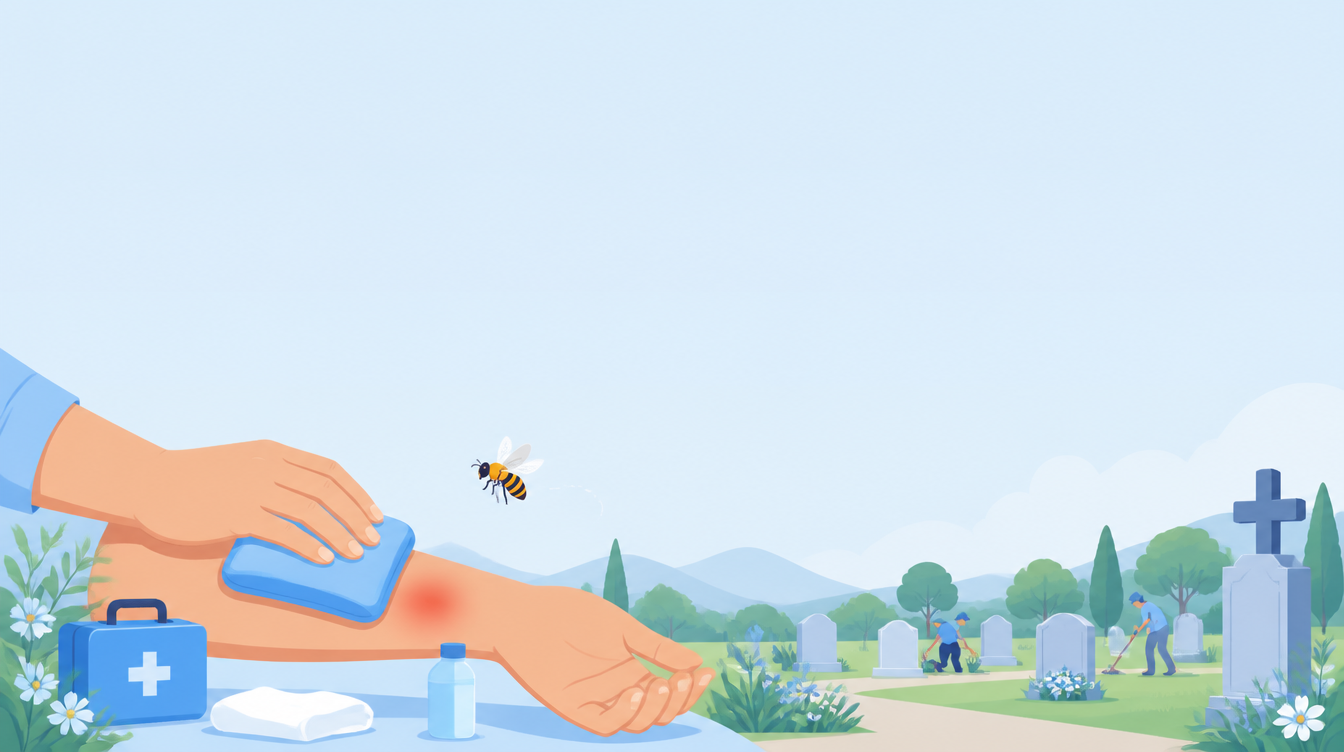
    Bee sting first aid starts with scraping out the stinger, washing the area with soap, and applying ice.
    If you notice trouble breathing or hives spreading across the body, call 119 — Korea’s emergency dispatch number (similar to 911) — right away.
    Below, you’ll find the first aid steps, prevention tips, and clear signs that mean it’s time to see a doctor.

    벌쏘임 응급처치 방법을 순서대로 정리했습니다. 벌초·성묘 중 말벌에 쏘였을 때 침 제거, 냉찜질, 아나필락시스 증상과 119 신고 기준까지 확인하세요.

    What’s the right bee sting first aid method?

    The basic bee sting first aid steps are: remove the stinger, wash the area, then apply ice.
    Don’t pull the stinger out with your fingers — scraping it off with a card or fingernail releases less venom.

    Bee sting first aid is the sequence of removing the stinger, cleaning the wound, icing it, and watching for whole-body reactions.
    Skipping steps can make swelling and pain worse.

    Key Point
    Scrape the stinger out with a card or fingernail instead of squeezing it. Tweezers can press the venom sac and push more venom into your skin.
    1. If the stinger is still in your skin, scrape it out with a card or fingernail.
    2. Wash the sting site with soap and running water.
    3. Apply an ice pack or cold cloth for 15 to 20 minutes to ease pain and swelling.
    4. Remove rings or bracelets near the sting before swelling sets in.
    Checklist
    ✅ Scrape out the stinger with a card
    ✅ Wash with soap and water
    ✅ Ice for 15-20 minutes
    ✅ Remove tight jewelry early

    Source: Mayo Clinic, “Insect bites and stings: First aid,” 2024; Severance Hospital Health Information, “First Aid for Bee Stings” (세브란스병원, 「벌에 쏘였을 때 응급처치」)


    How can you prevent bee stings while cutting grass at a grave?

    Wearing light-colored, long clothing and skipping perfume is the most effective way to prevent stings.
    Bees and wasps are especially sensitive to black clothing and strong scents.

    Bee sting prevention means removing the triggers that provoke bees before you start working.
    A quick check for hives before you start mowing can prevent most accidents.

    Situation What to do
    Clothing Wear light-colored long sleeves, long pants, and a hat
    Scent Skip perfume, hairspray, and sweet drinks
    Before mowing Check the area for hives before using a mower or trimmer
    If you spot bees Don’t swat — crouch low and move away slowly
    Key Point
    If you disturb a hive, don’t swing your arms — crouch down and move at least 20 meters away as quickly as you can.

    For related conditions, see our Disease Encyclopedia category. (Internal link: replace with a related article once published)

    Source: Ministry of the Interior and Safety, Korea Policy Briefing, “Watch Out for Trimmer Accidents and Bee Stings Before Chuseok Grave Mowing,” 2024 (행정안전부, 「추석 전 벌초, 예초기 사고와 벌 쏘임에 각별히 주의하세요」)


    What are the symptoms of wasp sting anaphylaxis?

    Trouble breathing, hives all over the body, and dizziness together are signs of anaphylaxis.
    These symptoms can progress within minutes of a sting.

    Anaphylaxis is a severe, whole-body allergic reaction in people sensitized to bee or wasp venom.
    If you’ve had a serious reaction to a sting before, your risk is higher this time.

    Caution
    Call 119 immediately if you notice any of these:
    · Trouble breathing or wheezing
    · Swelling of the lips, face, or throat
    · Dizziness or fainting
    · Hives spreading across the body
    · Vomiting or stomach cramps

    Source: Mayo Clinic, “Anaphylaxis: First aid”; MSD Manuals (Consumer Version), “Anaphylactic Reactions”


    When should you go to the hospital after a bee sting?

    If you’ve been stung many times or have body-wide symptoms, skip home care and go straight to a hospital.
    If you have a history of bee venom allergy, it’s safer to get checked even if symptoms seem mild.

    Needing hospital care means the reaction has gone beyond local swelling into a whole-body response.
    Anyone with a past anaphylaxis diagnosis should always carry an epinephrine auto-injector.

    Key Point
    Ten or more stings, stings near the face or throat, or a known allergy history all mean it’s safer to see a doctor, even if things look mild at first.

    Source: Severance Hospital Health Information, “First Aid for Bee Stings” (세브란스병원, 「벌에 쏘였을 때 응급처치」); MSD Manuals, “Anaphylactic Reactions”


    Frequently Asked Questions

    1. Can I just pull the stinger out with my fingers?
    No. Pinching it or using tweezers can squeeze the venom sac and push more venom in. Scrape it out with a card or fingernail instead.

    2. My sting is swollen and itchy — do I really need to see a doctor?
    If it’s just local swelling and itching, ice and rest usually help. But see a doctor if the swelling keeps growing or the pain gets worse.

    3. Do wasp stings need different first aid than bee stings?
    The basic first aid is the same, but wasps can sting multiple times and their venom is stronger, so watch for whole-body symptoms more closely.

    4. How should I prepare if I have a history of anaphylaxis?
    Talk to your doctor about getting a prescription for an epinephrine auto-injector, carry it with you, and learn how to use it in advance.

    5. Can bee sting pain last for several days?
    It varies, but local reactions lasting a few days aren’t unusual. See a doctor if the pain or swelling keeps getting worse instead of easing off.

    References

    Ministry of the Interior and Safety (Korea Policy Briefing), “Watch Out for Trimmer Accidents and Bee Stings Before Chuseok Grave Mowing,” 2024. Link
    Severance Hospital Health Information, “First Aid for Bee Stings.” Link
    Mayo Clinic, “Insect bites and stings: First aid,” 2024. Link
    Mayo Clinic, “Anaphylaxis: First aid.” Link
    MSD Manuals (Consumer Version), “Anaphylactic Reactions.” Link


    This article is for general informational purposes only and is not a substitute for professional medical advice, diagnosis, or treatment. Please consult a qualified healthcare provider if you have health concerns.

  • Scrub Typhus Prevention: 5 Tips & Early Symptoms to Know

    Scrub Typhus Prevention: 5 Tips & Early Symptoms to Know

    SummaryScrub typhus prevention starts with covering skin in tall grass. Get 5 KDCA-backed tips, early symptoms, and safe tick repellent use for fall.

    South Korea logged 3,405 cases of scrub typhus in 2025, according to the Korea Disease Control and Prevention Agency (KDCA) — still one of the country’s most common fall infections even after a year-over-year drop.

    Cases start climbing in September and peak in October and November, right when hiking, farm work, and ancestral grave visits (called seongmyo in Korean) bring more people into tall grass.
    If you’re planning outdoor time this fall, here’s what actually works for scrub typhus prevention.

    This guide covers what scrub typhus is, its early symptoms, the KDCA’s core prevention checklist, and how to pick and use tick (chigger) repellent safely, including age limits for kids.

    질병관리청 자료를 바탕으로 쯔쯔가무시증 예방수칙 5가지를 정리했습니다. 초기증상과 가피 확인법, 진드기 기피제 올바른 사용법까지 한 번에 확인해보세요.

    What Is Scrub Typhus (Tsutsugamushi Disease)?

    Scrub typhus is an acute fever illness caused by the bacterium Orientia tsutsugamushi, spread through the bite of an infected chigger — a mite larva that lives in tall grass and brush.

    It’s most common among farmers, hikers, and people visiting family gravesites in rural areas, since chiggers cling to grass and low vegetation.
    The KDCA reported 3,405 cases in 2025, down from 6,268 in 2024, partly because reporting criteria now require confirming the bite-site scab before a case counts.

    Key Point
    You can only catch scrub typhus from an infected chigger bite — it doesn’t spread person to person. In Korea, cases climb starting in September and peak in October and November.

    What Are the Early Symptoms of Scrub Typhus?

    Early symptoms usually start 6 days to 3 weeks after the bite, most often 10 to 14 days, beginning with a sudden high fever, chills, and headache.

    Because it looks like a bad flu at first, scrub typhus is easy to miss.
    The telltale sign is an eschar, a small dark scab at the bite site, but it’s usually painless, so people often don’t notice it.

    Symptom What it looks like
    High fever & chills Sudden fever of 38–40°C (100–104°F) lasting several days
    Eschar A dark scab at the bite site, often in skin folds like the armpit or groin
    Rash Red spots that can spread from the trunk a few days after fever starts
    Swollen lymph nodes Tender, swollen nodes near the bite site
    Caution
    No visible eschar doesn’t rule out scrub typhus. See a doctor if you develop an unexplained fever after spending time outdoors. Under Korea’s National Health Insurance (NHI, the country’s mandatory public health coverage), a clinic visit for this is typically low-cost with just a copay.

    What Are the Key Steps for Scrub Typhus Prevention?

    Scrub typhus prevention comes down to covering your skin in grassy areas and showering right after you get home.

    There’s no vaccine yet, so physically avoiding chigger bites is really the only reliable defense.
    Here’s the KDCA’s core checklist for outdoor trips this fall.

    Checklist
    ✅ Wear long sleeves, long pants, a hat, a neck scarf, gloves, tall socks, and boots
    ✅ Sit on a mat instead of directly on grass
    ✅ Don’t leave clothing on the grass or lie down on it
    ✅ Don’t use the grass as a bathroom
    ✅ Shower and wash your clothes as soon as you get home

    What you do after you get home matters just as much.
    Shake out and wash your clothes right away, then check your whole body in the shower, especially skin folds like your armpits and groin, for ticks or bite marks.


    How Do You Use Tick (Chigger) Repellent Correctly?

    Pick a repellent approved as an over-the-counter drug product by Korea’s Ministry of Food and Drug Safety, and reapply it on the schedule listed on the label.

    Common active ingredients include DEET, icaridin (picaridin), and PMD (para-menthane-3,8-diol), and the age limits differ by ingredient and concentration.

    Key Point
    Products with 10% or less DEET are approved from 6 months old; 10–30% DEET is for ages 12 and up. PMD-based repellents are approved from age 4.

    If you’re also wearing sunscreen, apply sunscreen first and wait 20 to 30 minutes before adding repellent. Layering them the other way around can increase how much gets absorbed into your skin.
    For kids, don’t spray repellent directly on their face or hands. Put it on your own hands first, then apply it to them.

    Caution
    Skip repellent entirely for infants under 6 months old, and rely on protective clothing and mesh covers instead. Ask a pharmacist if you’re not sure which product fits your family.

    Frequently Asked Questions

    1. When are scrub typhus cases most common?
    In Korea, cases start rising in September and peak in October and November before tapering off. That’s exactly when fall hiking and grave-visiting season ramps up, so prevention matters most during these months.

    2. If I don’t see an eschar, am I in the clear?
    Not necessarily. An eschar is a useful clue, but not everyone develops one. See a doctor for any unexplained fever after outdoor exposure, eschar or not.

    3. Is there a vaccine for scrub typhus?
    No, there’s currently no approved vaccine. That makes following prevention steps, covering skin and avoiding chigger bites, the most reliable protection you have.

    4. Can scrub typhus spread from person to person?
    No. You can only get it from an infected chigger bite. Casual contact with someone who’s sick won’t transmit it.


    References

    (KDCA), “Scrub Typhus,” Korea National Health Information Portal, 2026 (original title: 쯔쯔가무시증, 국가건강정보포털) Link
    (KDCA), “Tick-Borne Infectious Disease Management,” 2026 (original title: 진드기매개감염병관리) Link
    (Yakup News), “Whooping Cough and Scrub Typhus Cases Drop as CRE and Scarlet Fever Rise,” 2026, citing the KDCA’s 2025 Notifiable Disease Report (original title: 백일해·쯔쯔가무시증 줄고 CRE 감염증·성홍열 증가) Link
    Merck Manual Professional Edition, “Scrub Typhus,” 2026 Link

    Related reading: More in Disease Encyclopedia (Internal link: replace with a related post once published)


    This article is for general informational purposes only and is not a substitute for professional medical advice, diagnosis, or treatment. Please consult a qualified healthcare provider if you have health concerns.

  • Diabetes Medication Insurance Coverage Korea: 3 Changes for 2026

    Diabetes Medication Insurance Coverage Korea: 3 Changes for 2026

    SummaryDiabetes medication insurance coverage Korea changed in 2026 — see what’s new for combination pills and why GLP-1 obesity drugs still aren’t covered.

    Getting diagnosed with diabetes usually means a lifetime of daily medication. But for years, patients had little reason to check what their national health insurance actually covered — the rules barely changed.

    That’s shifting. Korea’s Ministry of Health and Welfare recently expanded coverage for combination diabetes drugs, putting diabetes medication insurance coverage Korea back in the spotlight. Meanwhile, GLP-1 obesity drugs remain entirely out-of-pocket, leaving many patients confused.

    This article covers what changed for combination diabetes pills in June 2026, whether GLP-1 obesity drugs are covered, and how to check if your own medication qualifies.

    2026년 6월부터 달라진 당뇨병약 건강보험 급여기준 변경 내용, 당뇨병 복합제 급여 확대, GLP-1 비만치료제 급여 여부를 한눈에 정리했습니다.

    What Changed in Diabetes Medication Insurance Coverage Korea in 2026?

    Since June 1, 2026, Korea has expanded health insurance coverage for combination diabetes medications.

    Diabetes medication coverage criteria are the rules Korea’s National Health Insurance Service (NHIS) sets for which drugs are covered and under what conditions. This update came through a revised notice from the Ministry of Health and Welfare on coverage standards for medical benefits.

    The broader framework behind diabetes medication insurance coverage Korea provides, though, dates back to 2011 and had stayed largely unchanged for nearly 15 years. The Korean Diabetes Association has argued that current guidelines — which recommend early combined use of SGLT2 inhibitors and GLP-1 receptor agonists for patients with heart failure, chronic kidney disease, or atherosclerotic cardiovascular disease — weren’t fully reflected in Korea’s coverage rules.

    Key Point
    Since June 1, 2026, coverage for SGLT2-inhibitor-based combination diabetes pills has broadened in Korea.

    Source: Kpanews (2026), Kookmin Ilbo (2026)


    How exactly did coverage for diabetes combination pills expand?

    More ingredient combinations now qualify for coverage — both two-drug combos of an SGLT2 inhibitor plus a thiazolidinedione, and three-drug combos that add metformin.

    A diabetes combination pill packs two or more diabetes drug ingredients with different mechanisms into a single tablet. The combo of empagliflozin (an SGLT2 inhibitor) and lobeglitazone sulfate (a thiazolidinedione) was added to the covered two-drug group, and a new three-drug group adding metformin was created.

    As a result, new lobeglitazone-based combination products entered Korea’s covered drug list.

    Category Before After June 2026
    2-drug combo (SGLT2 + TZD) Only existing combos covered Empagliflozin + lobeglitazone sulfate added
    3-drug combo (SGLT2 + TZD + metformin) No such group existed New group created, related combo pills listed
    Checklist
    ✅ Check the exact ingredient names in your prescription
    ✅ Compare them against your medication label
    ✅ Ask your prescribing hospital or pharmacy if unsure
    Caution
    Coverage often depends on additional criteria, like A1C thresholds. Confirm your specific eligibility with your prescribing doctor.

    Source: Kpanews (2026), Newsmp (2026)


    Are GLP-1 obesity drugs covered by insurance in Korea?

    No. Wegovy, Mounjaro, and similar GLP-1 obesity drugs remain fully out-of-pocket in Korea as of 2026.

    GLP-1 obesity drugs use ingredients originally developed for diabetes, repurposed for weight management. Coverage policy abroad is moving in a different direction.

    1. United States: A Medicare GLP-1 bridge pilot runs from July 2026 through December 2027, offering eligible drugs at around $50 a month
    2. Japan: Prices are being cut by 25% starting August 2026
    3. United Kingdom: The NHS is expanding prescription support
    4. Korea: GLP-1 drugs for weight loss remain fully out-of-pocket

    Even GLP-1 receptor agonists prescribed for diabetes itself (such as Ozempic) are still bound by an outdated coverage rule requiring prior use of metformin plus a sulfonylurea. That’s out of step with the 2026 American Diabetes Association Standards of Care, which recommend earlier use of SGLT2 inhibitors and GLP-1 receptor agonists — regardless of A1C — for patients with cardiovascular or kidney risk. The Korean Diabetes Association has cited this gap in calling for broader reform of coverage criteria.

    Key Point
    Insurance coverage for GLP-1 obesity drugs isn’t confirmed yet, and Korean medical societies are pushing for a broader overhaul of diabetes drug coverage rules.

    Source: Kjob News (2026), American Diabetes Association / Diabetes Care (2026)


    How can I check if my diabetes medication is covered?

    The most reliable way to navigate diabetes medication insurance coverage Korea offers is to ask your prescribing hospital or pharmacy directly, or check coverage criteria on the Health Insurance Review and Assessment Service (HIRA) website.

    Coverage under Korea’s National Health Insurance (NHI, the country’s mandatory public health insurance) is separate from private “silbo” insurance (Korea’s supplemental private indemnity health insurance) — reimbursement terms vary by policy, so confirm details with your private insurer.

    For more on navigating hospital visits in Korea, see the Hospital Guide for Korea category.


    Frequently Asked Questions

    1. Does this coverage expansion apply to every diabetes patient?
    No. It applies only to patients prescribed specific ingredient combinations — an SGLT2 inhibitor plus a thiazolidinedione, with or without metformin. Individual eligibility varies.

    2. Could GLP-1 obesity drugs get insurance coverage later?
    Medical societies are pushing for reform, but as of August 2026, there’s no confirmed timeline for coverage.

    3. What happens if my medication doesn’t meet the coverage criteria?
    It’s prescribed as an out-of-pocket, non-covered drug. Ask your doctor whether a covered alternative exists.

    4. Can private insurance reimburse diabetes drug costs?
    Coverage depends on your specific private policy and when you signed up — check with your insurer directly.

    5. Where can I find the latest coverage rule updates?
    HIRA and the National Health Insurance Service post official notices with the latest criteria on their websites.

    References

    (Kpanews), “Voxzogo Coverage Added, Diabetes Combination Pills Expanded — Drug Criteria Revised” (복스조고 급여신설·당뇨 복합제 확대…약제기준 개정), 2026 Link

    (Newsmp), “Omzara, Voxzogo, Duviempa, Duviempol Added to Coverage List” (옴짜라·복스조고·듀비엠파·듀비엠폴 급여 등재), 2026 Link

    (Kookmin Ilbo), “Diabetes Drug Coverage Criteria Frozen for 15 Years — Experts Call for Reform” (당뇨병약 급여 기준 15년째 제자리), 2026 Link

    (Kjob News), “Other Countries Expand Coverage and Cut Prices for Obesity Drugs — Korea Stays Fully Out-of-Pocket” (해외는 비만약 보험 적용·약가 인하, 한국은 비급여), 2026 Link

    (American Diabetes Association, Diabetes Care), “9. Pharmacologic Approaches to Glycemic Treatment: Standards of Care in Diabetes—2026,” 2026 Link


    This article is for general informational purposes only and is not a substitute for professional medical advice, diagnosis, or treatment. Please consult a qualified healthcare provider if you have health concerns.
  • Seasonal Allergy Symptoms: 5 Signs It’s Not a Cold

    Seasonal Allergy Symptoms: 5 Signs It’s Not a Cold

    SummarySeasonal allergy symptoms like sneezing and a runny nose often flare with big day-night temperature swings. Learn 5 signs, causes, and care tips.

    If your mornings start with a sneezing fit and a runny nose the moment the temperature swings from chilly to warm, it’s easy to blame a cold and move on.

    But when day-to-night temperature differences widen during seasonal transitions, many people are actually dealing with seasonal allergy symptoms rather than a simple cold.

    If sneezing and a clear runny nose flare up specifically during the chilly mornings and evenings of a season change, your nasal lining may be reacting to the temperature swing itself.

    This article walks through why seasonal allergy symptoms worsen during transitional seasons, how to tell them apart from a cold, how to manage your health during big morning-to-evening temperature swings, and when it’s time to see a doctor.
    Knowing the real cause behind seasonal sneezing and a runny nose can help you avoid overusing medication and get treatment at the right time.

    환절기 알레르기 비염 증상이 심해지는 3가지 원인과 감기와 구별하는 방법, 일교차 큰 아침저녁 건강관리 팁, 병원에 가야 하는 시점까지 한눈에 정리했습니다.

    Why Do Seasonal Allergy Symptoms Get Worse With Temperature Swings?

    Seasonal allergy symptoms flare up mainly because sharp day-to-night temperature swings and dry air weaken your nose’s natural defenses.

    Allergic rhinitis is a condition in which your nasal lining overreacts to allergens like pollen or dust mites, causing repeated sneezing, a clear runny nose, congestion, and itching.
    Many people also notice itchy eyes, especially near the inner corner of the eye and the bridge of the nose.

    During seasonal transitions, cold and dry air makes your airway lining more sensitive, and daily temperature swings weaken your nose’s ability to regulate air temperature and humidity.
    On top of that, rising pollen and fine dust levels, combined with a seasonal dip in immune function, can push symptoms even further.

    Source: Seoul Asan Medical Center Newsroom, “Allergic Rhinitis, the Uninvited Guest of Seasonal Transitions.”

    Key Point
    1. Big temperature swings weaken your nose’s temperature and humidity control
    2. Dry air lowers your airway’s natural defenses
    3. Rising pollen, fine dust, and seasonal immune dips add up together

    How Can I Tell Seasonal Allergy Symptoms Apart From a Cold?

    If you have a clear runny nose, sneezing, and itchy eyes for more than two weeks without fever or body aches, it’s more likely allergies than a cold.

    A cold is caused by a virus, so it usually clears up within 7 to 10 days and often comes with fever, a sore throat, and body aches.
    Allergic rhinitis, on the other hand, flares up repeatedly whenever you’re exposed to a trigger, and the mucus tends to stay clear and watery instead of turning thick or yellow.

    The table below compares the two conditions.

    Feature Allergic Rhinitis Common Cold
    Duration Recurs with each exposure, can last weeks Usually resolves in 7-10 days
    Fever Rare Common
    Mucus Clear and watery Starts clear, often turns yellow
    Other symptoms Itchy eyes and nose, repeated sneezing Sore throat, body aches, cough

    Source: Seoul Asan Medical Center Health Encyclopedia, “Allergic Rhinitis.”


    How Should I Manage My Health When Morning and Evening Temperatures Swing Widely?

    Wearing a mask and a light jacket before heading out, plus a glass of warm water right after waking up, can help protect your nasal lining from sudden temperature changes.

    On days with a wide morning-to-evening temperature swing, the blood vessels in your nasal lining react sharply to the sudden shift, which can trigger a runny nose and congestion.
    Building habits that soften these temperature swings before and after you go outside can meaningfully ease your symptoms.

    Checklist
    ✅ Wear a light jacket and mask for morning and evening outings
    ✅ Keep indoor humidity between 40-60%
    ✅ Wash bedding and curtains regularly
    ✅ Air out your home when fine dust levels are low
    ✅ Support your immune system with regular sleep and hydration

    Children and older adults tend to be more sensitive to these swings, so it helps to check the expected temperature before school or work commutes.


    When Should I See a Doctor for Allergic Rhinitis Symptoms?

    If over-the-counter antihistamines haven’t helped after two weeks, or congestion is disrupting your sleep, it’s a good idea to see an ENT specialist.

    Most seasonal allergic rhinitis can be managed with lifestyle changes and over-the-counter medication, but persistent or disruptive symptoms call for a professional evaluation.
    If congestion is severe on only one side, or you notice facial pain and thick yellow mucus, it could point to sinusitis or another condition, so an accurate diagnosis matters.

    Caution
    Using an over-the-counter nasal decongestant spray for more than a week in a row can actually worsen congestion, a condition known as rebound (medication-induced) rhinitis.
    Children, pregnant women, and people with chronic conditions should always check with a doctor or pharmacist before use.
    Key Point
    1. Symptoms last longer than two weeks
    2. Congestion is disrupting your sleep quality
    3. You notice one-sided congestion or facial pain

    Frequently Asked Questions

    1. How do I tell allergic rhinitis apart from a cold or COVID-19?
    If you have a clear runny nose, sneezing, and itchy eyes without fever or a sore throat, allergies are more likely. Since symptoms can overlap, testing may still be needed if you’re unsure, so check with a healthcare provider.

    2. Are there lifestyle habits that help with seasonal allergy symptoms?
    Keeping indoor humidity between 40-60% and washing your hands and face after coming home can help reduce allergen exposure. These are supportive habits, though, not a substitute for treatment if symptoms are severe.

    3. Can I take over-the-counter antihistamines whenever I want?
    Even OTC antihistamines can cause drowsiness or dry mouth, so it’s safer to check with a pharmacist before use. Pregnant women and people with chronic conditions should always consult a doctor first.

    4. My child gets a runny nose every seasonal transition — is it just a cold?
    If it recurs at the same time every year with a clear runny nose and no fever, allergic rhinitis is a real possibility. Because symptoms in children can look different than in adults, a visit to a pediatrician or ENT specialist can confirm the cause.

    References

    (Seoul Asan Medical Center), “Allergic Rhinitis, the Uninvited Guest of Seasonal Transitions” (환절기 불청객 알레르기 비염), Link
    (Seoul Asan Medical Center Health Encyclopedia), “Allergic Rhinitis” (알레르기 비염), Link
    (Mayo Clinic), “Seasonal allergies: Nip them in the bud,” Link
    (Cleveland Clinic), “Vasomotor Rhinitis (Nonallergic Rhinitis),” Link

    For more disease information, visit our Disease Encyclopedia category. (Internal link: recommended to replace with a related article once published)

    Note: In Korea, ENT clinics are covered under National Health Insurance (건강보험, Korea’s public health insurance system), which keeps out-of-pocket costs for a routine visit relatively low.

    This article is for general informational purposes only and is not a substitute for professional medical advice, diagnosis, or treatment. Please consult a qualified healthcare provider if you have health concerns.

  • Swimmer’s Ear Symptoms After Swimming: 5 Warning Signs

    Swimmer’s Ear Symptoms After Swimming: 5 Warning Signs

    SummarySwimmer’s ear symptoms after swimming include itching, pain, and muffled hearing. Learn causes, home care, and prevention tips for swimmers.

    Ear infections spike every summer, and the numbers back it up. In Korea, health insurance data shows that of the roughly 1.66 million people treated for otitis externa in 2021, about 30% — over 516,000 cases — happened in July and August alone.

    If your ears feel itchy and clogged after a day at the pool or beach, you might be dealing with swimmer’s ear symptoms after swimming. Here’s what causes it, how to respond, and how to prevent it.

    📌 Quick Summary
    Swimmer’s ear happens when trapped water lets bacteria grow in your ear canal. Swimmer’s ear symptoms after swimming include itching, pain, and a plugged-up feeling. If water gets in your ear, drain it gently instead of digging around. Earplugs and proper drying prevent most cases.

    물놀이 후 외이도염 증상은 귀 가려움, 통증, 이충만감으로 나타나며 심해지면 진물이 생길 수 있습니다. 원인과 초기 대처법, 병원 방문 시기, 수영인을 위한 예방법까지 자세히 알아보세요.

    Why Do Your Ears Hurt After Swimming? What Is Swimmer’s Ear?

    The most common reason your ears hurt and itch after swimming is swimmer’s ear.

    Swimmer’s ear is inflammation of the skin lining the ear canal — the passage from your outer ear to your eardrum. Doctors call it otitis externa.

    When water stays trapped in your ear after swimming, it creates a warm, damp environment where bacteria multiply easily. Scratching an itchy ear with a cotton swab or your finger can break the skin, which raises your infection risk even more. (Source: Mayo Clinic)

    Key Point
    Swimmer’s ear needs three things to develop: trapped moisture, damaged skin, and bacteria. How you care for your ears after swimming matters more than the swimming itself.

    What Are Swimmer’s Ear Symptoms After Swimming?

    Swimmer’s ear symptoms usually start with itching and pain, and can progress to discharge if left untreated.

    One telltale sign: the pain gets worse when you tug on your outer ear or press the small bump in front of your ear canal (the tragus).

    Stage Symptoms
    Early Itching, slight redness, a “full” feeling
    Moderate Pain that worsens when you pull your ear, ear fullness, muffled hearing
    Advanced Discharge or pus, swelling around the ear, swollen lymph nodes
    Key Point
    Symptoms typically follow this order: mild itching → pain → discharge. Catching it early means a faster recovery.

    What Should You Do When Water Gets in Your Ear — and When to See a Doctor?

    If water gets in your ear, drain it gently first instead of forcing it out. Don’t wait around if symptoms show up — see a doctor as soon as you can. (Source: Mayo Clinic)

    1. Tilt your head to the side and gently pull your earlobe to let water drain out.
    2. Pat the outer ear dry with a soft towel — don’t go inside the canal.
    3. Still feels blocked? Use a hair dryer on its lowest, coolest setting, held at least a foot away.
    Caution
    Never stick cotton swabs, fingers, or earbuds into your ear canal. You’ll damage the skin and raise your infection risk instead of lowering it.

    A doctor will usually prescribe ear drops that combine an acidic solution, a steroid, and an antibiotic. If you’ve been using prescribed drops for about 10 days and symptoms haven’t improved, go back for a follow-up — you may need something stronger. While you’re healing, skip swimming and diving, and keep water out of your ear canal during showers. In Korea, ENT visits are covered by National Health Insurance (NHI) — the country’s mandatory public health insurance system — so treating this early is usually affordable.

    For more on ear conditions and related topics, browse our Disease Encyclopedia. (Internal link: recommend replacing with a related published article)


    How Can Swimmers Prevent Ear Infections?

    The core of ear infection prevention for swimmers is simple: keep your ears dry. Follow this checklist and you’ll avoid most cases.

    Checklist
    ✅ Wear earplugs or a swim cap before you get in the water
    ✅ Tilt your head after swimming to drain water
    ✅ Pat the outer ear dry — don’t go inside the canal
    ✅ Skip cloudy or questionable-looking water
    ✅ Never use cotton swabs or your fingers to scratch your ear

    If you swim often, a homemade rinse of equal parts rubbing alcohol and white vinegar can help — a few drops before and after swimming. But if you’ve ever had a perforated eardrum or ear tubes, talk to an ENT specialist before trying this. (Source: Cleveland Clinic, CDC)


    Frequently Asked Questions

    1. How long does swimmer’s ear usually take to heal?
    With proper treatment, most cases clear up within 7 to 10 days. If you’ve used prescribed ear drops for about 10 days with no improvement, go back to your doctor.

    2. Can I go swimming if I have swimmer’s ear?
    It’s best to avoid swimming until you’ve fully healed. Getting water back into an infected ear canal can make the inflammation worse and slow down recovery.

    3. What if water in my ear won’t drain out?
    Tilt your head to the side and gently pull your earlobe to help it drain naturally. If it still feels stuck, try a hair dryer on the lowest, coolest setting held at a distance. Avoid using cotton swabs to dig it out.

    4. Are kids more prone to swimmer’s ear?
    Korean health data shows a higher share of pediatric and teen cases during peak swimming season. This is likely because kids have narrower ear canals and often don’t dry their ears well on their own. See an ENT doctor for an accurate diagnosis.


    References

    (Mayo Clinic), “Swimmer’s Ear – Symptoms & Causes,” Link
    (Mayo Clinic), “Swimmer’s Ear – Diagnosis & Treatment,” Link
    (CDC), “Preventing Swimmer’s Ear,” Healthy Swimming, Link
    (Cleveland Clinic), “How To Prevent and Get Rid of Swimmer’s Ear,” Link
    (HiDoc, Korean health media), “Ear Itchiness and Fullness After Water Play… Swimmer’s Ear Symptoms Worsen With Cotton Swab Use” (원제: 물놀이 후 귀 가렵고 먹먹… 여름철 ‘외이도염’, 면봉 사용 시 증상 악화), citing Health Insurance Review & Assessment Service (HIRA) data, 2021, Link

    This article is for general informational purposes only and is not a substitute for professional medical advice, diagnosis, or treatment. Please consult a qualified healthcare provider if you have health concerns.

  • Sleep Deprivation and Joint Pain: 3 Tropical Night Tips

    Sleep Deprivation and Joint Pain: 3 Tropical Night Tips

    SummarySleep deprivation and joint pain often occur together on tropical nights. Learn why, how it weakens immunity, and the best sleep position for relief.

    Most of us have tossed and turned through at least one sticky, sleepless summer night. But tropical-night insomnia may not stop at next-day fatigue.

    If your knees or shoulders feel unusually stiff after a rough night’s sleep, sleep deprivation and joint pain may be more closely linked than you think, especially during Korea’s hot, humid tropical nights.

    This article explains why sleep deprivation and joint pain tend to show up together, how poor sleep weakens your immune system, and which sleep positions and bedroom habits actually help during tropical-night heat. The key takeaway: protecting your sleep quality is one of the most effective ways to manage nighttime joint pain.

    열대야 수면부족 관절통증은 왜 함께 나타날까요? 통증 민감도가 높아지는 이유와 면역력 저하 원리, 관절에 좋은 숙면 자세와 실내 온도 관리법까지 정리했습니다.

    Sleep Deprivation and Joint Pain: Why Do They Show Up Together on Hot Nights?

    Losing sleep lowers your pain threshold, so joint sensations that would normally feel minor start to feel much more painful. Your joints haven’t necessarily gotten worse overnight. Your brain and nervous system have simply become more sensitive to pain signals.

    This link between sleep deprivation and joint pain shows up in real clinical settings, too. In one hospital survey, more than 60% of patients seeking treatment for joint pain also reported sleep problems, and about 62% said their pain worsened during tropical nights.

    When you don’t get enough sleep, the brain’s ability to regulate pain signals weakens. The same stimulus feels stronger, and your body’s natural pain-inhibiting system works less effectively. Research on healthy adults found that even one night of total sleep deprivation noticeably raised sensitivity to pressure and cold pain.

    Key Point
    Sleep loss doesn’t usually create brand-new joint inflammation. Instead, it makes your brain register existing pain and stiffness more intensely. That’s why people with pre-existing knee or shoulder issues often notice their pain spike after just a few tropical nights in a row.

    Source: Sisa Journal, “Tropical Nights Make Sleepless Joints Hurt More” / NIH, research on sleep deprivation and pain sensitivity.


    Does Lack of Sleep Really Weaken Your Immune System?

    Yes. Repeated sleep loss reduces the activity of immune cells that fight infection while raising inflammatory markers in your body. Together, these changes make you more likely to catch a cold, and they can make joint pain and stiffness worse at the same time.

    This sleep-immune connection has been confirmed in multiple studies. In one experiment, restricting sleep to just four hours a night sharply reduced the activity of natural killer cells, the immune cells that directly attack bacteria and viruses.

    In another study, participants who slept only four hours a night for six days produced less than half the antibodies after a flu vaccine, compared to those who slept normally. Fewer antibodies mean weaker defenses when bacteria or viruses invade your body.

    Key Point
    Sleep loss, weaker immunity, and higher pain sensitivity aren’t separate problems. They’re tangled together. Protecting your sleep is really a way of managing joint pain and infection risk at the same time.

    Source: NIH, research on the bidirectional relationship between sleep and immunity.


    What’s the Best Sleep Position for Joint Pain During Hot Nights?

    Sleeping on your back with a thin pillow or rolled towel under your knees helps distribute pressure away from sensitive joints. If you sleep on your side, lie on the less painful side and place a pillow between your knees to keep your hips and spine aligned.

    The goal of a good sleep position is minimizing how long your joints stay compressed or twisted. According to the Arthritis Foundation, using a slightly taller pillow to keep your neck aligned with your spine can also reduce shoulder and neck pain.

    Sleeping on your stomach is generally not recommended, since it twists your neck and lower back and can make pain worse.

    Checklist
    ✅ Back sleepers: place a pillow under your knees
    ✅ Side sleepers: put a pillow between your knees
    ✅ Use a pillow height that keeps your neck level with your spine
    ✅ Avoid sleeping on your stomach
    ✅ Check that your mattress doesn’t sag too much under your hips

    Source: Arthritis Foundation, “Arthritis Pain at Night: Tips to Position Yourself for Pain-Free Sleep.”


    What Room Temperature and Habits Ease Tropical-Night Joint Pain?

    Keeping your bedroom around 24-26°C (75-79°F) with humidity near 50% supports both better sleep and lower joint pain. When your body is too hot or too humid, it struggles to reach deep sleep, and repeated shallow sleep feeds right back into the pain sensitivity described above.

    Running an air conditioner or fan at full blast all night can dry the air out too much, irritating your airways and sometimes making muscles and joints feel stiffer. A timer that gradually adjusts the temperature works better than leaving it on high all night.

    A lukewarm shower one to two hours before bed helps your core body temperature drop naturally, making it easier to fall asleep. It also helps to avoid caffeinated drinks like coffee, green tea, or cola in the late afternoon and evening.

    Caution
    Don’t rely on over-the-counter pain relievers long-term just to get through tropical nights. Extended use without medical guidance can cause stomach irritation or put stress on your kidneys. Always check with a doctor or pharmacist first.

    For more detailed tips on joint stretches and heat therapy, see our (Internal link: to be replaced once a related article is published) Disease Encyclopedia category.

    Source: Asan Medical Center Newsroom, “Staying Cool at Night: How to Sleep Well During Tropical Nights.”


    Frequently Asked Questions

    1. Does napping reduce joint pain caused by tropical-night sleep loss?
    A short nap can help make up for lost sleep and may reduce pain sensitivity, according to research. However, avoid long naps after 3 p.m. or naps longer than 30 minutes, since they can interfere with nighttime sleep.

    2. Is it okay to run the air conditioner all night?
    It’s better to set a timer for two to three hours or use dehumidifier mode rather than running it at full blast all night. Air that’s too cold and dry can strain both your airways and your joints.

    3. How many hours before bed should I avoid caffeine?
    This varies by person, but it’s generally recommended to avoid coffee, green tea, and cola at least six to eight hours before bedtime.

    4. Should I see a doctor if joint pain lasts more than two weeks?
    Yes. If pain persists for more than two weeks or comes with swelling or warmth, see an orthopedic or rheumatology specialist rather than managing it yourself. In Korea, specialist visits like these are covered by National Health Insurance (Korea’s mandatory public health insurance system that subsidizes most medical costs), so cost shouldn’t keep you from getting checked.

    5. Does repeated sleep deprivation raise the risk of arthritis?
    It’s hard to call sleep loss a direct cause, but chronic sleep deprivation is reported to increase inflammation and pain sensitivity, which can worsen symptoms in people who already have joint conditions. Talk to a specialist for an accurate diagnosis.


    References

    (NIH), “Total Sleep Deprivation Increases Pain Sensitivity, Impairs Conditioned Pain Modulation and Facilitates Temporal Summation of Pain in Healthy Participants,” Link
    (NIH), “The Bidirectional Relationship between Sleep and Immunity against Infections,” Link
    (NIH), “Napping Reverses Increased Pain Sensitivity Due to Sleep Restriction,” Link
    (Arthritis Foundation), “Arthritis Pain at Night: Tips to Position Yourself for Pain-Free Sleep,” Link
    (Sisa Journal, Korea), “Tropical Nights Make Sleepless Joints Hurt More” (열대야로 잠 설치면 관절도 더 아프다), Link
    (Asan Medical Center Newsroom, Korea), “Staying Cool at Night: How to Sleep Well During Tropical Nights” (한밤중에도 찜통더위…열대야 속 꿀잠 자는 법), Link

    This article is for general informational purposes only and is not a substitute for professional medical advice, diagnosis, or treatment. Please consult a qualified healthcare provider if you have health concerns.

  • Medication Storage Power Outage: 3 Rules to Keep Insulin Safe

    Medication Storage Power Outage: 3 Rules to Keep Insulin Safe

    SummaryMedication storage power outage guide: CDC and FDA rules for insulin, plus a 3-step typhoon prep checklist for cold-chain drugs.

    Medication storage power outage planning matters just as much as food safety planning. When a typhoon knocks out the power, most people worry about food spoiling in the fridge — but insulin and other cold-chain medications need attention just as urgently.

    Many assume refrigerated drugs go bad within hours of an outage, yet insulin can often stay safe at room temperature for weeks, while other refrigerated medications need to be discarded much sooner. Knowing the real rules for medication storage during a power outage helps you act calmly instead of guessing when a storm hits.

    This guide covers how long refrigerated medications and insulin stay safe during a power outage, how to check your emergency medications before a typhoon, and how to decide whether a drug is still usable once power returns.

    정전 냉장 의약품 보관법을 CDC·FDA 기준으로 정리했습니다. 인슐린 정전 시 보관법과 태풍 대비 상비약 점검 체크리스트, 전기 복구 후 약 사용 판단 기준까지 확인하세요.

    Medication Storage Power Outage: How Long Do Refrigerated Medications Last?

    If the fridge door stays closed, it usually holds a safe temperature for about 4 hours. But once a power outage lasts a day or longer, refrigerated medications should generally be discarded as a rule, unless the label says otherwise.

    Refrigerated medications are drugs — including many vaccines, insulin, and biologic products — that must stay between 36°F and 46°F (2-8°C) to keep working properly.

    The U.S. Centers for Disease Control and Prevention (CDC) recommends throwing away refrigerated medications if the power has been out for a day or more, unless the label says otherwise. If your life depends on that medication, you can keep using it until you get a new supply — just replace it as soon as possible. (Source: CDC, 2024)

    Key Point
    A closed fridge holds a safe temperature for about 4 hours. A full freezer can stay cold for up to 48 hours if the door stays shut.
    Medications need stricter rules than food, so check each drug individually.

    How should insulin be stored during a power outage?

    Insulin can typically be kept unrefrigerated at 59-86°F (15-30°C) for up to 28 days and still work, making it more outage-resistant than most refrigerated drugs.

    Room-temperature insulin storage means keeping an opened or unopened insulin vial or cartridge outside the fridge, between 59°F and 86°F.

    According to the FDA, insulin vials and cartridges supplied by manufacturers — opened or unopened — may be left unrefrigerated between 59°F and 86°F for up to 28 days and still be effective. (Source: FDA) The American Diabetes Association (ADA) recommends storing unused insulin in the fridge at 36-46°F, and notes that potency drops quickly once insulin is exposed to temperatures above 86°F. (Source: ADA)

    Never use insulin that has frozen, even once. Keep it away from direct contact with ice packs or a freezer, since freezing destroys insulin below 32°F (0°C). (Source: Korean Diabetes Association, 2025) If you use an insulin pump, discard the insulin in the infusion set after 48 hours, or immediately if it’s been exposed to temperatures above 98.6°F (37°C). (Source: ADA)

    Key Point
    Insulin can stay safe unrefrigerated at 59-86°F for up to 28 days (FDA).
    But heat above 86°F and any freezing must be avoided.
    Caution
    Throw away insulin that has frozen or turned cloudy when it shouldn’t be, and check with a pharmacist or doctor before using it.

    How should you check your emergency medications before a typhoon or power outage?

    At least a day before a typhoon warning, gather your refrigerated medications in one place and freeze your ice packs — that’s the first step in checking your medications.

    Checklist
    ✅ Freeze ice packs ahead of time
    ✅ Gather refrigerated medications together, ready for a cooler bag
    ✅ Photograph your prescriptions and medication list
    ✅ Keep a 3-day backup supply if you have a chronic condition
    ✅ Save your clinic and pharmacy contact numbers

    Japan’s Ministry of Health, Labour and Welfare recommends that people who depend on life-critical medications, like insulin or anti-seizure drugs, keep about a 3-day emergency supply on hand. (Source: Japan MHLW, 2024) A portable insulin cooling pouch typically costs $15-30 (about ₩20,000-40,000 / ¥2,200-4,400), and picking one up before typhoon season can make a real difference.

    For more on preparing your medications before a storm or outage, browse the Medications & Supplements category. (Internal link: recommend replacing with a related article once published)


    After the power comes back, how do you know if your medication is still safe to use?

    If a medication looks cloudy or has changed color, discard it regardless of how long the outage lasted. When in doubt, check with a pharmacist or doctor before using it.

    Unlike food, you can’t judge a medication’s safety by smell or taste, so a visual check plus a pharmacist’s opinion is the only reliable method. The CDC also recommends visually inspecting any medication affected by an outage before every dose, once power returns. (Source: CDC) Good medication storage power outage habits don’t stop once the lights come back on — a quick visual check every time keeps you safe.

    Caution
    Stop using and call a pharmacist if any of these apply:
    – Insulin looks cloudy or has visible particles
    – Refrigerated medication was exposed to a day-long outage or longer
    – You’re not sure what temperature the medication reached

    Frequently Asked Questions

    1. Is a few hours of power outage okay for refrigerated medications?
    If the fridge door stays closed, it usually holds a safe temperature for about 4 hours. But for most refrigerated medications besides insulin, it’s safest to discard them once an outage drags on — check with your pharmacist for drug-specific guidance.

    2. What should I do if my insulin froze?
    Discard it. Even after thawing, frozen insulin loses potency and shouldn’t be used. Talk to your care team about getting a replacement.

    3. What if I run out of insulin during a long outage?
    The ADA notes that in an emergency, you may need to use insulin that’s been above 86°F — just keep it as cool as possible. This is a temporary measure only; replace the insulin as soon as you can.

    4. How many days before a typhoon should I start preparing?
    Once a typhoon warning is issued, freeze your ice packs and gather your refrigerated medications at least a day ahead. If you take chronic medications, request an early refill if possible.

    5. What extra steps should families with children or older adults take?
    Keep a photo or written list of every medication and dose, and make sure everyone in the household has the clinic and pharmacy’s contact information on hand.

    References

    (CDC), “Refrigerated Drugs,” 2024. Link
    (FDA), “Information Regarding Insulin Storage and Switching Between Products in an Emergency.” Link
    (American Diabetes Association), “Insulin Storage and Syringe Safety.” Link
    (Korean Diabetes Association, 대한당뇨병학회), “Insulin Storage Guide for People with Diabetes,” 2025. Link
    (Japan Ministry of Health, Labour and Welfare, 厚生労働省), “Disaster Response Manual for Pharmacists,” 2024. Link
    (DXY Endocrinology, 丁香园内分泌), “Proper Storage and Carrying of Insulin.” Link

    This article is for general informational purposes only and is not a substitute for professional medical advice, diagnosis, or treatment. Please consult a qualified healthcare provider if you have health concerns.

  • Heat-Damaged Medicine Signs: 3 Things to Check This Summer

    Heat-Damaged Medicine Signs: 3 Things to Check This Summer

    SummaryHeat can quietly damage medicine in your cabinet. Learn the key heat-damaged medicine signs and how to dispose of expired drugs safely.

    Once the rainy season ends in Korea, brutal summer heatwaves follow — and that’s when people finally check their home medicine cabinet.
    Most just glance at the expiration date on the box and assume it’s fine.
    But even medicine with time left on the label can already be damaged if it’s been sitting somewhere hot.

    This is especially true if you’ve kept pills in a car or on a sunny windowsill.
    The medicine can look completely normal on the outside while its effectiveness has already dropped.

    Here’s how to spot heat-damaged medicine signs, why heat exposure is risky for medication, how storage differs by form, and how to dispose of expired drugs safely.

    (Image placeholder — replace with a licensed photo before publishing.)

    폭염철 상비약 변질 확인법 3가지를 통해 의약품 고온 보관 위험을 점검하고, 정제·시럽·좌약 등 제형별 보관법과 유통기한 지난 약 폐기 방법까지 확인하세요.

    Does Heat Really Damage Medicine in Your Cabinet?

    Yes. Prolonged heat exposure can change a drug’s chemical structure, reducing its effectiveness or raising the risk of side effects.
    Heat damage to medicine is when storage temperature, humidity, or light exposure alters a drug’s ingredients or physical form.

    Most Korean-registered medicines are meant to be stored at room temperature (roughly 59–86°F / 15–30°C).
    But a parked car’s interior can climb past 158°F (70°C) in summer.

    Leaving medicine in a hot car — even briefly — puts it at real risk of losing potency.

    Key Point
    Most medicines should stay between 59–86°F (15–30°C).
    A parked car can exceed 158°F (70°C) in summer — even a short stop is risky.
    Learning to recognize these heat-damaged medicine signs early can help you avoid taking a compromised dose.

    What Are the Heat-Damaged Medicine Signs to Watch For?

    You can’t always tell by looking, but changes in color, smell, or texture are red flags worth trusting.
    Leftover prescriptions, medicine you can’t identify, and drugs with an unreadable or expired date should never be taken.

    Powdered medicine that clumps or discolors should be thrown out right away.
    Liquid syrups that separate into layers or turn cloudy shouldn’t be used either.

    Tablets can look perfectly normal even after losing potency, so if anything feels off, check with a pharmacist before taking it.

    Checklist
    ✅ Tablets or capsules smell or look different than usual
    ✅ Powdered medicine has clumped or gotten damp
    ✅ Syrup has separated into layers or turned cloudy
    ✅ Suppositories have melted or lost their shape
    ✅ The expiration date is unreadable or already passed

    Do Pills, Syrups, and Suppositories Need Different Storage?

    Yes — how sensitive a medicine is to moisture and light depends on its form.
    Thyroid hormone medications and nitroglycerin are especially sensitive to light, heat, and humidity, so they need light-blocking containers at room temperature.

    Form Storage rule Watch for
    Tablets / capsules Keep in original blister pack or bottle Loose pills absorb moisture fast
    Powdered medicine Cool, dry place, sealed container Discard if clumped or discolored
    Liquid syrup Room temperature unless labeled otherwise Check color/smell once opened
    Suppositories Refrigerate if softened by heat Discard if badly misshapen
    Insulin & other refrigerated drugs Follow prescribed range (usually 36–46°F / 2–8°C) Never freeze; use a cooler bag when out
    Caution
    Light- and heat-sensitive drugs like thyroid hormone medication and nitroglycerin need light-blocking containers at room temperature.
    Refrigerated medicines like insulin must never be frozen.

    For more medication and supplement storage tips, visit our Medications & Supplements category. (Internal link: recommend replacing once a related article is published)


    How Do You Safely Dispose of Expired Medicine?

    Don’t throw it in regular trash or flush it down the drain — use a medicine take-back box or mailbox drop-off instead.
    In Korea, take-back boxes are located at local pharmacies, public health centers (bogeonso, community-run public health clinics found in every district), and haengbok-bokji centers (Korea’s neighborhood administrative offices).

    You can pick up a return envelope at your local administrative office, or seal the medicine in a paper or plastic bag labeled “expired medicine” and drop it in a public mailbox — the post office forwards it for proper incineration.

    Liquid medicine shouldn’t go in a mailbox since it can leak; close the cap tightly and use a take-back box instead.
    Dumping unused medicine down the drain or in regular trash can contribute to environmental contamination and antibiotic resistance.

    Key Point
    1) Use take-back boxes at pharmacies, health centers, or administrative offices
    2) Sealed powdered medicine can go in a mailbox (liquids excluded)
    3) Trash or drain disposal can fuel environmental and resistance problems

    Frequently Asked Questions

    1. Q. Is it okay to leave medicine in a parked car for just a few minutes?
    A. No. A parked car’s interior can approach 158°F (70°C) in summer, so even a brief stop can damage medicine.
    Always keep your medicine in a cool, dry indoor spot.

    2. Q. Is refrigerating medicine always safer?
    A. Not necessarily. Some syrups and tablets can separate or harden if refrigerated.
    Stick to room temperature unless the label says otherwise, and ask a pharmacist if you’re unsure.

    3. Q. Can medicine be damaged even if the color and smell look normal?
    A. Yes. Repeated heat exposure can slowly break down active ingredients without any visible change.
    If the expiration date has passed or storage conditions are questionable, check with a pharmacist before taking it.

    4. Q. Can I just throw leftover medicine in the regular trash?
    A. It’s not recommended. Medicine residue from trash or drains can contribute to environmental pollution and antibiotic resistance.
    Use a take-back box at a pharmacy, health center, or administrative office instead.

    5. Q. Can powdered or liquid medicine go in a mailbox?
    A. Sealed powdered medicine can go in a mailbox, but liquid medicine risks leaking and shouldn’t be mailed.
    Close the cap tightly and drop it in a take-back box at your local administrative office instead.

    References

    (Medipana News, Korea), “Heat-Damaged Medications During Heatwaves: How to Store and Manage Them” (원제: 폭염 속 변질 우려 의약품, 이렇게 보관·관리해야), 2026, Link
    (Asan Medical Center, Seoul), “How to Store Medications During Scorching Heatwaves” (원제: 푹푹 찌는 폭염 속 의약품 이렇게 보관하세요), Link
    (Korea Policy Briefing, korea.kr), “How to Safely Dispose of Expired Medications” (원제: 유통기한 지난 폐의약품, 이렇게 버려요), Link
    (U.S. Food and Drug Administration), “Safe Disposal of Medicines,” Link

    This article is for general informational purposes only and is not a substitute for professional medical advice, diagnosis, or treatment. Please consult a qualified healthcare provider if you have health concerns.