
Table of Contents
A child who slept in all summer suddenly complains of a stomachache every morning after school starts — a common sign of back to school syndrome in kids.
The night before class, they can’t fall asleep.
It’s tempting to assume they’re faking it.
But a new classroom, unfamiliar classmates, and a stricter schedule can feel genuinely overwhelming to a child.
When this tension shows up again and again as physical complaints, it’s a signal worth taking seriously.
Back-to-school syndrome describes the emotional and physical stress reaction some children show while adjusting to a new school term.
It often combines feelings like anxiety and irritability with physical symptoms such as stomachaches, headaches, and sleep trouble.
This article covers what causes back-to-school syndrome in kids, why some children refuse to go to school after a break, and how you can help a child who’s struggling to adjust.
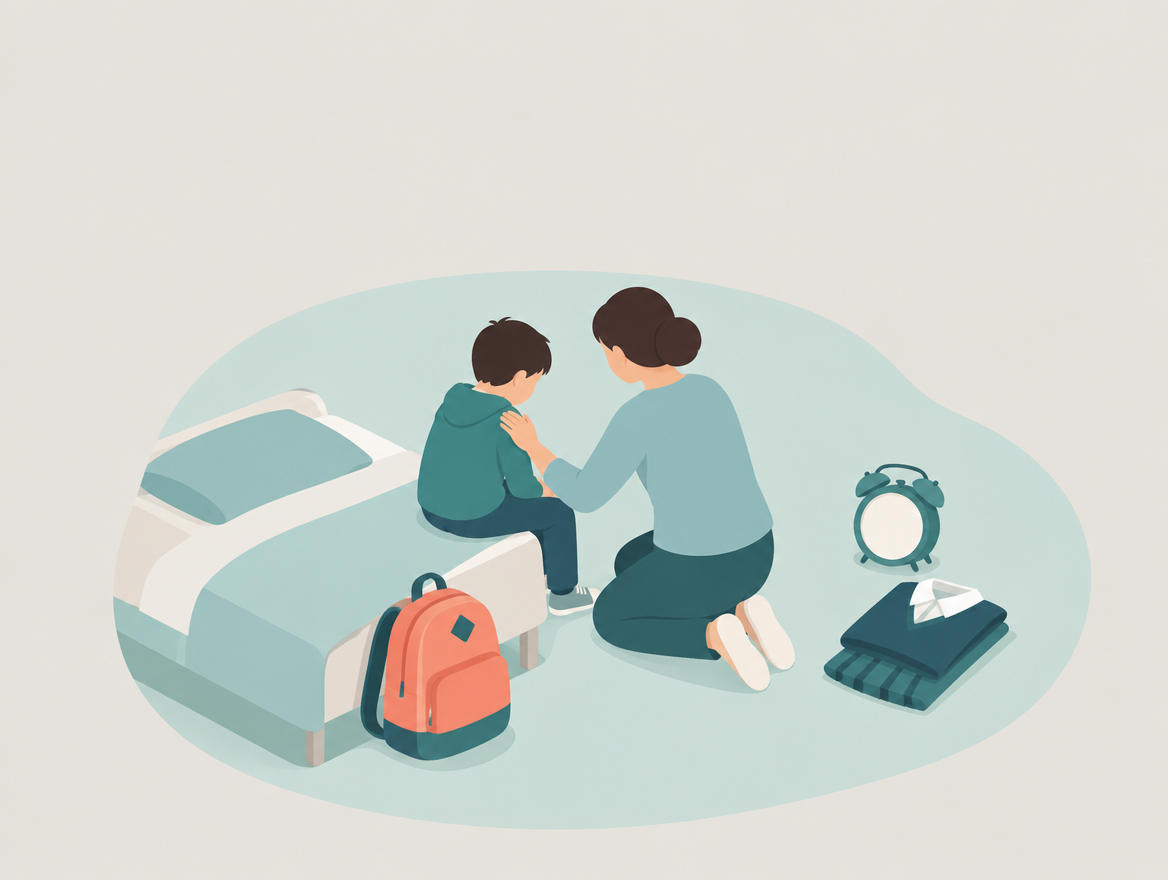
What Is Back-to-School Syndrome in Kids and Why Does It Happen?
Back-to-school syndrome is the emotional and physical stress response a child shows while adjusting to a new school term.
It’s less a medical condition than a natural reaction to change.
An unfamiliar classroom, new classmates, and a different teacher can feel like a lot for a child to handle.
Kids starting elementary school for the first time often feel real separation anxiety about being away from a parent.
Loose sleep habits from summer break and heavier phone or screen use can throw off a child’s sleep rhythm, making the adjustment even harder.
Shy kids or those who get anxious easily tend to struggle more with this transition.
Back-to-school syndrome isn’t an official diagnosis — it’s a term for the stress of adjusting to a new term.
Most kids feel better within one to two weeks.
Source: Seoul Asan Medical Center Newsroom; Severance Hospital Child Psychiatry
What Physical Symptoms Come From Back-to-School Stress?
The most common ones are stomachaches and headaches.
Sleep trouble and loss of appetite often show up alongside them.
A back-to-school physical symptom is emotional tension showing up in the body — in the stomach, head, or sleep.
These symptoms tend to cluster around school hours: right before leaving for school or right after getting home.
They often fade on weekends and school breaks, which is exactly why parents start to suspect their child is faking it.
But for the child, the pain is real, and treating it that way matters.
✅ Stomachache or nausea before school
✅ Headache or dizziness
✅ Trouble falling asleep or frequent waking
✅ Loss of appetite, constipation
✅ More irritable or on-edge than usual
Source: Health Kyunghyang (Severance Hospital)
Why Do Kids Refuse to Go to School After Break?
School refusal usually comes from a mix of friend conflicts, academic pressure, separation anxiety, parental overprotection, and a child’s temperament.
School refusal is a state where intense anxiety or fear about school makes attending itself difficult.
Unlike ordinary back-to-school syndrome, it tends to get worse over time instead of easing up.
Sometimes there’s a specific reason behind it, like conflict with a friend, fear of a teacher, or bullying.
| Feature | Back-to-School Syndrome (temporary) | School Refusal |
|---|---|---|
| Duration | Eases within 1-2 weeks | Lasts 2+ weeks, may worsen |
| Symptom pattern | Mainly around school hours | All day, even on weekends |
| Attendance | Still goes to school | Struggles to attend at all |
If symptoms last more than two weeks, show up even on weekends and breaks, or your child shows intense anxiety at the mere mention of school, consider talking to a child mental health professional.
Source: AACAP
How Can You Help a Child Who’s Struggling to Adjust?
Start by listening to your child without judgment.
Then help them get back into a steady daily rhythm.
Instead of asking “Don’t you want to go to school?” try something specific like “What was the hardest part of school today?”
Give your child a real chance to explain what’s going on.
Rather than aiming for full attendance right away, try small, step-by-step goals: going to school, then walking into the classroom, then joining a lesson.
Gradually resetting sleep and meal times before the term starts also helps.
✅ Don’t assume it’s an excuse
✅ Reset bedtime and wake time before school starts
✅ Ask specific, open-ended questions
✅ Praise small wins along the way
If school refusal or physical symptoms don’t improve despite these efforts, it’s worth consulting a child psychiatrist, and reviewing more on childhood anxiety disorders here.
Source: Child Mind Institute, CDC
Frequently Asked Questions
1. How long does back-to-school syndrome usually last?
Most cases ease up within one to two weeks. If it lasts close to a month or gets worse, talk to a professional.
2. How can I tell if my child’s stomachache is real or an excuse?
If it shows up repeatedly around school time and disappears on weekends or breaks, it’s likely back-to-school syndrome. If unexplained stomachaches persist, see a pediatrician first to rule out other causes.
3. Which age group is most affected by back-to-school syndrome?
It’s most common in early elementary schoolers, especially first-time students, but middle and high schoolers can experience it too from academic or social pressure.
4. Should I take my child to a doctor if school refusal keeps happening?
Yes. If it lasts more than two weeks or disrupts eating, sleep, or friendships, a child psychiatry consultation is recommended.
5. What’s the single most important thing a parent can do at home?
Listen to your child’s feelings without judgment. Saying “that sounds really hard” instead of “it’s nothing” helps a child open up.
References
Seoul Asan Medical Center Newsroom, “Back-to-School Syndrome” (새 학기 증후군), 2026. Link
Health Kyunghyang / Severance Hospital, “Getting Ahead of ‘Back-to-School Syndrome’: Smart Ways to Cope” (미리 알아두면 좋은 ‘새학기증후군’…현명한 대처법은?), 2026. Link
AACAP, “Children Who Won’t Go To School (Separation Anxiety),” Facts for Families. Link
CDC, “Anxiety and Depression in Children.” Link
This article is for general informational purposes only and is not a substitute for professional medical advice, diagnosis, or treatment. Please consult a qualified healthcare provider if you have health concerns.
Leave a Reply