Author: medimaster

  • Flu vs COVID Rapid Test: 3 Key Differences to Know

    Flu vs COVID Rapid Test: 3 Key Differences to Know

    SummaryFlu vs COVID rapid test: learn the 3 key differences, accuracy rates, and whether you can catch both at once.

    A fever and sore throat can feel like just a bad cold.
    But a quick swab test often reveals it’s actually the flu or COVID-19.
    The World Health Organization says these two illnesses look nearly identical early on.
    Here’s how a flu vs COVID rapid test actually tells them apart, and how much you can trust the result.

    The flu vs COVID rapid test works best as a combo kit that checks for both viruses from one swab.
    These tests detect viral proteins directly, so they’re generally less sensitive than a PCR test.
    Because co-infection is possible, doctors recommend proper testing whenever symptoms don’t improve.
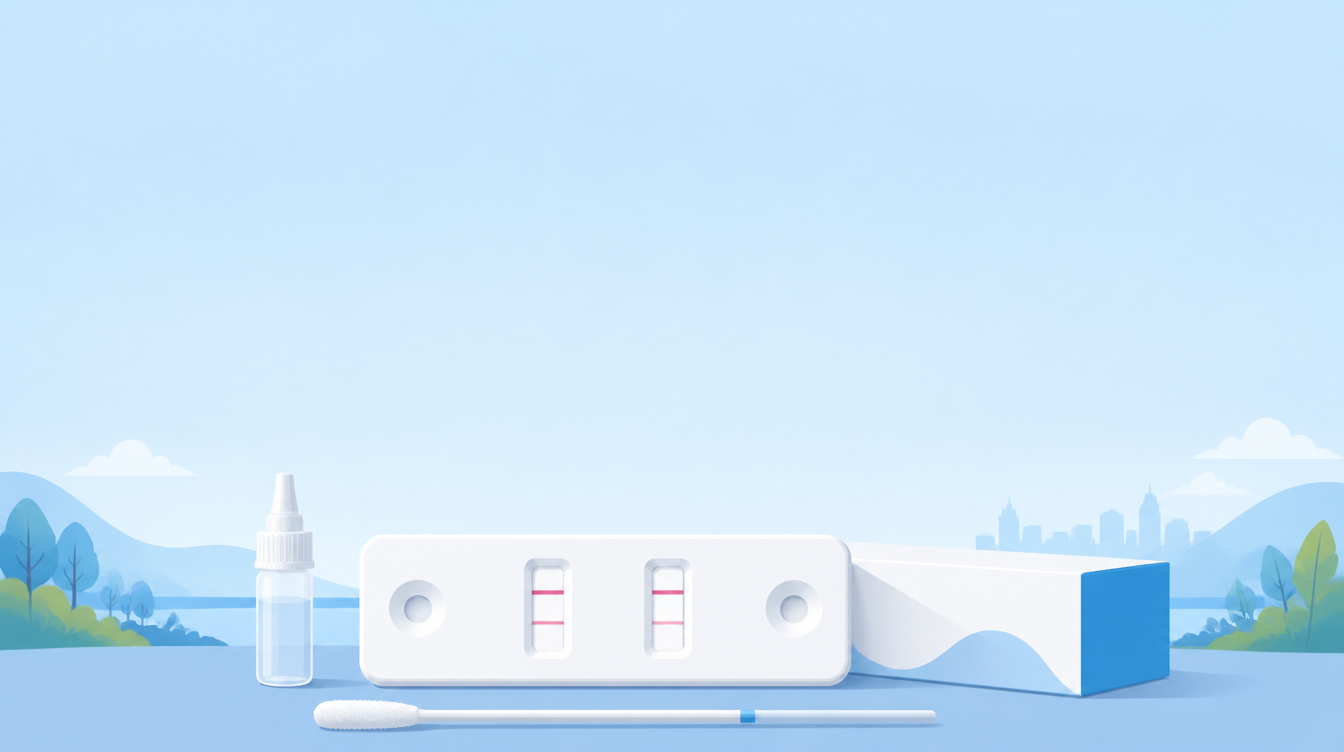
    Flu vs COVID rapid test combo kit showing separate result lines

    Can you tell flu and COVID apart just from symptoms?

    No. You really can’t reliably tell flu and COVID-19 apart by symptoms alone.
    Flu and COVID-19 are both respiratory infections that share fever, cough, sore throat, and body aches as core symptoms.

    The World Health Organization confirms symptoms alone can’t distinguish flu from COVID-19 — testing is the only reliable way.
    Mayo Clinic notes new loss of taste or smell shows up more often with COVID-19, which can be a helpful clue.
    Flu symptoms tend to hit fast, within 1 to 4 days of exposure. COVID-19 symptoms can take 2 to 14 days to appear.

    Key Point
    Fever, cough, and sore throat overlap heavily between flu and COVID-19.
    New loss of taste or smell leans more toward COVID-19.
    Only a test — rapid antigen or PCR — gives you a real answer.

    Source: World Health Organization (WHO), Mayo Clinic


    How does a flu vs COVID rapid test tell them apart?

    The most reliable option is a combo rapid antigen test that checks for COVID-19 and flu A/B from a single swab.
    A rapid antigen test is a diagnostic tool that detects viral proteins through an immune reaction to quickly confirm infection.

    These tests need a much higher viral load to produce a visible line than PCR does, so they’re naturally less sensitive.
    Combo kits flag COVID-19, flu A, and flu B as separate result lines on one strip.
    Some FDA-authorized combo tests are already sold over the counter in the U.S., no prescription required.

    Key Point
    Combo antigen tests show COVID-19, flu A, and flu B results as separate lines on the same strip.
    Some countries, including South Korea, cover hospital-administered combo tests under national health insurance — check with your clinic for coverage details.
    Always follow the swab and timing instructions in the kit exactly.

    You can find more testing guides in our Exams & Procedures Guide category.

    Source: U.S. Food and Drug Administration (FDA), Korea Disease Control and Prevention Agency (KDCA, 질병관리청)


    How accurate is a flu and COVID rapid antigen test?

    A positive result is usually reliable, but a negative result doesn’t fully rule out infection.

    FDA data on one over-the-counter combo test shows about 99% negative agreement and 92% positive agreement for COVID-19.
    The same test showed roughly 92.5% positive agreement for flu A and 90.5% for flu B.
    The CDC notes rapid antigen sensitivity for flu ranges anywhere from 50% to 90%, depending on the sample type, timing, and specific test used.

    Test Target Negative Agreement Positive Agreement
    COVID-19 ~99% ~92%
    Flu A ~99.9% ~92.5%
    Flu B ~99.9% ~90.5%
    Checklist
    ✅ Testing too early after exposure raises your risk of a false negative.
    ✅ If you’re negative but still have symptoms, retest in 1 to 2 days.
    ✅ Get a PCR test at a clinic if results seem unclear or you’re at higher risk.
    Caution
    A rapid antigen test result is informational. Always confirm your diagnosis and treatment plan with a healthcare provider.

    Source: FDA, CDC


    Can you catch flu and COVID at the same time?

    Yes, co-infection with both flu and COVID-19 has been documented.

    The WHO explains that testing is the only way to reveal whether someone has both infections at once.
    Both viruses spread through droplets and aerosols and cause nearly identical symptoms, making co-infection easy to miss without a test.
    Older adults and people with underlying conditions may see more severe symptoms with co-infection, so prompt testing matters more for these groups.

    Key Point
    Symptoms alone can’t reveal a flu-COVID co-infection.
    High-risk groups — older adults and those with chronic conditions — should seek testing and care quickly if symptoms appear.

    Source: WHO


    Frequently Asked Questions

    1. What should I do if my rapid antigen test is negative but symptoms continue?
    Early infection can produce a false negative because viral load is still low. Retest in 1 to 2 days, or get a PCR test at a clinic.

    2. Can I have flu and COVID-19 at the same time?
    Yes. Co-infection is possible, and only testing can confirm it since the symptoms look nearly identical.

    3. Can a rapid antigen test tell flu A from flu B?
    A combo rapid antigen test can flag COVID-19, flu A, and flu B as separate result lines in a single test.

    4. Is a combo flu and COVID test covered by insurance?
    Coverage varies by country and insurer. In South Korea, some hospital-administered combo tests qualify for national health insurance (건강보험, Korea’s national health insurance) — confirm with your clinic.

    5. Should I trust a positive rapid antigen test result?
    Yes, positive results are generally reliable. A negative result, though, doesn’t fully rule out infection, especially early on.

    References

    World Health Organization (WHO), “Similarities and differences between COVID-19 and Influenza,” Link
    Mayo Clinic, “COVID-19 vs. flu: Similarities and differences,” Link
    U.S. Food and Drug Administration (FDA), “FDA authorizes marketing first home flu and COVID-19 combination test outside emergency use,” Link
    U.S. Centers for Disease Control and Prevention (CDC), “Information for Clinicians on Rapid Diagnostic Testing for Influenza,” Link
    Korea Disease Control and Prevention Agency (KDCA, 질병관리청), “Rapid Antigen Test (Self-Use) Implementation Guidelines (신속항원검사(개인용) 시행 지침),” Link
    Korea Ministry of Health and Welfare / Bokjiro (보건복지부·복지로), “National Health Insurance Coverage for Combined COVID-19–Flu Diagnostic Testing (코로나19·독감 동시 진단검사 건강보험 적용),” Link

    This article is for general informational purposes only and is not a substitute for professional medical advice, diagnosis, or treatment. Please consult a qualified healthcare provider if you have health concerns.

  • Asthma Inhaler Technique: 5 Steps for Seasonal Flare-Ups

    Asthma Inhaler Technique: 5 Steps for Seasonal Flare-Ups

    SummaryAsthma inhaler technique matters most when seasons change. Learn the correct 5-step method, warning signs of a flare-up, and fall asthma care tips.

    Emergency room visits for asthma tend to climb as mornings and evenings turn colder in fall. Many people use an inhaler every single day, yet still don’t know the exact steps that get medicine into their lungs.

    Getting your asthma inhaler technique right during seasonal changes — and knowing your body’s early warning signs — can prevent a surprising number of severe flare-ups before they start.

    This guide covers the correct asthma inhaler technique for MDI and dry-powder inhalers, why asthma worsens during seasonal transitions, red-flag symptoms that need medical attention, and a fall asthma care checklist.

    Illustration showing correct asthma inhaler technique for seasonal flare-ups

    What Is the Correct Asthma Inhaler Technique?

    The correct asthma inhaler technique means shaking it, breathing out fully, pressing down as you start to inhale slowly and deeply, then holding your breath for 10 seconds. Skip even one step, and much of the dose ends up on the back of your throat instead of your airways.

    A metered-dose inhaler (MDI) is a hand-held device that releases a fixed dose of medicine using pressurized gas. A dry-powder inhaler (DPI) works differently — it needs a fast, forceful breath in to pull the powder into your lungs.

    The three most common mistakes doctors see are not exhaling fully before inhaling, pressing the canister at the wrong moment, and not holding your breath afterward. (Source: Journal of the Korean Medical Association)

    Key Point – Asthma Inhaler Technique: 8 Steps for Correct Use
    1) Remove the cap and shake well
    2) Tilt your head back slightly and breathe out fully
    3) Seal your lips around the mouthpiece
    4) Press down as you start to breathe in
    5) Inhale slowly and deeply for 3-5 seconds
    6) Hold your breath for 10 seconds
    7) Wait at least 1 minute before the next puff
    8) Rinse your mouth with water if it’s a steroid inhaler

    If timing your breath with your hand feels hard, a spacer (a holding chamber attached to the inhaler) can help. It cuts down on medicine hitting the back of your mouth, so more of it reaches your airways, which is an easy way to improve your asthma inhaler technique overall. (Source: Mayo Clinic)


    Why Does Asthma Get Worse During Seasonal Changes?

    Asthma flares up during seasonal transitions because big temperature swings, dry air, cold and flu viruses, and pollen or mold spores all hit your airways around the same time. It’s rarely one single trigger — it’s the pile-up that does the damage.

    A seasonal asthma flare-up is a worsening of symptoms caused by shifts in temperature and humidity that make your airways more reactive than usual. If you have allergic asthma, cold or dry air alone can trigger noticeable tightening of your airways.

    Fall brings a spike in cold and flu infections around back-to-school season, along with weed pollen and indoor mold — a combination that tends to hit children and teens especially hard. (Source: Pulmonology Advisor)

    That’s exactly why sticking to a careful asthma inhaler technique matters even more once the season turns — irritated airways leave less room for error.

    Seasonal Factor Effect on Your Airways
    Bigger day-night temperature swings Cold air irritation causes bronchial constriction
    Dry air Irritates airway lining, makes mucus harder to clear
    Cold and flu viruses Raises airway inflammation and flare-up risk
    Pollen and mold spores Triggers allergic swelling in the airways

    What Are the Warning Signs of an Asthma Flare-Up?

    If you’re reaching for your reliever inhaler more often, waking up coughing at night, or getting short of breath with less activity than usual, these are classic warning signs that your asthma isn’t as controlled as it should be.

    Asthma warning signs are symptoms that appear more often or more severely than your usual baseline, signaling that your treatment plan needs a review. A drop in your peak flow reading compared to your personal best is another key signal worth tracking. Struggling with your asthma inhaler technique can also make these warning signs appear more often, so it’s worth reviewing your steps regularly.

    Checklist – See a Doctor Soon If You Notice
    ✅ Using your reliever inhaler more than twice a week
    ✅ Waking up at night from coughing or tightness
    ✅ Getting winded from stairs or a short walk
    ✅ Peak flow reading below 80% of your personal best
    Caution
    If your peak flow drops below 50% of your personal best, you’re too breathless to speak in full sentences, or your lips or nails turn bluish, don’t wait for an appointment — call emergency services or get to an ER right away. (Source: CDC)

    Needing your reliever inhaler more often is itself a sign that your controller medication or treatment step may need to be adjusted.


    How Should You Manage Asthma During Fall?

    Taking your controller medication every day without skipping, limiting time outdoors on high-pollution days, and getting your flu and pneumonia vaccines are the basics of fall asthma care. Keeping your asthma inhaler technique sharp all season, alongside your daily controller medication, helps you get the full benefit from every dose.

    A controller medication is a daily long-term medicine, like an inhaled corticosteroid, that reduces airway inflammation even when you have no symptoms. The 2024 GINA (Global Initiative for Asthma) guidelines now favor using a low-dose ICS-formoterol combination as needed, rather than relying on a short-acting reliever alone. (Source: GINA)

    Key Point – Fall Asthma Care Checklist
    1) Use your controller (inhaled corticosteroid) daily, even without symptoms
    2) Limit outdoor time and wear a mask on high-pollution days
    3) Get flu and pneumococcal vaccines
    4) Keep indoor humidity around 40-60% and avoid sudden temperature shifts
    5) Always carry your reliever inhaler with you
    6) Practice your asthma inhaler technique regularly so it stays second nature

    Cigarette smoke significantly worsens airway inflammation, so quitting — and avoiding secondhand smoke at home — matters a great deal. Rather than changing your inhaler type or dose on your own, talk with your doctor about adjusting your treatment step.

    You can find more medication information in our Medications & Supplements category. (Internal link: recommend replacing with a related article once published)


    Frequently Asked Questions

    1. How many times a day should I use my inhaler?
    It depends on your specific medication and treatment step. Controller medications are usually taken at set times morning and night, while relievers are used as needed — always confirm the exact frequency and your asthma inhaler technique with your doctor or pharmacist.

    2. Is it normal for my throat to feel hoarse or burn after inhaling?
    Leftover inhaled steroid in your mouth or throat can cause hoarseness or oral thrush. Rinsing your mouth with water and spitting it out after each use helps prevent this — see your doctor if it continues.

    3. Do I really need to use a spacer?
    It’s not mandatory, but a spacer is recommended if timing your breath with your hand is difficult, especially for children and older adults. It can help more medicine reach your lungs instead of your mouth, which is a simple way to strengthen your asthma inhaler technique.

    4. Should I use more asthma medication when I catch a cold?
    Don’t increase your dose on your own — follow your asthma action plan. If you’re reaching for your reliever more often, see your doctor promptly to check whether your controller needs adjusting.

    References

    (Journal of the Korean Medical Association), “Principles of Inhaler Use in Asthma Treatment” (원제: 천식 치료에서 흡입기 사용 원칙), 2022. Link
    (Global Initiative for Asthma, GINA), “2024 GINA Summary Guide”, 2024. Link
    (Mayo Clinic), “Asthma inhalers: Which one’s right for you?” Link
    (American Lung Association), “How to Use a Metered-Dose Inhaler” Link
    (CDC), “Asthma Action Plan” Link

    This article is for general informational purposes only and is not a substitute for professional medical advice, diagnosis, or treatment. Please consult a qualified healthcare provider if you have health concerns.

  • Fall Seasonal Depression: 5 Ways to Overcome It Plus a Self-Check

    Fall Seasonal Depression: 5 Ways to Overcome It Plus a Self-Check

    SummaryWhy does fall trigger seasonal depression? Self-check the symptoms and try 5 doctor-backed ways to manage fall seasonal depression naturally.

    You start feeling drained the moment the air turns cool, and you can’t quite explain why.

    It’s easy to write it off as “the fall blues,” but if the same slump shows up around the same time every year, it could be seasonal affective disorder (SAD).

    Depressive symptoms are known to rise between fall and winter, when daylight hours shrink. 🍂

    This guide covers fall seasonal depression — why it happens, a self-check symptom list, and 5 practical ways to manage it, plus when it’s time to see a doctor.

    Light therapy and simple lifestyle changes help many people, so let’s go through the specifics.

    Illustration of fall seasonal depression and ways to overcome it

    Why Do People Feel More Depressed in Fall? (Causes)

    Short answer: fall’s mood dip happens because less daylight throws off your brain chemistry.

    Seasonal affective disorder (SAD) is a form of depression that follows a seasonal pattern, typically showing up in fall and winter and easing in spring.

    As daylight decreases in fall, your serotonin levels tend to drop while melatonin, the hormone that makes you sleepy, rises — and that combination throws off your circadian rhythm.

    That shift can leave you feeling low-energy and down (Source: Yonsei Severance Hospital Health Information, 2024).

    According to the Mayo Clinic, the exact cause isn’t fully understood, but seasonal change is thought to disrupt your serotonin-melatonin balance and your body’s internal clock (Source: Mayo Clinic, 2024).

    Key Point
    Less sunlight in fall and winter → lower serotonin, higher melatonin → disrupted circadian rhythm → fatigue and low mood can follow.

    How Can You Self-Check for Seasonal Depression? (Checklist)

    Short answer: if the same depressive pattern returns for two or more years around the same season and lifts at other times, SAD is worth considering.

    Per Severance Hospital’s health information, you can suspect SAD when low mood, loss of interest, sleep changes, fatigue, and poor concentration recur regularly during a specific time of year (Source: Yonsei Severance Hospital, 2024).

    Unlike typical depression, fall/winter-onset SAD often comes with oversleeping and increased appetite or weight gain rather than insomnia and appetite loss (Source: Health Kyunghyang, 2023).

    Checklist (the more boxes you check, the more worth discussing with a professional)
    ✅ Your mood dips around the same time every year (usually fall to winter)
    ✅ You sleep more than usual and struggle to get up in the morning
    ✅ You crave carbs or sweets and you’re gaining weight
    ✅ You’ve lost interest in things you used to enjoy
    ✅ You feel tired easily and can’t concentrate
    Caution
    This checklist is for general reference only and can’t replace a medical diagnosis. See a psychiatrist for an accurate evaluation.

    If you’re having thoughts of ending your life, reach out right away. In Korea, call 109 (24-hour suicide prevention hotline) or 1577-0199 (mental health crisis line). In the US, call or text 988 (Suicide & Crisis Lifeline). Outside these countries, contact your local emergency number (Source: Korea Ministry of Health and Welfare, 2024; 988lifeline.org).


    How Can You Overcome Fall Seasonal Depression? (Practical Strategies)

    Short answer: light therapy plus regular exercise and outdoor sunlight are the most recommended ways to manage fall seasonal depression.

    According to Mayo Clinic, light therapy means sitting near a special light box within the first hour of waking, and it may shift brain chemicals tied to mood (Source: Mayo Clinic, 2024).

    Dr. Park Hyung-keun, a psychiatrist at Seoul Asan Hospital, notes that exercise intense enough to raise your heart rate and breathing — done 3+ times a week, 30+ minutes each, for 9+ weeks — can help ease depressive symptoms (Source: Health Kyunghyang, 2023).

    Method How to Do It
    Light therapy Sit near a light box within an hour of waking up
    Regular exercise 3+ times a week, 30+ minutes each, for 9+ weeks
    Sunlight exposure Take a daytime walk outdoors for natural light
    Sleep habits Keep a consistent wake and bedtime every day
    Key Point
    Many people improve with lifestyle changes alone — light therapy, exercise, sunlight, and consistent sleep — no medication needed. If symptoms are severe, a doctor may add medication to the plan.

    When Should You See a Doctor for Seasonal Depression?

    Short answer: if you can barely function day to day, or you’re having thoughts of not wanting to live, see a psychiatrist right away.

    Mayo Clinic recommends getting professional help immediately if low mood lasts more than two weeks and interferes with work or relationships, or if you have suicidal thoughts (Source: Mayo Clinic, 2024).

    If you’re in Korea, outpatient psychiatric visits are covered under National Health Insurance (Korea’s public health insurance system that most residents and long-term visa holders are enrolled in), so cost shouldn’t be a major barrier.

    Caution
    Don’t wait to see a doctor if you notice:
    ⚠ Low mood lasting more than 2 weeks
    ⚠ Trouble functioning at work, school, or in relationships
    ⚠ Thoughts of suicide or self-harm

    Frequently Asked Questions

    1. How long does seasonal affective disorder last?
    It typically appears as daylight decreases in fall and winter, then eases naturally in spring. If symptoms are severe or persistent, talk to a doctor.

    2. Does light therapy actually work?
    Per Mayo Clinic and related research, light therapy is one of the main treatments for SAD, and about half of patients see improvement. Results vary by person, so check with a doctor before starting.

    3. What’s the difference between regular depression and seasonal depression?
    Regular depression often involves insomnia and appetite loss, while seasonal depression more commonly comes with oversleeping and weight gain. Individual cases vary, so a professional evaluation is the only way to be sure.

    4. Can vitamin D supplements help?
    Reduced sunlight can affect vitamin D synthesis and serotonin levels, but supplement effects vary by individual health status. Always talk to a doctor or pharmacist before taking any supplement.

    Want to read more? Check out the Disease Encyclopedia category. (Internal link: recommend replacing with a related article once published)

    References

    Mayo Clinic, “Seasonal affective disorder (SAD) — Symptoms & causes,” 2024. Link
    Mayo Clinic, “Seasonal affective disorder (SAD) — Diagnosis & treatment,” 2024. Link
    National Institute of Mental Health (NIMH), “Seasonal Affective Disorder.” Link
    Cleveland Clinic, “Seasonal Depression (Seasonal Affective Disorder).” Link
    Yonsei Severance Hospital, “Seasonal Affective Disorder (계절성 정동장애),” 2024. Link
    Health Kyunghyang (헬스경향), “Feeling Down Since Fall? Watch for Increased Appetite and Sleep,” 2023. Link
    Korea Ministry of Health and Welfare, “Suicide Prevention Hotlines Unified Under ‘109’ Starting January 1,” 2024. Link

    This article is for general informational purposes only and is not a substitute for professional medical advice, diagnosis, or treatment. Please consult a qualified healthcare provider if you have health concerns.

  • Korea Childbirth Accident Compensation Expands in 2026: What Changed

    Korea Childbirth Accident Compensation Expands in 2026: What Changed

    SummaryKorea childbirth accident compensation now covers severe maternal disability starting August 2026. See updated payout limits and how to apply.

    What happens when medical staff do everything right, yet a childbirth still ends in tragedy? This is exactly where Korea childbirth accident compensation comes in.
    For years, Korean mothers and families had no clear path to compensation if the hospital wasn’t at fault.

    Starting in August 2026, Korea’s state compensation for unavoidable childbirth accidents now covers severe maternal disability too — so it’s worth knowing who qualifies and how to apply.

    Korea’s state compensation for unavoidable childbirth accidents (불가항력 분만사고 국가보상) pays up to 300 million won when a delivery accident happens with no medical negligence.
    This latest update adds severe maternal disability to the existing list of neonatal cerebral palsy, neonatal death, and maternal death.
    Here’s what changed and how to apply.

    Korea childbirth accident compensation expansion 2026 infographic

    What Is Korea Childbirth Accident Compensation for Unavoidable Deliveries?

    It’s a government program that pays financial support to mothers and families when a childbirth accident occurs despite medical staff meeting their full duty of care.

    An unavoidable childbirth accident is a medical accident that occurs during delivery even though the healthcare provider was not negligent.
    The program is run by the Korea Medical Dispute Mediation and Arbitration Agency (한국의료분쟁조정중재원, known as K-medi), a public body that mediates medical disputes and administers this compensation fund.
    Since December 2023, the government has covered 100% of the fund — previously the government and the delivering hospital split it 70:30.

    Key Point
    ✔ You can be compensated even with no hospital fault
    ✔ Government has covered 100% of the fund since December 2023
    ✔ Maximum payout raised to 300 million won (approx. $214,000) in July 2025

    What Changed in Korea’s Childbirth Accident State Compensation This Time?

    Since August 2026, severe maternal disability is newly covered.
    Before this, only neonatal cerebral palsy, neonatal death, and maternal death qualified.

    Severe maternal disability means a disability classified as “severe” under Korea’s Act on Welfare of Persons with Disabilities (장애인복지법).
    The exact recognition criteria are set separately by the Minister of Health and Welfare.

    Key Point (Before vs. After)
    Before: only neonatal cerebral palsy/death and maternal death
    Since August 2026: severe maternal disability added
    From May 2027: coverage may expand to unavoidable accidents during other high-risk essential procedures, not just childbirth
    Caution
    Whether a disability qualifies as “severe” is reviewed case by case.
    Since the detailed criteria are set by government notice, always confirm the current standard with K-medi or your hospital before assuming eligibility.

    How Much Compensation Can You Receive by Accident Type?

    The payout cap depends on the type of accident, and severe neonatal cerebral palsy has the highest cap at 300 million won.

    Accident Type Maximum Compensation
    Neonatal cerebral palsy (severe) 300 million won (approx. $214,000)
    Neonatal cerebral palsy (mild) 150 million won (approx. $107,000)
    Maternal death 100 million won (approx. $71,400)
    Neonatal death 30 million won (approx. $21,400)
    Fetal death 20 million won (approx. $14,300)
    Severe maternal disability (new) Set case by case per official criteria

    Source: Korea Ministry of Health and Welfare, as reported by MoneyToday (Aug 11, 2026).


    Who Can Apply, and How Does the Process Work?

    The patient herself, an heir, or an authorized representative can apply to K-medi in person, online, by mail, or by fax. Understanding how Korea childbirth accident compensation applications move through this process can help you prepare the right documents in advance.

    The process runs: file a medical dispute mediation request → medical accident review → if no medical negligence is found, you’re notified to file a compensation claim → submit the claim.
    The Medical Accident Compensation Review Committee then decides within 60 days of receiving the claim, extendable to 90 days.

    Checklist (Basic Documents)
    ✅ Mediation application form and attachment
    ✅ Consent form for collecting sensitive personal information
    ✅ Copy of ID
    ✅ Copy of bank account
    ✅ Copy of medical records, imaging data

    Heirs or representatives may need extra documents, such as a family relationship certificate or power of attorney.
    Applicants who receive basic livelihood benefits or are recognized as national merit honorees have the application fee waived.

    If you’re planning delivery in Korea and want to understand hospital procedures beforehand, check the related guide.
    (Internal link: recommend replacing with a related article once published) Visit the Hospital Guide for Korea


    Frequently Asked Questions

    1. Who can apply for compensation?
    The mother herself, an heir, or an authorized representative can apply. If there are multiple heirs, a power of attorney is required.

    2. Does it cost anything to apply?
    Some fees may apply, but they’re waived for basic livelihood recipients and national merit honorees.

    3. What’s the standard for recognizing severe maternal disability?
    It follows the “severe” disability classification under the Act on Welfare of Persons with Disabilities, with detailed criteria set by the Minister of Health and Welfare via official notice.

    4. How long does the review take?
    The Compensation Review Committee decides within 60 days of receiving your claim, extendable up to 90 days.

    5. Will coverage expand further?
    From May 2027, coverage is expected to extend beyond childbirth to unavoidable accidents during other high-risk essential medical procedures.

    References

    (Rapportian), “Korea’s State Compensation for Unavoidable Childbirth Accidents Expands to Cover Severe Maternal Disability” (불가항력 분만 의료사고 국가보상, ‘산모 중증장애’까지 확대), 2026. Link
    (MoneyToday), “State Compensation for Maternal Severe Disability from Unavoidable Childbirth Accidents Expands This Month” (불가항력 분만사고, 산모 중증장애도 국가 보상…이달부터 확대), 2026. Link
    (DocDocDoc), “State Also Compensates Maternal Severe Disability from Unavoidable Childbirth Accidents” (불가항력 분만사고, 산모 중증장애도 국가가 보상), 2026. Link
    (Korea Medical Dispute Mediation and Arbitration Agency, K-medi), “Unavoidable Medical Accident Compensation Program,” Official Website. Link

    This article is for general informational purposes only and is not a substitute for professional medical advice, diagnosis, or treatment. Please consult a qualified healthcare provider if you have health concerns.

  • Scarlet Fever Symptoms in Children: 4 Early Signs to Know

    Scarlet Fever Symptoms in Children: 4 Early Signs to Know

    SummaryScarlet fever symptoms in children start with fever and sore throat, then a sandpaper rash. Learn the signs, how it spreads, and school return timing.

    If your child suddenly spikes a fever and complains of a sore throat, then a sandpaper-like rash spreads across their body a day or two later, it may be more than a common cold — it could be an early sign of scarlet fever.

    According to Korea’s Disease Control and Prevention Agency (KDCA), scarlet fever reports rose about 2.5 times in 2025 compared with the previous year, and children under 10 made up 86.8% of cases (Source: KDCA, Jun. 2025).

    In group settings like daycare and school, one infected child can spread it quickly, so recognizing scarlet fever symptoms in children early really matters.

    This article covers the classic scarlet fever symptoms in children, how the infection spreads, and how long kids typically need to stay home from school. If fever, a strawberry tongue, and a rough rash appear in sequence, see a pediatrician promptly.

    Illustration of scarlet fever symptoms in children showing strawberry tongue and rash

    What Are the Early Scarlet Fever Symptoms in Children?

    Scarlet fever symptoms in children usually start with a sudden fever and sore throat, followed within 12 to 48 hours by a sandpaper-textured rash and a strawberry tongue.
    Scarlet fever is an acute infection caused by a toxin released by group A Streptococcus bacteria, causing high fever and a distinctive rash.

    Symptoms usually begin 2 to 5 days after exposure to the bacteria (Source: CDC). Early signs — a fever of 101°F (38.3°C) or higher, sore throat, headache, chills, vomiting, abdominal pain, and swollen neck glands — can look a lot like a common cold or strep throat.

    Within a day or two, a rash appears, starting on the face and neck and spreading to the trunk and limbs. It feels rough like sandpaper, and the skin around the mouth often stays pale while the rest of the face flushes. Skin folds at the armpits, elbows, and groin often look deeper red.

    The tongue is coated white for the first day or two, then peels by day 4 or 5 to reveal a bumpy, red “strawberry tongue.” The rash and redness usually fade after about a week, often followed by peeling skin on the fingers, toes, and groin (Source: Mayo Clinic).

    Key Point
    Before the rash appears, fever and sore throat alone are hard to tell apart from a cold. If a strawberry tongue or sandpaper rash shows up, see a pediatrician to rule out scarlet fever.
    Early Symptom Checklist
    ✅ Sudden fever of 101°F (38.3°C) or higher
    ✅ Bumpy, red strawberry tongue
    ✅ Sandpaper-textured rash with a pale ring around the mouth

    How Does Scarlet Fever Spread?

    Scarlet fever spreads through respiratory droplets from coughing or sneezing, and also through touching a contaminated surface and then your mouth, nose, or eyes.
    Transmission happens when respiratory secretions from an infected person reach another person’s nose, mouth, or eyes.

    Per the CDC, group A strep — the bacteria behind scarlet fever — spreads most commonly through coughing and sneezing droplets.

    Sharing cups, utensils, or towels with an infected person, or touching contaminated doorknobs and toys before touching your face, can also spread it.

    Crowded settings like daycare centers and schools carry a higher risk of spread because kids are in close, frequent contact.

    Key Point
    Scarlet fever spreads like a cold — through droplets. Frequent handwashing and covering coughs go a long way toward cutting transmission risk.
    Caution
    If a sibling or classmate is diagnosed with scarlet fever, avoid close contact and wash hands more often until that child finishes their antibiotic course.

    How Long Should a Child Stay Home From School?

    A child diagnosed with scarlet fever should generally stay home from daycare or school until at least 24 hours after starting appropriate antibiotics.
    This exclusion period keeps a still-contagious child from spreading the infection to other kids in group settings.

    Under Korea’s School Health Act (학교보건법 시행령 제22조), school administrators can require a student diagnosed with a highly contagious illness to stay home.

    Because antibiotics greatly reduce contagiousness within about 24 hours, children can typically return once at least 24 hours have passed and their fever has broken.

    The exact return date can vary with each child’s recovery, so confirm timing with your pediatrician before sending your child back.

    Before Returning to School
    – Has it been at least 24 hours since starting antibiotics?
    – Has the fever gone down?
    – Is the child’s energy level back to normal?
    – Has the pediatrician confirmed it’s okay to return?

    How Is Scarlet Fever Treated?

    Scarlet fever is treated with penicillin or amoxicillin, and finishing the full prescribed course matters more than symptom relief alone.
    Treatment means clearing the group A strep bacteria with antibiotics, which shortens symptoms and reduces contagiousness at the same time.

    There’s no vaccine for scarlet fever, but antibiotics speed up recovery and lower the risk of complications like ear or sinus infections.

    Penicillin or amoxicillin are first-line treatments; erythromycin or another alternative is used for kids with a penicillin allergy.

    Stopping antibiotics early — even once symptoms improve — can leave bacteria behind and raise the risk of relapse, so stick to the full course your doctor prescribes.

    In Korea, seeing a pediatrician for suspected scarlet fever is affordable thanks to national health insurance (건강보험 — Korea’s public health insurance system that covers most clinic visits), so don’t delay a checkup.

    Key Point
    Never stop antibiotics on your own. Even after symptoms fade, finishing the full prescribed course is what actually prevents relapse.

    For more information on common childhood infections, visit our Disease Encyclopedia. (Internal link: replace with a related article after publishing)


    Frequently Asked Questions

    1. Can adults get scarlet fever too?
    Scarlet fever mostly affects children under 10, but adults can catch it too if exposed to group A strep. It’s just less common than in kids in group care settings.

    2. Where does the scarlet fever rash usually start?
    The rash typically starts on the face or neck, then spreads to the chest, trunk, and limbs, often leaving a pale area around the mouth.

    3. Can my child bathe or shower while they have scarlet fever?
    Regular bathing for hygiene is generally fine, but avoid scrubbing the rash hard. Ask your doctor for specific skin-care guidance during the visit.

    4. Can you get scarlet fever more than once?
    Yes. There are multiple strains of group A strep, so having had scarlet fever once doesn’t protect against a different strain later.

    5. My other child was just diagnosed — how do I protect my other kids?
    There’s no vaccine for scarlet fever, so handwashing, avoiding shared cups and towels, and limiting close contact are currently the most effective ways to lower the risk.


    References

    Korea Disease Control and Prevention Agency (KDCA, 질병관리청), “Guidance on Preventing and Managing the Rise in Scarlet Fever Cases” (성홍열 발생 증가에 따른 예방·관리 당부), Jun. 2025, Link
    KDCA National Health Information Portal (국가건강정보포털), “Scarlet Fever” (성홍열), Ongoing update, Link
    CDC, “About Scarlet Fever,” Ongoing update, Link
    Mayo Clinic, “Scarlet fever – Symptoms & causes,” Ongoing update, Link

    This article is for general informational purposes only and is not a substitute for professional medical advice, diagnosis, or treatment. Please consult a qualified healthcare provider if you have health concerns.

  • COVID Surge Symptoms 2026: When Will Korea’s Wave Peak?

    COVID Surge Symptoms 2026: When Will Korea’s Wave Peak?

    SummaryKorea's COVID surge symptoms 2026 include sore throat, cough, and fever. See when the September resurgence is expected to peak and why cases are rising.

    Korea’s COVID-19 detection rate nearly tripled in just three weeks this August.
    According to the Korea Disease Control and Prevention Agency (KDCA), the rate hit 9.1% in the second week of August, and hospital admissions have climbed for four straight weeks.
    That’s why people are searching for COVID surge symptoms 2026 this September.
    Here’s what’s driving the numbers, when the wave is expected to peak, and what to watch for.

    In short: this season’s main symptoms are sore throat, cough, and fever, and the wave is expected to peak sometime between late August and late September 2026.
    The rise in cases is linked to a new Omicron sublineage called BA.3.2 (the “Cicada variant”) plus a concurrent surge in China.

    Chart showing Korea's September 2026 COVID surge symptoms and detection rate

    What Are the COVID Surge Symptoms 2026 to Watch For?

    The main symptoms this round are sore throat, cough, fever, nasal congestion, and fatigue.
    Some patients also report mild stomach upset.

    The September 2026 COVID resurgence is the seasonal rebound in cases and hospitalizations that typically appears between August and September after a summer lull. Korean health authorities have identified BA.3.2 — nicknamed the “Cicada variant” — as this season’s dominant strain.

    This lineage carries roughly 70 to 75 mutations on its spike protein, which is why immune evasion is getting attention.
    Still, reported symptoms aren’t meaningfully different from earlier Omicron waves. (Source: KDCA, 2026)

    Key Point
    This wave isn’t defined by a distinctive symptom like hoarseness — it’s the same sore throat, cough, and fever combo as a bad cold. Recognizing these COVID surge symptoms 2026 early is the easiest way to decide whether a home antigen test is needed.

    When will this COVID resurgence peak?

    KDCA expects this wave to peak sometime between the fourth week of August and the fourth week of September 2026.
    The exact timing could shift depending on how the detection rate trends.

    A resurgence’s peak is simply the point in a cycle when case counts and hospitalizations are highest. KDCA projects this year’s overall wave at 11% to 48% of last year’s size, with hospitalizations at peak ranging from roughly 52 to 223 patients nationwide. (Source: KDCA, 2026)

    The last four weeks of tracked data show a steady climb:

    Week (dates) Outpatient detection rate Hospitalized patients
    Week 30 (7/19–7/25) 3.2% 23
    Week 31 (7/26–8/1) 5.9% 27
    Week 32 (8/2–8/8) 5.7% 48
    Week 33 (8/9–8/15) 9.1% 56

    Source: KDCA, “Weekly Infectious Disease Surveillance Bulletin (Week 33, 2026)”

    Caution
    Sentinel surveillance numbers are trend indicators, not individual diagnoses. A test is the only way to confirm whether you’re infected.

    Why are COVID-19 cases rising again?

    Three things are driving the increase: a new variant, seasonal conditions, and a surge in a neighboring country.

    The Cicada variant (BA.3.2) gets its nickname from the way it resurfaced after lying low, similar to a cicada’s life cycle, and it’s now been detected in roughly 30 countries including Korea.
    It appears to partially evade immunity built up from earlier infections or vaccination. (Source: KDCA, 2026)

    China reported over 520,000 new cases in July alone, with the positivity rate topping 20% for five straight weeks.
    Chinese health authorities point to summer heat and humidity as major factors and say most cases are mild. (Source: YTN, Aug 23, 2026)

    Globally, the WHO continues to track new Omicron descendant lineages as “variants under monitoring” and has so far found no evidence that these newer lineages cause more severe disease than earlier ones. (Source: WHO, 2025)

    Meanwhile, KDCA fully lifted its “Attention”-level COVID-19 alert on July 7, 2026, after 6 years and 6 months of continuous alert status.
    That doesn’t mean the virus is gone — it means the intensive-management phase has ended.

    Key Point
    Lifting the alert level means a shift to routine management, not eradication. KDCA has expanded its sentinel surveillance network from 300 to 800 clinics to keep tracking new variants.

    How can you protect yourself during this wave?

    The single most important step for high-risk patients is getting checked promptly once COVID surge symptoms 2026 appear.
    Most otherwise-healthy adults recover with rest and fluids alone.

    High-risk groups include older adults, people with chronic conditions, pregnant women, and anyone who is immunocompromised.
    Health authorities recommend that these individuals, and household members living with them, seek prompt medical evaluation if sore throat, cough, or fever appear. (Source: KDCA, 2026)

    Current vaccines are still considered likely to help reduce the risk of severe illness.
    Talk to a doctor about timing and whether a booster makes sense for you.

    If you do need to see a doctor, the visit is generally covered under National Health Insurance (Korea’s public health insurance system for residents), which keeps out-of-pocket costs low.

    Checklist
    -Consider a mask in crowded indoor spaces
    -Use a home antigen test if symptoms appear
    -Check for symptoms before visiting high-risk relatives
    -See a doctor if sore throat or fever persists
    -Discuss vaccine timing with your doctor

    You can find more condition-specific guides in our Disease Encyclopedia. (Internal link: recommended to replace once a related article is published)


    Frequently Asked Questions

    1. Is the Cicada variant (BA.3.2) more dangerous than earlier ones?
    It carries more mutations, so partial immune evasion is possible, but there’s no evidence yet that it causes more severe illness.

    2. Do I need another vaccine dose this fall?
    High-risk individuals may want to consider it, but timing and necessity are best decided with a doctor.

    3. How do I tell COVID apart from a regular cold?
    Symptoms alone usually aren’t enough — a home antigen test is the most reliable way to check.

    4. Should high-risk groups be extra careful?
    Yes. Older adults, people with chronic conditions, and pregnant women should seek medical care quickly if symptoms appear.


    References

    (KDCA), “Weekly Infectious Disease Surveillance Bulletin (Week 33, 2026)” (2026년 감염병 표본감시 주간소식지 33주차), 2026. Link
    (News1), “Signs of Renewed COVID Spread: KDCA Predicts Scale Below Half of Last Year” (코로나 재확산 조짐에… 질병청 “유행 규모 작년 절반 이하로 예상”), 2026. Link
    (Maeil Shinmun), “Korea’s COVID Detection Rate Nearly Triples in Three Weeks” (국내 코로나19 검출률 3주 새 2.8배…여름 끝자락 다시 고개), 2026. Link
    (YTN), “China Reports 520,000 COVID Cases in a Month, Korea’s Hospitalizations Up 2.8x” (중국, 1달 52만 명 코로나 확진…한국도 3주 새 입원 2.8배↑), 2026. Link
    (WHO), “TAG-VE Risk Evaluation for SARS-CoV-2 Variant Under Monitoring: XFG”, 2025. Link


    This article is for general informational purposes only and is not a substitute for professional medical advice, diagnosis, or treatment. Please consult a qualified healthcare provider if you have health concerns.

  • Glimepiride Recall Korea: 3 Steps to Check Your Diabetes Medication

    Glimepiride Recall Korea: 3 Steps to Check Your Diabetes Medication

    SummaryGlimepiride recall Korea: one batch of Geulimideu-jeong 2mg was pulled in August 2026. Here's the lot number and 3 steps to check your medication.

    Imagine taking your daily diabetes pill without knowing it might already be under recall. That’s the glimepiride recall Korea officials just announced for a widely used type 2 diabetes drug.

    In August 2026, Korea’s Ministry of Food and Drug Safety (MFDS) ordered a recall of a batch of Geulimideu-jeong 2mg (글리미드정2mg), a glimepiride tablet made by Guju Pharm (구주제약), after concerns emerged about possible foreign substance contamination during manufacturing. If you or a family member takes this medication in Korea, the natural next question is simple: is the box in your medicine cabinet part of the recalled batch?

    This article covers exactly which batch is affected by the glimepiride recall Korea order, why it happened, and a 3-step process to check whether your own diabetes medication is included. We also explain what to do if you’ve already taken the recalled batch.

    glimepiride recall Korea diabetes medication lot number check

    Glimepiride Recall Korea: Which Products Are Affected?

    Yes, but only one specific lot of Geulimideu-jeong 2mg made by Guju Pharm is affected, not every box of the product. The glimepiride recall Korea authorities issued applies to that single lot only, not the entire product line.

    Geulimideu-jeong 2mg is a tablet containing 2mg of glimepiride, used alongside diet and exercise to help control blood sugar in people with type 2 diabetes. It’s typically prescribed once daily, before breakfast.

    Item Detail
    Product Geulimideu-jeong 2mg (글리미드정2mg), glimepiride
    Manufacturer Guju Pharm (구주제약)
    Recalled lot number 10662601
    Expiration date April 7, 2029
    Recall order date August 13, 2026
    Package sizes 30 tablets/bottle, 300 tablets/bottle
    Recall type Voluntary recall (foreign substance contamination concern)
    Key Point
    Only lot number 10662601 is recalled — not every bottle of Geulimideu-jeong 2mg. If your bottle shows a different lot number, it isn’t part of this recall.

    Why Was It Recalled? What Does “Foreign Substance Contamination” Mean?

    A concern arose that a substance that shouldn’t be in the medication may have entered it during manufacturing.

    Foreign substance contamination means an unintended material got mixed into a medication during production or packaging. MFDS classified this as a voluntary recall by the manufacturer, triggered by a contamination “concern” rather than a confirmed, described hazard.

    The exact material and how much of it may be present haven’t been disclosed publicly. Recalls like this are often precautionary — pulling stock from circulation before safety is fully confirmed either way.

    Caution
    Since the exact substance and its risk to health haven’t been officially confirmed, don’t assume the worst — but do stop taking the affected lot and watch for any unusual symptoms.

    How Can I Check If My Own Diabetes Medication Is Recalled?

    Check three things printed on the packaging, in order: product name, manufacturer, and lot number.

    If you received loose pills from a pharmacy without the original box, ask your pharmacy directly — that’s the most reliable way to confirm.

    Checklist
    ✅ Confirm the product name reads “Geulimideu-jeong 2mg (글리미드정2mg)”
    ✅ Confirm the manufacturer is “Guju Pharm (구주제약)”
    ✅ Confirm the lot number on the bottle or box is “10662601”
    ✅ Double-check via MFDS’s Nedrug portal (nedrug.mfds.go.kr) recall notices

    If even one of these four doesn’t match, your medication isn’t part of the glimepiride recall Korea. If all four match, it is.

    For more on managing diabetes medication in Korea, see our related articles. Visit the Medications & Supplements category (Internal link: recommend replacing with related post after publishing)


    What Should I Do If I’ve Already Taken the Recalled Medication?

    Stop taking pills from the affected lot, but don’t stop your diabetes treatment on your own — talk to a doctor first. Anyone caught up in the glimepiride recall Korea announced should follow these steps carefully.

    Suddenly stopping a diabetes medication can cause blood sugar to spike, so a doctor needs to decide whether you need a replacement prescription.

    Key Point
    1) Stop taking pills from lot 10662601 2) Don’t throw the rest away yourself — return them to the pharmacy where you bought them 3) See a doctor or pharmacist before switching medications

    If you notice stomach pain, hives, or any symptom that feels out of the ordinary, visit a nearby clinic or hospital. If you’re not enrolled in Korea’s National Health Insurance (건강보험, Korea’s public health insurance system covering most residents), a private clinic visit is still possible but will cost more out of pocket — worth knowing if you’re new to the Korean healthcare system.


    Frequently Asked Questions

    1. Q. I got loose pills from a pharmacy and don’t know the lot number. How do I check?
    A. Ask the pharmacy that dispensed your medication — they can look up the lot number used at the time. Contacting the pharmacy or your clinic directly is the most reliable option.

    2. Q. I’ve already taken pills from the recalled lot for a few days. Should I be worried about side effects?
    A. MFDS hasn’t disclosed the specific substance or its health risk. If you haven’t had unusual symptoms like stomach pain or an allergic reaction, there’s no need to panic — but see a doctor if anything feels off.

    3. Q. Can I just stop taking my diabetes medication?
    A. Stopping on your own isn’t recommended, since blood sugar can spike suddenly. Stop the recalled lot, but let a doctor decide whether you need a replacement prescription.

    4. Q. Are other glimepiride medications from different manufacturers also recalled?
    A. No. The glimepiride recall Korea issued is limited to one specific lot (10662601) from Guju Pharm. Glimepiride products from other manufacturers, or other lots from Guju Pharm, aren’t affected.

    5. Q. Where do I return recalled medication?
    A. Start with the pharmacy where you bought it. If needed, Guju Pharm or the MFDS Nedrug portal can guide you through the return or exchange process.


    References

    (KPA News, Korea), “Guju Pharm Recalls ‘Geulimideu-jeong 2mg’ Over Contamination Concerns” (구주제약 ‘글리미드정2mg’ 회수…이물 혼입 우려), 2026. Link

    (Ministry of Food and Drug Safety, Korea), “Nedrug Recall & Disposal Notices” (의약품안전나라 회수·폐기 공고). Link

    (Mayo Clinic), “Glimepiride (Oral Route),” 2026. Link


    This article is for general informational purposes only and is not a substitute for professional medical advice, diagnosis, or treatment. Please consult a qualified healthcare provider if you have health concerns.

  • Snake Bite Antivenom Hospital Korea: 4 Key Steps

    Snake Bite Antivenom Hospital Korea: 4 Key Steps

    SummaryBitten by a snake in Korea? Here's how to find the nearest snake bite antivenom hospital Korea offers, plus the right first aid steps and how long treatment usually takes.

    Snake bites spike every summer near Korea’s mountains, farms, and hiking trails.

    According to Korea’s disease control agency (KDCA), 60.2% of snakebite patients over the past five years (2021-2025) needed hospitalization, and more than half of all cases (56.8%) happened between July and September. The moment you’re bitten, the priority is staying calm and getting to a hospital with antivenom fast.

    This guide covers everything you need about a snake bite antivenom hospital Korea relies on for treatment, the right first aid steps, and how long hospital treatment typically takes. Bottom line: keep the bite below heart level and call 119 (Korea’s version of 911) right away.

    뱀 물림 항뱀독소 병원을 빠르게 찾는 방법, 119 신고 순서와 응급처치 요령, 실제 입원 치료 기간과 부작용까지 한눈에 정리했습니다.

    What should I do first if a snake bites me?

    Get away from the snake, call 119 immediately, and keep the bitten area below heart level while staying as still as possible.

    Snake bite first aid is the set of actions you take to slow venom spread and get to a hospital as fast as possible. Most venomous snakes in Korea cause blood-toxic effects rather than sudden shock, but you still need medical care even without symptoms. The goal of every step is to get you safely to a snake bite antivenom hospital Korea can route you to quickly.

    Key Point
    Keep the limb below heart level, immobilize it, and wait for help. Don’t chase the snake or try to identify it up close.
    Checklist (right after a bite)
    ✅ Move away from the snake immediately
    ✅ Call 119 and stay calm while you wait
    ✅ Remove rings, watches, and tight clothing before swelling starts
    ✅ Rinse the wound with clean water if available
    ✅ If safe, note the snake’s head shape (triangular often means venomous)
    ✅ Go to a hospital even if you feel fine

    (Source: Korea’s National Emergency Medical Center E-GEN, Mayo Clinic)


    Snake Bite Antivenom Hospital Korea: How Do I Find One Fast?

    The fastest way isn’t searching on your own — it’s calling 119. Korea’s emergency dispatchers route ambulances directly to a hospital that has antivenom in stock. In short, the quickest path to a snake bite antivenom hospital Korea emergency teams trust is a single call to 119.

    An antivenom hospital is an emergency medical center that keeps snake antivenom stocked as a designated national essential medicine, ready to treat bite patients immediately. Korea used to run a separate hotline (1339) for emergency medical guidance, but that service is now merged into 119.

    Some regional fire departments — Gangwon Province’s fire headquarters is one example — publish a list of “snake antidote hospitals” on their own websites, so it’s worth checking your local fire department’s site in advance. You can also check nearby emergency rooms through Korea’s Emergency Medical Portal (E-GEN, e-gen.or.kr), though it may not show real-time antivenom stock, which is why routing through 119 is the safest bet.

    Key Point
    Calling 119 gets you routed straight to a hospital with antivenom on hand. Let dispatchers pick the hospital instead of driving around looking for one yourself.

    If you’re new to Korea’s ER system, check this Hospital Guide for Korea too. (Internal link: replace with a published article once available)


    How long is hospital treatment for a snake bite?

    Once you reach a snake bite antivenom hospital Korea dispatchers selected for you, treatment length depends on how serious the bite is. Mild cases with limited local swelling are usually observed for at least 12 hours before discharge. Moderate to severe cases with systemic symptoms can require days, sometimes two weeks or more, of hospitalization.

    Antivenom treatment means giving IV antibodies that neutralize snake venom to stop symptoms from progressing. Venom levels in the blood drop sharply within an hour of antivenom, but the antivenom itself stays in circulation for 2 to 4 days, so monitoring continues through that window.

    Severity Key Signs Treatment Path
    Mild Local swelling only, not spreading 12+ hours observation, then discharge
    Moderate Swelling past half the limb Antivenom given, several days admitted
    Severe Blood abnormalities, systemic toxicity, tissue risk ICU care, 10+ day stays reported

    (Source: Journal of the Korean Medical Association, Mayo Clinic)


    What should I never do after a snake bite?

    Never suck out the venom, cut the wound, apply a tight tourniquet, or use ice.

    These are all outdated methods once thought helpful that are now confirmed to make tissue damage or venom spread worse. Cutting the wound is especially risky since it can damage nerves and tendons. Whatever first aid you attempt, don’t delay reaching a snake bite antivenom hospital Korea trusts for antivenom treatment.

    Caution
    ❌ Don’t try to suck out the venom (it doesn’t work)
    ❌ Don’t cut the wound (risks nerve and tendon damage)
    ❌ Don’t apply a tight tourniquet
    ❌ Don’t apply ice or a cold pack
    ❌ Don’t try to catch or kill the snake

    Frequently Asked Questions

    1. What venomous snakes live in Korea?
    Korean pit vipers cause most bites: the short-tailed viper accounts for about 27%, the Korean viper 23%, and the mountain viper 10%, while 40% of patients couldn’t identify the snake. The tiger keelback snake is also venomous, but Korea has no dedicated antivenom for it, so those cases get supportive care instead.

    2. Can I put ice on the bite or tie it off tightly?
    No. Ice and tight tourniquets are both listed as things to avoid because they can worsen tissue damage. Just remove jewelry before swelling starts and head to a hospital.

    3. Does antivenom have side effects?
    A Korean clinical study found an overall adverse reaction rate of 2.4% after antivenom, with anaphylaxis occurring in 1.8% of patients. Tell your medical team right away if you have a history of asthma or allergies.

    4. Is snake bite treatment covered by insurance in Korea?
    ER visits at any snake bite antivenom hospital Korea operates are covered under Korea’s National Health Insurance (a mandatory public health insurance system all residents pay into), though you’ll still owe a co-pay. If you have silson insurance — Korea’s popular private indemnity health insurance that supplements NHI — you can often file an additional claim. Foreign visitors without Korean coverage should check their travel insurance, since ER care is billed directly and NHI generally doesn’t apply to short-term tourists.


    References

    (Korea Disease Control and Prevention Agency, KDCA), “Bee Stings and Snake Bites Surge in Summer — Follow These Safety Rules” (벌쏘임 뱀물림, 여름철 야외에서 집중발생 안전수칙 꼭 확인하세요), 2026. Link
    (The Kyunghyang Shinmun), “72% of Bee Stings, 57% of Snake Bites Concentrated in July-September” (벌쏘임 72%·뱀물림 57% 7~9월에 집중), 2026. Link
    (Journal of the Korean Medical Association), “Antivenom for Snakebite in Korea” (한국 뱀 교상에 대한 항뱀독소), 2013. Link
    (National Emergency Medical Center, E-GEN Korea), “When Bitten by a Snake.” Link
    (Mayo Clinic), “Snakebites: First aid,” 2024. Link
    (World Health Organization, WHO), “Snakebite envenoming,” 2024. Link


    This article is for general informational purposes only and is not a substitute for professional medical advice, diagnosis, or treatment. Please consult a qualified healthcare provider if you have health concerns.

  • HPV Vaccine for Boys Korea: 2026 Eligibility Guide

    HPV Vaccine for Boys Korea: 2026 Eligibility Guide

    SummaryFree HPV vaccine for boys Korea: 2026 eligibility rules, how to find a vaccinating hospital, and side effects parents should know before booking.

    For years, the HPV vaccine was seen as something only for girls. That changed in May 2026.

    South Korea added 12-year-old boys to its national free vaccination program, and pediatric clinics have been fielding a flood of questions ever since. Parents want to know if their son qualifies for the HPV vaccine for boys Korea now offers for free, and whether the shot is safe. Here’s what the latest guidelines say.

    This guide covers who qualifies for the free HPV vaccine for boys in Korea, how to find a vaccinating hospital, what side effects to expect, and why boys need this vaccine at all. Eligibility currently starts with boys born in 2014 (age 12), and the age range will expand each year.

    2026년 5월부터 시행된 HPV 남자 무료접종 대상 기준과 접종 횟수, 청소년 HPV 접종 병원 찾는 법, HPV 백신 남자 부작용까지 최신 정보로 정리했습니다.

    Who Qualifies for the HPV Vaccine for Boys Korea Program?

    Since May 6, 2026, boys born in 2014 — currently age 12 — are newly eligible for Korea’s free HPV vaccine for boys program.

    Korea’s national HPV immunization program is government funding that covers the full cost of the HPV vaccine for eligible residents. Previously, only teen girls and low-income young women qualified. Starting in 2026, boys were added for the first time.

    The eligible age will expand by one birth year annually. This year it’s boys born in 2014; next year, boys born in 2015 will be added, with the program eventually covering boys up to age 17. Check your son’s birth year to confirm eligibility.

    Group Birth Year Age
    Boys 2014 12
    Girls 2008-2014 12-17
    Low-income young women 1999-2007 18-26

    Source: Korea Disease Control and Prevention Agency (KDCA) Immunization Helper, 2026.

    Key Point
    The free HPV vaccine for boys in Korea currently covers boys born in 2014 (age 12) as of 2026. The eligible age expands by one year annually, so check your son’s birth year.

    How do I find a hospital for teen HPV vaccination?

    Use the KDCA’s Immunization Helper website (nip.kdca.go.kr) and search for a “designated vaccination provider” (위탁의료기관, a private clinic contracted to administer government-funded vaccines) near you.

    Public health centers (“bogeonso,” Korea’s community public health clinics) also offer the shot. Bring an ID and, if available, your child’s vaccination record booklet. Vaccine stock varies by clinic, so it’s worth calling ahead.

    Boys who start before age 14 need 2 doses; those starting at 15 or older need 3 doses. Confirm the exact schedule with your provider.

    If you’re new to navigating Korean clinics, check our Hospital Guide for Korea category for more tips. (Internal link: recommend replacing with a related published article)

    Checklist
    ✅ Search “designated provider” on nip.kdca.go.kr
    ✅ Bring ID and vaccination record
    ✅ Call ahead to confirm vaccine stock and dose count (2 or 3)

    What are the side effects of the HPV vaccine in boys — is it safe?

    Most reactions are mild, like soreness at the injection site, and serious side effects are rare.

    A side effect is any reaction the body has after a vaccine, though not every reaction is proven to be caused by the vaccine itself. Pain, redness, and swelling at the injection site are most common. Some teens get a low fever, headache, or nausea.

    Fainting is reported more often in teens after this vaccine than in adults, so staying seated for 15 minutes after the shot can help prevent injury from a fall. Severe allergic reactions like anaphylaxis are very rare.

    More than 270 million doses have been given worldwide, building a long safety track record, according to the CDC. Tell your doctor about any allergy history before vaccination.

    Caution
    Dizziness or fainting can happen after the shot. Staying seated at the clinic for 15 minutes is a simple safety step. Tell staff right away if a severe allergic reaction occurs.

    Do boys really need the HPV vaccine?

    HPV infects both men and women, and vaccination may help prevent genital warts and cancers such as anal cancer.

    The World Health Organization (WHO) recommends HPV vaccination regardless of sex. When boys are vaccinated, they protect themselves and may also lower the risk of passing the virus to future partners.

    Keep in mind the vaccine doesn’t treat an existing HPV infection — it’s a prevention tool. Talk to a pediatrician or family doctor about timing and whether it’s right for your son.

    Key Point
    HPV affects both sexes. Vaccination may help prevent genital warts and certain cancers, which is why the WHO recommends it for boys as well as girls.

    Frequently Asked Questions

    1. My son just turned 13 — can he still get it free?
    Only boys born in 2014 currently qualify. The eligible age expands by one year annually, so check next year’s update. If he doesn’t qualify yet, ask your clinic about paid options and pricing.

    2. How many doses does he need in total?
    Two doses if he starts before age 14, three doses if he starts at 15 or older. Your provider will confirm the exact schedule.

    3. Can he go straight back to school after the shot?
    It’s safer to sit at the clinic for 15 minutes first to watch for dizziness or fainting. Rest a bit longer if he feels unwell before heading out.

    4. Is it the same vaccine girls get?
    Yes, the government-funded program uses the same quadrivalent (4-valent) vaccine for both sexes. Some clinics also offer a paid 9-valent option — ask your provider which fits best.

    References

    (Korea Disease Control and Prevention Agency), “Immunization Helper — HPV National Immunization Program” (예방접종도우미 – HPV 국가예방접종사업), 2026. Link
    (Korea JoongAng Daily), “12-year-old boys eligible for free HPV vaccine starting next month,” 2026. Link
    (U.S. CDC), “Human Papillomavirus (HPV) Vaccine Safety,” 2026. Link
    (U.S. CDC), “Fainting and Vaccines,” 2026. Link

    This article is for general informational purposes only and is not a substitute for professional medical advice, diagnosis, or treatment. Please consult a qualified healthcare provider if you have health concerns.

  • Mold Removal After a Flood: 5 Steps to Protect Your Lungs

    Mold Removal After a Flood: 5 Steps to Protect Your Lungs

    SummaryMold removal after a flood, explained in 5 clear steps. Learn how post-flood mold triggers respiratory illness and mold allergy or asthma symptoms.

    The rain finally stops and the water recedes — it’s tempting to breathe a sigh of relief.
    But the real problem is just getting started.

    Damp walls and floors can grow mold within a day or two, and breathing in those spores can trigger coughing, congestion, and worse asthma symptoms.
    Knowing safe mold removal after a flood is the first step to protecting your family’s lungs.

    Below, you’ll learn how fast mold grows after a flood, how to remove it safely step by step, the respiratory illnesses and mold allergy and asthma symptoms linked to flood damage, and the warning signs that mean it’s time to see a doctor.

    (Image placeholder — replace with an original photo)

    침수 후 곰팡이 제거 방법을 5단계로 정리했습니다. 태풍이나 집중호우로 물에 잠긴 집은 24~48시간 안에 곰팡이가 번질 수 있어 빠른 조치가 중요합니다. 곰팡이 알레르기 천식 증상과 병원에 가야 할 신호까지 확인하세요.

    How fast does mold grow after a flood, and why does it matter?

    Mold can start growing within 24 to 48 hours after a flood. That’s why drying out and ventilating your home quickly matters so much.

    Mold is a microorganism that spreads by releasing spores on damp surfaces. After a typhoon or heavy flooding, water seeps into wallpaper, flooring, carpet, and even the inside of furniture. Within a day or two, mold can start spreading in places you can’t see — inside walls, under flooring.

    The World Health Organization (WHO) explains that indoor dampness and mold raise the risk of respiratory symptoms, allergies, and asthma. Because there’s no safe exposure threshold, any visible mold or musty smell should be dealt with right away (Source: WHO, Guidelines for Indoor Air Quality: Dampness and Mould, 2009).

    Key Point
    Mold can appear within 24-48 hours after flooding
    Lower indoor humidity as fast as possible (Source: CDC, 2024)

    How does mold removal after a flood work, step by step?

    Drain the water, ventilate, put on protective gear, scrub hard surfaces with detergent and dry them, and plan to discard most porous materials — that’s the basic process for removing mold once flooding hits your home.

    Removing mold safely after a flood means following a cleanup process that includes drying, ventilation, disinfecting, and disposal. Here’s the order:

    1. Open all doors and windows to ventilate, and pump out standing water as fast as possible.
    2. Use fans and dehumidifiers to dry everything out within 48 hours.
    3. Scrub hard surfaces — tile, glass, metal — with detergent and water, then dry completely.
    4. Porous materials like carpet, wallpaper, insulation, and ceiling tiles usually need to be thrown out, since mold can grow inside where you can’t clean it.
    5. If you use bleach, follow the label’s dilution ratio, ventilate the area, and never mix it with other cleaning products.

    (Source: CDC, Homeowner’s and Renter’s Guide to Mold Cleanup After Disasters, 2024)

    Checklist
    ✅ N95 respirator or better
    ✅ Rubber gloves and boots
    ✅ Goggles
    ✅ Detergent, brush, bucket
    Caution
    If you have asthma, mold allergies, a weakened immune system, or chronic lung disease, don’t do the cleanup yourself — have someone else handle it or hire a professional (Source: CDC).

    If you see a doctor for symptoms after cleanup, that visit is covered under South Korea’s National Health Insurance (건강보험, Korea’s mandatory public health insurance system) — though hiring a company to physically remove mold from your home counts as a repair, not medical care, so it isn’t covered.

    You can find more on illnesses linked to flooding in our Disease Encyclopedia category. (Internal link: to be replaced once related articles are published)


    What respiratory illnesses can mold exposure cause? (Mold allergy and asthma symptoms)

    Coughing, itchy eyes, sneezing, and a stuffy nose are common mold allergy symptoms, and if you have asthma, mold exposure can trigger shortness of breath and wheezing.

    A mold allergy is an overreaction of your immune system to mold spores. Mayo Clinic notes that if you have both a mold allergy and asthma, exposure to spores can narrow your airways and, in some people, trigger a severe asthma attack (Source: Mayo Clinic, 2024).

    Cleveland Clinic adds that itchy eyes, sneezing, congestion, or coughing in damp or musty environments are signs worth paying attention to (Source: Cleveland Clinic).

    Key Point
    Common mold allergy symptoms: coughing, sneezing, stuffy nose, itchy eyes
    With asthma: shortness of breath, chest tightness, and wheezing can worsen

    Should I see a doctor if coughing continues after mold cleanup?

    If congestion, sneezing, coughing, or shortness of breath continues or worsens after cleanup, it’s safer to see a doctor.

    Keeping indoor humidity low also helps prevent mold from coming back. Here’s what different health agencies recommend.

    Agency Recommended indoor humidity
    CDC (US) Below 50%
    KDCA (South Korea) 30-60% range
    Caution
    See a doctor if you notice
    ✅ Stuffy nose, sneezing, or watery eyes lasting more than 2 weeks
    ✅ Shortness of breath or wheezing
    ✅ Existing asthma or rhinitis getting worse (Source: Mayo Clinic)

    Frequently Asked Questions

    1. When is it safe to go back into a flooded home to start cleaning?
    Wait until the floodwater has fully receded, then open doors and windows to ventilate before you go in. If mold covers a large area, it’s better to consult a professional than to tackle it alone.

    2. Can I use bleach to remove mold?
    Bleach works on hard surfaces like tile, but always ventilate the area, follow the label’s dilution ratio, and never mix it with other cleaning products.

    3. How can I tell a mold allergy from a common cold?
    A cold usually clears up in one to two weeks, while mold allergy symptoms tend to persist or worsen while you’re in a damp indoor space. See a doctor if symptoms drag on.

    4. Can I keep flood-soaked carpet or wallpaper?
    If it was wet for more than 24 to 48 hours, mold may have grown inside where you can’t see it, so replacing it is usually recommended (Source: CDC).

    5. Who should not do mold cleanup themselves?
    If you have asthma, mold allergies, a weakened immune system, or chronic lung disease, it’s safer to have another family member or a professional handle the cleanup (Source: CDC).

    References

    Centers for Disease Control and Prevention (CDC), “Homeowner’s and Renter’s Guide to Mold Cleanup After Disasters,” 2024. Link

    World Health Organization (WHO), “Guidelines for Indoor Air Quality: Dampness and Mould,” 2009. Link

    Mayo Clinic, “Mold allergy – Symptoms and causes,” 2024. Link

    Korea Disease Control and Prevention Agency (KDCA), National Health Information Portal, “Asthma” (천식). Link

    U.S. Environmental Protection Agency (EPA), “Ten Things You Should Know About Mold.” Link

    This article is for general informational purposes only and is not a substitute for professional medical advice, diagnosis, or treatment. Please consult a qualified healthcare provider if you have health concerns.