If your child suddenly starts vomiting in August, and a few days later half the daycare room comes down with the same stomach bug, it’s probably not just a summer cold. Norovirus has a reputation as a winter illness, but it actually circulates year-round, and summer outbreaks often trace back to raw shellfish or contaminated pool water. In crowded settings like daycare centers, it can spread through an entire room within days.
This article covers summer norovirus symptoms and incubation period, how to handle a daycare norovirus outbreak, and the safest way to disinfect vomit. If sudden vomiting, diarrhea, or a low-grade fever hits your household, here’s what actually helps.
Can You Really Get Norovirus in Summer?
Yes. Norovirus spreads year-round, and summer cases are often linked to raw shellfish and contaminated water.
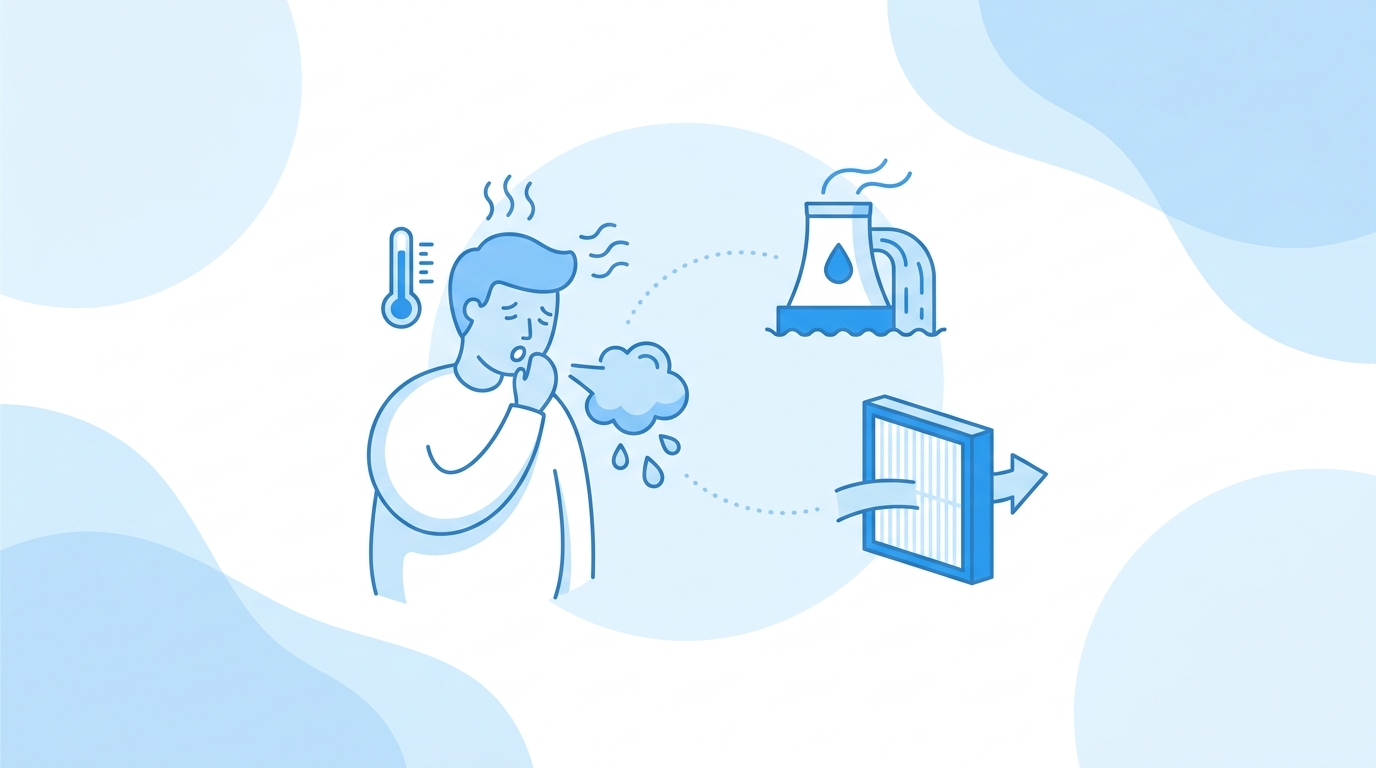
Norovirus infection is an acute, highly contagious stomach illness spread through contaminated food, water, or contact with an infected person. In summer, outbreaks are commonly tied to undercooked oysters and clams, or to contaminated splash pads and pools.
The virus can survive temperatures as low as -20°C (-4°F) and isn’t reliably killed by normal cooking temperatures or the chlorine levels in tap water. Source: Korea’s Ministry of Food and Drug Safety (식품의약품안전처, MFDS).
Summer norovirus usually spreads through raw or undercooked shellfish, contaminated pool or splash-pad water, and close contact with someone who’s sick.
Cook shellfish to an internal temperature of at least 85°C (185°F) for one minute or more to help lower your risk.
What Are Summer Norovirus Symptoms From Start to Finish?
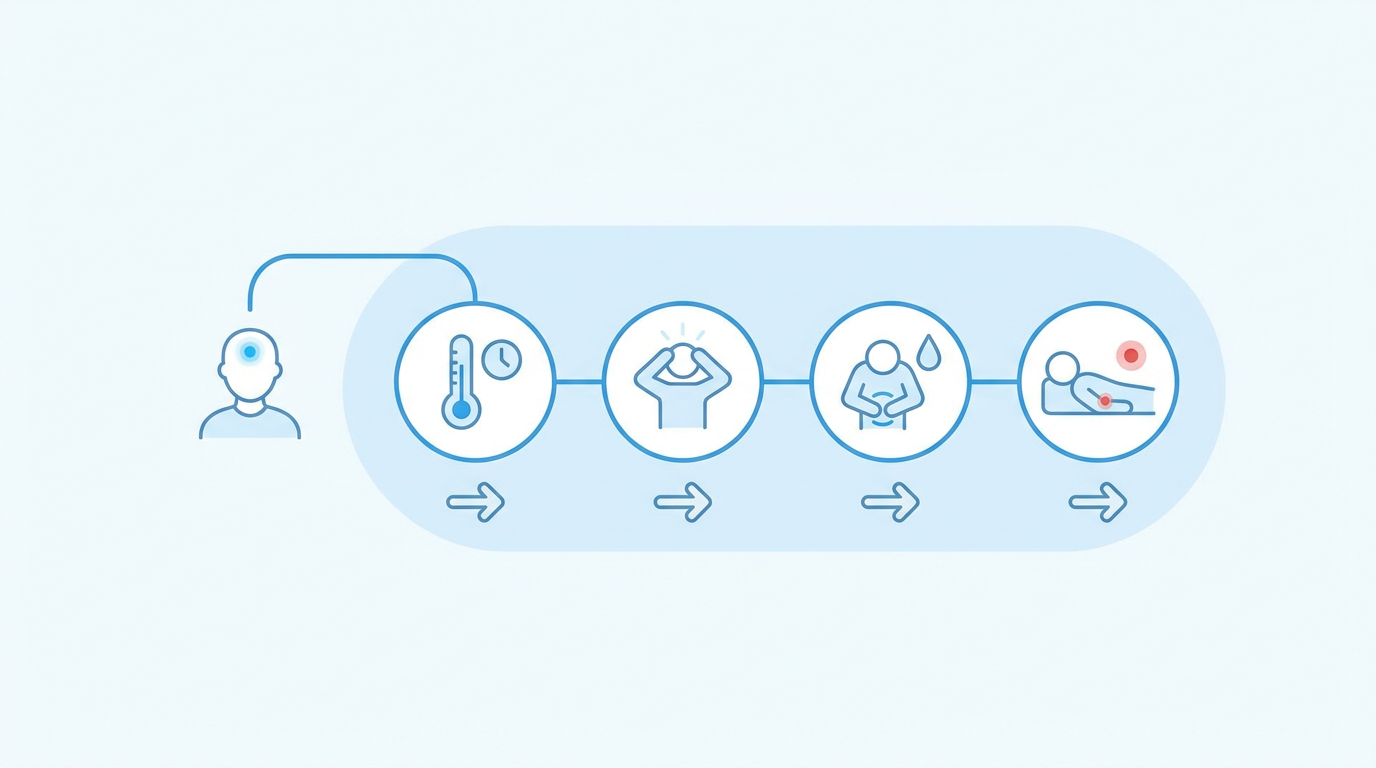
Symptoms usually appear 12 to 48 hours after exposure and include sudden vomiting and watery diarrhea.
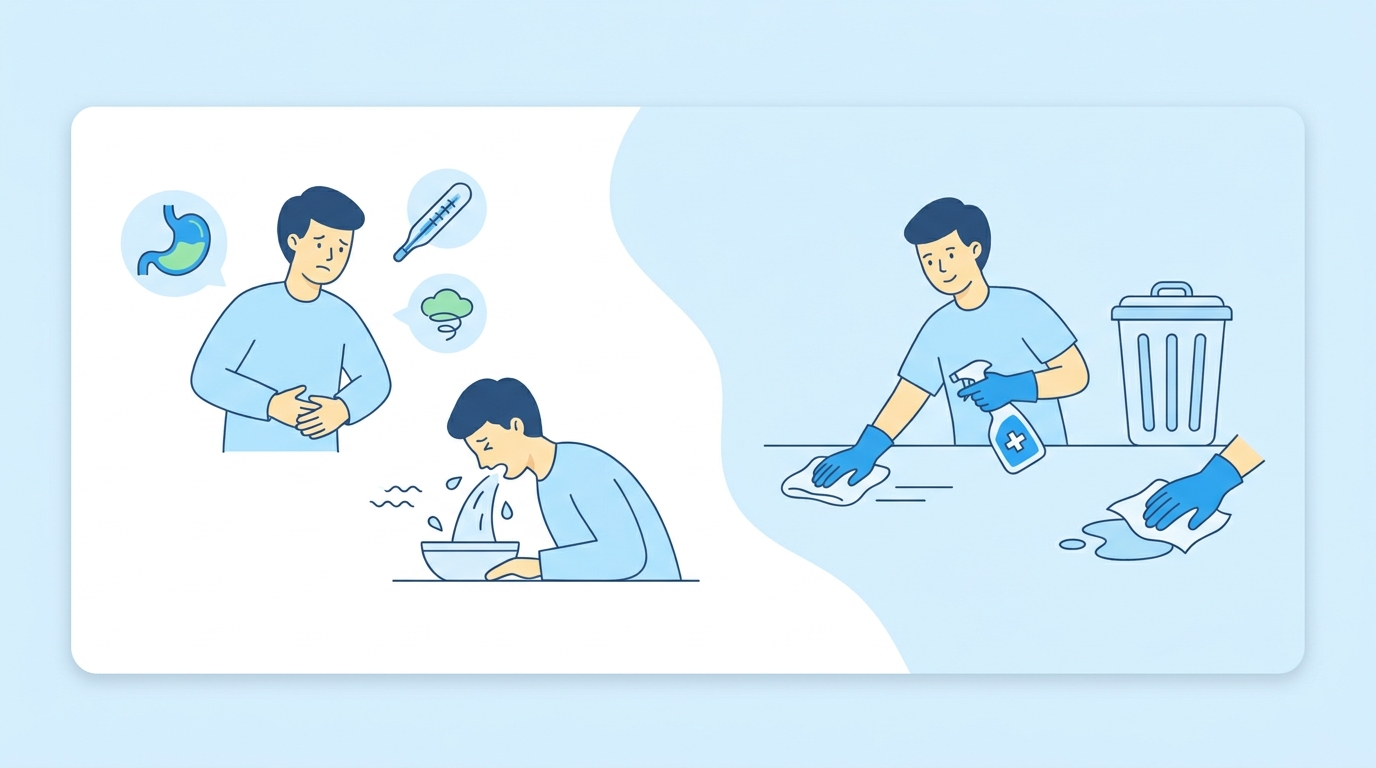
Nausea, vomiting, watery diarrhea, abdominal cramps, a low-grade fever around 37.5-38°C (99-100°F), headache, and body aches can all show up together.
| Category | Duration |
|---|---|
| Incubation period | 12-48 hours |
| Symptom duration | 1-3 days (about 12-72 hours) |
| Contagious period | From symptom onset through at least 2 days after recovery |
Young children and older adults face a higher risk of dehydration from vomiting and diarrhea. See a doctor if symptoms drag on. Source: CDC, Mayo Clinic.
How Should a Daycare Handle a Norovirus Outbreak?
Keep a sick child home right away, and wait at least 48 hours after symptoms clear before sending them back.
Norovirus is so contagious that a tiny amount of virus can cause infection, which is why daycare norovirus outbreaks spread fast. According to Korea’s Disease Control and Prevention Agency (질병관리청, KDCA), it’s one of the leading causes of group diarrhea outbreaks in daycare centers, kindergartens, and schools.
✅ Isolate and send home any child with symptoms
✅ Keep kids home for 48 hours after symptoms stop
✅ Teach 20+ second handwashing with soap
✅ Disinfect toys and doorknobs daily
✅ Check reporting steps with your local health department if there’s a cluster
Alcohol-based hand sanitizer doesn’t work well against norovirus — soap and running water matter far more.
How Do You Disinfect Vomit After a Norovirus Case?
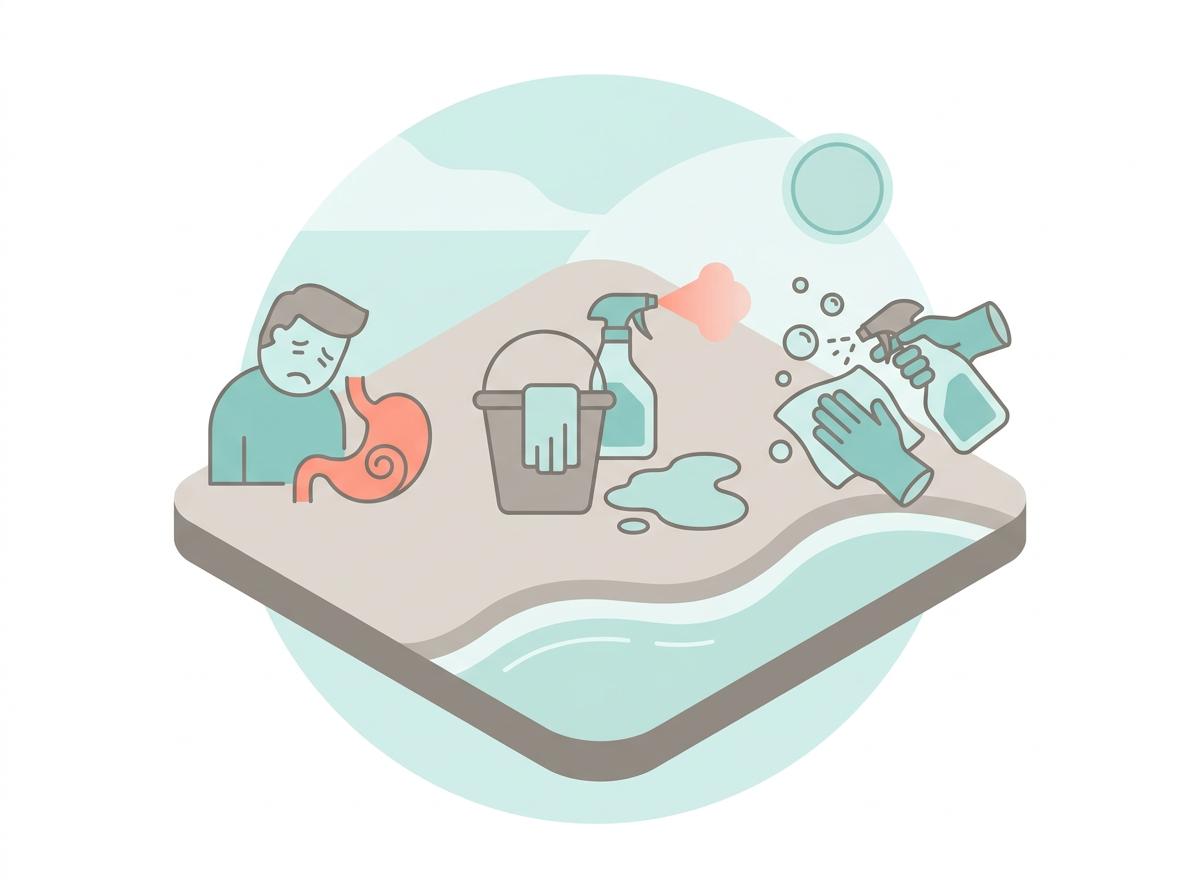
Never touch it with bare hands. Put on gloves and a mask, absorb it with disposable material, then disinfect the surface with diluted bleach.
Disinfection here means chemically inactivating the virus left on a contaminated surface.
- Put on a mask and disposable gloves.
- Cover the vomit with paper towels to absorb it.
- Seal the soiled materials in a plastic bag and throw them away.
- Mix a bleach solution of about 1,000 to 5,000 ppm — roughly 5 to 25 tablespoons of household bleach (5%-8%) per gallon of water — and wipe the surface.
- Let it sit for at least 5 to 10 minutes, then wipe again with water and air out the room.
For vomit and bathroom surfaces, guidance points to a stronger bleach solution than everyday cleaning. Source: CDC.
Never mix bleach with other cleaning products — it can release toxic fumes. Always dilute it and ventilate the room.
Frequently Asked Questions
1. Can you get norovirus more than once?
Yes. There are multiple norovirus genotypes, so having had one type doesn’t fully protect you from another, and immunity doesn’t seem to last long.
2. Does hand sanitizer prevent norovirus?
Alcohol-based sanitizer is only partly effective. Washing with soap and running water for 20+ seconds works much better.
3. Can you go back to daycare or work right after symptoms stop?
Not quite. You can still shed the virus for at least 2 days after symptoms end, so it’s safer to wait 48 hours.
4. What should you eat while sick?
Focus on fluids like water or an electrolyte drink to avoid dehydration, then ease into bland foods like rice porridge. Talk to a doctor or pharmacist if symptoms are severe.
5. When should you see a doctor?
Go in right away if you notice reduced urination, severe weakness, bloody stools, a high fever, or if a young child or older adult has symptoms that won’t quit. If you’re enrolled in Korea’s National Health Insurance (건강보험, NHI — Korea’s public health insurance system most residents pay into), your out-of-pocket share of the hospital bill will be much lower.
References
(Korea Disease Control and Prevention Agency, KDCA), “Norovirus Cases Rise for 10 Straight Weeks, Agency Urges Proper Handwashing” (original title: 노로바이러스 감염증 10주 연속 증가, 올바른 손씻기 등 예방수칙 준수 당부), 2026. Link
(Korea Ministry of Food and Drug Safety, MFDS), “Preventing Norovirus Food Poisoning” (original title: 노로바이러스 식중독 예방하기). Link
(CDC), “Norovirus”, 2026. Link
(Mayo Clinic), “Norovirus infection – Symptoms & causes”. Link
For more disease information, see our Disease Encyclopedia. (Internal link: recommended to replace once a related article is published)
This article is for general informational purposes only and is not a substitute for professional medical advice, diagnosis, or treatment. Please consult a qualified healthcare provider if you have health concerns.