Table of Contents
Ear infections spike every summer, and the numbers back it up. In Korea, health insurance data shows that of the roughly 1.66 million people treated for otitis externa in 2021, about 30% — over 516,000 cases — happened in July and August alone.
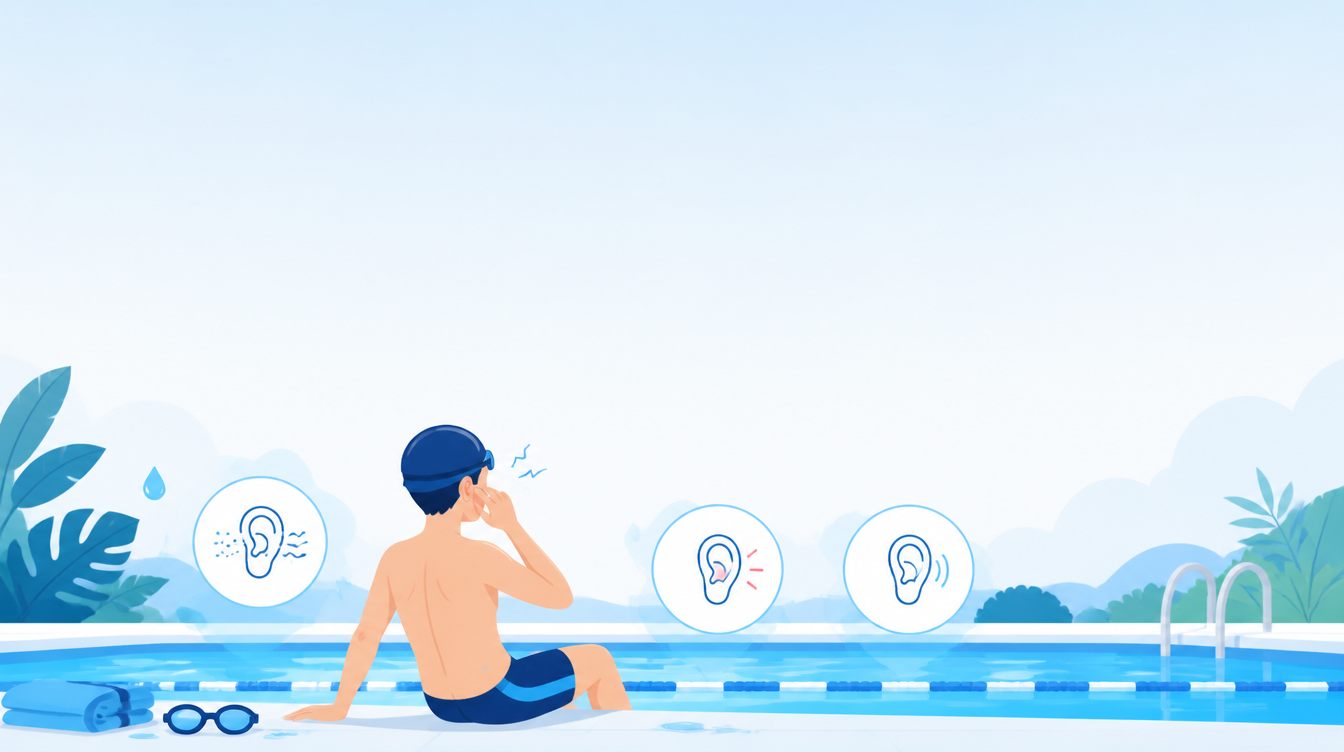
If your ears feel itchy and clogged after a day at the pool or beach, you might be dealing with swimmer’s ear symptoms after swimming. Here’s what causes it, how to respond, and how to prevent it.
📌 Quick Summary
Swimmer’s ear happens when trapped water lets bacteria grow in your ear canal. Swimmer’s ear symptoms after swimming include itching, pain, and a plugged-up feeling. If water gets in your ear, drain it gently instead of digging around. Earplugs and proper drying prevent most cases.
Why Do Your Ears Hurt After Swimming? What Is Swimmer’s Ear?
The most common reason your ears hurt and itch after swimming is swimmer’s ear.
Swimmer’s ear is inflammation of the skin lining the ear canal — the passage from your outer ear to your eardrum. Doctors call it otitis externa.
When water stays trapped in your ear after swimming, it creates a warm, damp environment where bacteria multiply easily. Scratching an itchy ear with a cotton swab or your finger can break the skin, which raises your infection risk even more. (Source: Mayo Clinic)
Swimmer’s ear needs three things to develop: trapped moisture, damaged skin, and bacteria. How you care for your ears after swimming matters more than the swimming itself.
What Are Swimmer’s Ear Symptoms After Swimming?
Swimmer’s ear symptoms usually start with itching and pain, and can progress to discharge if left untreated.
One telltale sign: the pain gets worse when you tug on your outer ear or press the small bump in front of your ear canal (the tragus).
| Stage | Symptoms |
|---|---|
| Early | Itching, slight redness, a “full” feeling |
| Moderate | Pain that worsens when you pull your ear, ear fullness, muffled hearing |
| Advanced | Discharge or pus, swelling around the ear, swollen lymph nodes |
Symptoms typically follow this order: mild itching → pain → discharge. Catching it early means a faster recovery.
What Should You Do When Water Gets in Your Ear — and When to See a Doctor?
If water gets in your ear, drain it gently first instead of forcing it out. Don’t wait around if symptoms show up — see a doctor as soon as you can. (Source: Mayo Clinic)
- Tilt your head to the side and gently pull your earlobe to let water drain out.
- Pat the outer ear dry with a soft towel — don’t go inside the canal.
- Still feels blocked? Use a hair dryer on its lowest, coolest setting, held at least a foot away.
Never stick cotton swabs, fingers, or earbuds into your ear canal. You’ll damage the skin and raise your infection risk instead of lowering it.
A doctor will usually prescribe ear drops that combine an acidic solution, a steroid, and an antibiotic. If you’ve been using prescribed drops for about 10 days and symptoms haven’t improved, go back for a follow-up — you may need something stronger. While you’re healing, skip swimming and diving, and keep water out of your ear canal during showers. In Korea, ENT visits are covered by National Health Insurance (NHI) — the country’s mandatory public health insurance system — so treating this early is usually affordable.
For more on ear conditions and related topics, browse our Disease Encyclopedia. (Internal link: recommend replacing with a related published article)
How Can Swimmers Prevent Ear Infections?
The core of ear infection prevention for swimmers is simple: keep your ears dry. Follow this checklist and you’ll avoid most cases.
✅ Wear earplugs or a swim cap before you get in the water
✅ Tilt your head after swimming to drain water
✅ Pat the outer ear dry — don’t go inside the canal
✅ Skip cloudy or questionable-looking water
✅ Never use cotton swabs or your fingers to scratch your ear
If you swim often, a homemade rinse of equal parts rubbing alcohol and white vinegar can help — a few drops before and after swimming. But if you’ve ever had a perforated eardrum or ear tubes, talk to an ENT specialist before trying this. (Source: Cleveland Clinic, CDC)
Frequently Asked Questions
1. How long does swimmer’s ear usually take to heal?
With proper treatment, most cases clear up within 7 to 10 days. If you’ve used prescribed ear drops for about 10 days with no improvement, go back to your doctor.
2. Can I go swimming if I have swimmer’s ear?
It’s best to avoid swimming until you’ve fully healed. Getting water back into an infected ear canal can make the inflammation worse and slow down recovery.
3. What if water in my ear won’t drain out?
Tilt your head to the side and gently pull your earlobe to help it drain naturally. If it still feels stuck, try a hair dryer on the lowest, coolest setting held at a distance. Avoid using cotton swabs to dig it out.
4. Are kids more prone to swimmer’s ear?
Korean health data shows a higher share of pediatric and teen cases during peak swimming season. This is likely because kids have narrower ear canals and often don’t dry their ears well on their own. See an ENT doctor for an accurate diagnosis.
References
(Mayo Clinic), “Swimmer’s Ear – Symptoms & Causes,” Link
(Mayo Clinic), “Swimmer’s Ear – Diagnosis & Treatment,” Link
(CDC), “Preventing Swimmer’s Ear,” Healthy Swimming, Link
(Cleveland Clinic), “How To Prevent and Get Rid of Swimmer’s Ear,” Link
(HiDoc, Korean health media), “Ear Itchiness and Fullness After Water Play… Swimmer’s Ear Symptoms Worsen With Cotton Swab Use” (원제: 물놀이 후 귀 가렵고 먹먹… 여름철 ‘외이도염’, 면봉 사용 시 증상 악화), citing Health Insurance Review & Assessment Service (HIRA) data, 2021, Link
This article is for general informational purposes only and is not a substitute for professional medical advice, diagnosis, or treatment. Please consult a qualified healthcare provider if you have health concerns.
Leave a Reply