Table of Contents
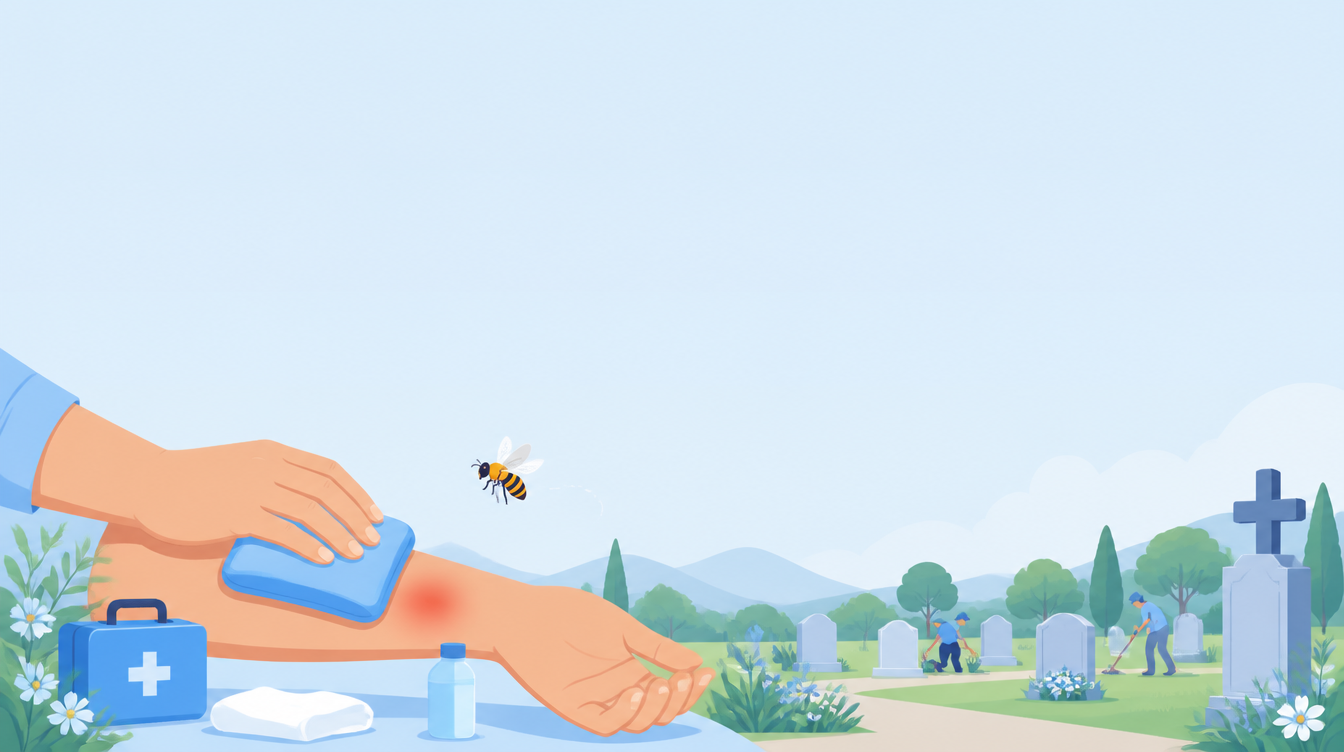
Every autumn, thousands of people in Korea get stung by bees and wasps while cutting grass at family graves for Chuseok, the fall harvest holiday.
Bees and wasps react strongly to dark colors and strong scents, so stings often happen in seconds during outdoor grass-cutting.
This guide covers bee sting first aid, prevention tips for grave-mowing season, and how to recognize wasp sting anaphylaxis.
Bee sting first aid starts with scraping out the stinger, washing the area with soap, and applying ice.
If you notice trouble breathing or hives spreading across the body, call 119 — Korea’s emergency dispatch number (similar to 911) — right away.
Below, you’ll find the first aid steps, prevention tips, and clear signs that mean it’s time to see a doctor.

What’s the right bee sting first aid method?
The basic bee sting first aid steps are: remove the stinger, wash the area, then apply ice.
Don’t pull the stinger out with your fingers — scraping it off with a card or fingernail releases less venom.
Bee sting first aid is the sequence of removing the stinger, cleaning the wound, icing it, and watching for whole-body reactions.
Skipping steps can make swelling and pain worse.
Scrape the stinger out with a card or fingernail instead of squeezing it. Tweezers can press the venom sac and push more venom into your skin.
- If the stinger is still in your skin, scrape it out with a card or fingernail.
- Wash the sting site with soap and running water.
- Apply an ice pack or cold cloth for 15 to 20 minutes to ease pain and swelling.
- Remove rings or bracelets near the sting before swelling sets in.
✅ Scrape out the stinger with a card
✅ Wash with soap and water
✅ Ice for 15-20 minutes
✅ Remove tight jewelry early
Source: Mayo Clinic, “Insect bites and stings: First aid,” 2024; Severance Hospital Health Information, “First Aid for Bee Stings” (세브란스병원, 「벌에 쏘였을 때 응급처치」)
How can you prevent bee stings while cutting grass at a grave?
Wearing light-colored, long clothing and skipping perfume is the most effective way to prevent stings.
Bees and wasps are especially sensitive to black clothing and strong scents.
Bee sting prevention means removing the triggers that provoke bees before you start working.
A quick check for hives before you start mowing can prevent most accidents.
| Situation | What to do |
|---|---|
| Clothing | Wear light-colored long sleeves, long pants, and a hat |
| Scent | Skip perfume, hairspray, and sweet drinks |
| Before mowing | Check the area for hives before using a mower or trimmer |
| If you spot bees | Don’t swat — crouch low and move away slowly |
If you disturb a hive, don’t swing your arms — crouch down and move at least 20 meters away as quickly as you can.
For related conditions, see our Disease Encyclopedia category. (Internal link: replace with a related article once published)
Source: Ministry of the Interior and Safety, Korea Policy Briefing, “Watch Out for Trimmer Accidents and Bee Stings Before Chuseok Grave Mowing,” 2024 (행정안전부, 「추석 전 벌초, 예초기 사고와 벌 쏘임에 각별히 주의하세요」)
What are the symptoms of wasp sting anaphylaxis?
Trouble breathing, hives all over the body, and dizziness together are signs of anaphylaxis.
These symptoms can progress within minutes of a sting.
Anaphylaxis is a severe, whole-body allergic reaction in people sensitized to bee or wasp venom.
If you’ve had a serious reaction to a sting before, your risk is higher this time.
Call 119 immediately if you notice any of these:
· Trouble breathing or wheezing
· Swelling of the lips, face, or throat
· Dizziness or fainting
· Hives spreading across the body
· Vomiting or stomach cramps
Source: Mayo Clinic, “Anaphylaxis: First aid”; MSD Manuals (Consumer Version), “Anaphylactic Reactions”
When should you go to the hospital after a bee sting?
If you’ve been stung many times or have body-wide symptoms, skip home care and go straight to a hospital.
If you have a history of bee venom allergy, it’s safer to get checked even if symptoms seem mild.
Needing hospital care means the reaction has gone beyond local swelling into a whole-body response.
Anyone with a past anaphylaxis diagnosis should always carry an epinephrine auto-injector.
Ten or more stings, stings near the face or throat, or a known allergy history all mean it’s safer to see a doctor, even if things look mild at first.
Source: Severance Hospital Health Information, “First Aid for Bee Stings” (세브란스병원, 「벌에 쏘였을 때 응급처치」); MSD Manuals, “Anaphylactic Reactions”
Frequently Asked Questions
1. Can I just pull the stinger out with my fingers?
No. Pinching it or using tweezers can squeeze the venom sac and push more venom in. Scrape it out with a card or fingernail instead.
2. My sting is swollen and itchy — do I really need to see a doctor?
If it’s just local swelling and itching, ice and rest usually help. But see a doctor if the swelling keeps growing or the pain gets worse.
3. Do wasp stings need different first aid than bee stings?
The basic first aid is the same, but wasps can sting multiple times and their venom is stronger, so watch for whole-body symptoms more closely.
4. How should I prepare if I have a history of anaphylaxis?
Talk to your doctor about getting a prescription for an epinephrine auto-injector, carry it with you, and learn how to use it in advance.
5. Can bee sting pain last for several days?
It varies, but local reactions lasting a few days aren’t unusual. See a doctor if the pain or swelling keeps getting worse instead of easing off.
References
Ministry of the Interior and Safety (Korea Policy Briefing), “Watch Out for Trimmer Accidents and Bee Stings Before Chuseok Grave Mowing,” 2024. Link
Severance Hospital Health Information, “First Aid for Bee Stings.” Link
Mayo Clinic, “Insect bites and stings: First aid,” 2024. Link
Mayo Clinic, “Anaphylaxis: First aid.” Link
MSD Manuals (Consumer Version), “Anaphylactic Reactions.” Link
This article is for general informational purposes only and is not a substitute for professional medical advice, diagnosis, or treatment. Please consult a qualified healthcare provider if you have health concerns.
Leave a Reply