Table of Contents
You start feeling drained the moment the air turns cool, and you can’t quite explain why.
It’s easy to write it off as “the fall blues,” but if the same slump shows up around the same time every year, it could be seasonal affective disorder (SAD).
Depressive symptoms are known to rise between fall and winter, when daylight hours shrink. 🍂
This guide covers fall seasonal depression — why it happens, a self-check symptom list, and 5 practical ways to manage it, plus when it’s time to see a doctor.
Light therapy and simple lifestyle changes help many people, so let’s go through the specifics.
Why Do People Feel More Depressed in Fall? (Causes)
Short answer: fall’s mood dip happens because less daylight throws off your brain chemistry.
Seasonal affective disorder (SAD) is a form of depression that follows a seasonal pattern, typically showing up in fall and winter and easing in spring.
As daylight decreases in fall, your serotonin levels tend to drop while melatonin, the hormone that makes you sleepy, rises — and that combination throws off your circadian rhythm.
That shift can leave you feeling low-energy and down (Source: Yonsei Severance Hospital Health Information, 2024).
According to the Mayo Clinic, the exact cause isn’t fully understood, but seasonal change is thought to disrupt your serotonin-melatonin balance and your body’s internal clock (Source: Mayo Clinic, 2024).
Less sunlight in fall and winter → lower serotonin, higher melatonin → disrupted circadian rhythm → fatigue and low mood can follow.
How Can You Self-Check for Seasonal Depression? (Checklist)
Short answer: if the same depressive pattern returns for two or more years around the same season and lifts at other times, SAD is worth considering.
Per Severance Hospital’s health information, you can suspect SAD when low mood, loss of interest, sleep changes, fatigue, and poor concentration recur regularly during a specific time of year (Source: Yonsei Severance Hospital, 2024).
Unlike typical depression, fall/winter-onset SAD often comes with oversleeping and increased appetite or weight gain rather than insomnia and appetite loss (Source: Health Kyunghyang, 2023).
✅ Your mood dips around the same time every year (usually fall to winter)
✅ You sleep more than usual and struggle to get up in the morning
✅ You crave carbs or sweets and you’re gaining weight
✅ You’ve lost interest in things you used to enjoy
✅ You feel tired easily and can’t concentrate
This checklist is for general reference only and can’t replace a medical diagnosis. See a psychiatrist for an accurate evaluation.
If you’re having thoughts of ending your life, reach out right away. In Korea, call 109 (24-hour suicide prevention hotline) or 1577-0199 (mental health crisis line). In the US, call or text 988 (Suicide & Crisis Lifeline). Outside these countries, contact your local emergency number (Source: Korea Ministry of Health and Welfare, 2024; 988lifeline.org).
How Can You Overcome Fall Seasonal Depression? (Practical Strategies)
Short answer: light therapy plus regular exercise and outdoor sunlight are the most recommended ways to manage fall seasonal depression.
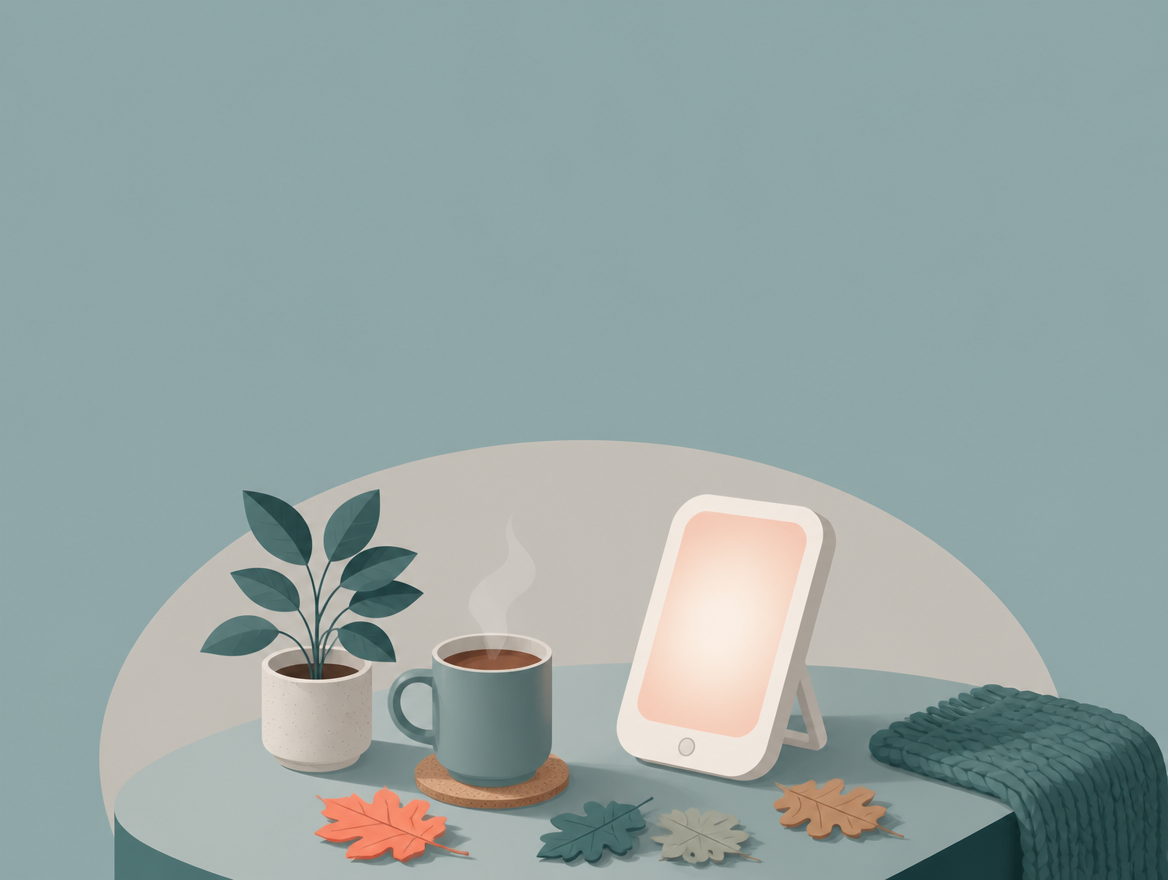
According to Mayo Clinic, light therapy means sitting near a special light box within the first hour of waking, and it may shift brain chemicals tied to mood (Source: Mayo Clinic, 2024).
Dr. Park Hyung-keun, a psychiatrist at Seoul Asan Hospital, notes that exercise intense enough to raise your heart rate and breathing — done 3+ times a week, 30+ minutes each, for 9+ weeks — can help ease depressive symptoms (Source: Health Kyunghyang, 2023).
| Method | How to Do It |
|---|---|
| Light therapy | Sit near a light box within an hour of waking up |
| Regular exercise | 3+ times a week, 30+ minutes each, for 9+ weeks |
| Sunlight exposure | Take a daytime walk outdoors for natural light |
| Sleep habits | Keep a consistent wake and bedtime every day |
Many people improve with lifestyle changes alone — light therapy, exercise, sunlight, and consistent sleep — no medication needed. If symptoms are severe, a doctor may add medication to the plan.
When Should You See a Doctor for Seasonal Depression?
Short answer: if you can barely function day to day, or you’re having thoughts of not wanting to live, see a psychiatrist right away.
Mayo Clinic recommends getting professional help immediately if low mood lasts more than two weeks and interferes with work or relationships, or if you have suicidal thoughts (Source: Mayo Clinic, 2024).
If you’re in Korea, outpatient psychiatric visits are covered under National Health Insurance (Korea’s public health insurance system that most residents and long-term visa holders are enrolled in), so cost shouldn’t be a major barrier.
Don’t wait to see a doctor if you notice:
⚠ Low mood lasting more than 2 weeks
⚠ Trouble functioning at work, school, or in relationships
⚠ Thoughts of suicide or self-harm
Frequently Asked Questions
1. How long does seasonal affective disorder last?
It typically appears as daylight decreases in fall and winter, then eases naturally in spring. If symptoms are severe or persistent, talk to a doctor.
2. Does light therapy actually work?
Per Mayo Clinic and related research, light therapy is one of the main treatments for SAD, and about half of patients see improvement. Results vary by person, so check with a doctor before starting.
3. What’s the difference between regular depression and seasonal depression?
Regular depression often involves insomnia and appetite loss, while seasonal depression more commonly comes with oversleeping and weight gain. Individual cases vary, so a professional evaluation is the only way to be sure.
4. Can vitamin D supplements help?
Reduced sunlight can affect vitamin D synthesis and serotonin levels, but supplement effects vary by individual health status. Always talk to a doctor or pharmacist before taking any supplement.
Want to read more? Check out the Disease Encyclopedia category. (Internal link: recommend replacing with a related article once published)
References
Mayo Clinic, “Seasonal affective disorder (SAD) — Symptoms & causes,” 2024. Link
Mayo Clinic, “Seasonal affective disorder (SAD) — Diagnosis & treatment,” 2024. Link
National Institute of Mental Health (NIMH), “Seasonal Affective Disorder.” Link
Cleveland Clinic, “Seasonal Depression (Seasonal Affective Disorder).” Link
Yonsei Severance Hospital, “Seasonal Affective Disorder (계절성 정동장애),” 2024. Link
Health Kyunghyang (헬스경향), “Feeling Down Since Fall? Watch for Increased Appetite and Sleep,” 2023. Link
Korea Ministry of Health and Welfare, “Suicide Prevention Hotlines Unified Under ‘109’ Starting January 1,” 2024. Link
This article is for general informational purposes only and is not a substitute for professional medical advice, diagnosis, or treatment. Please consult a qualified healthcare provider if you have health concerns.
Leave a Reply