
Table of Contents
A lot of people reach for cold medicine or allergy pills the moment the seasons start to change.
Then, out of nowhere, their eyelids get heavy and they can barely stay awake.
That drowsiness usually isn’t the cold talking — it’s antihistamine drowsiness from the pill itself.
This article breaks down why antihistamine drowsiness happens, how first- and second-generation ingredients differ, and whether it’s safe to drive after taking seasonal cold or allergy medicine, based on Korean drug safety guidance and international research.
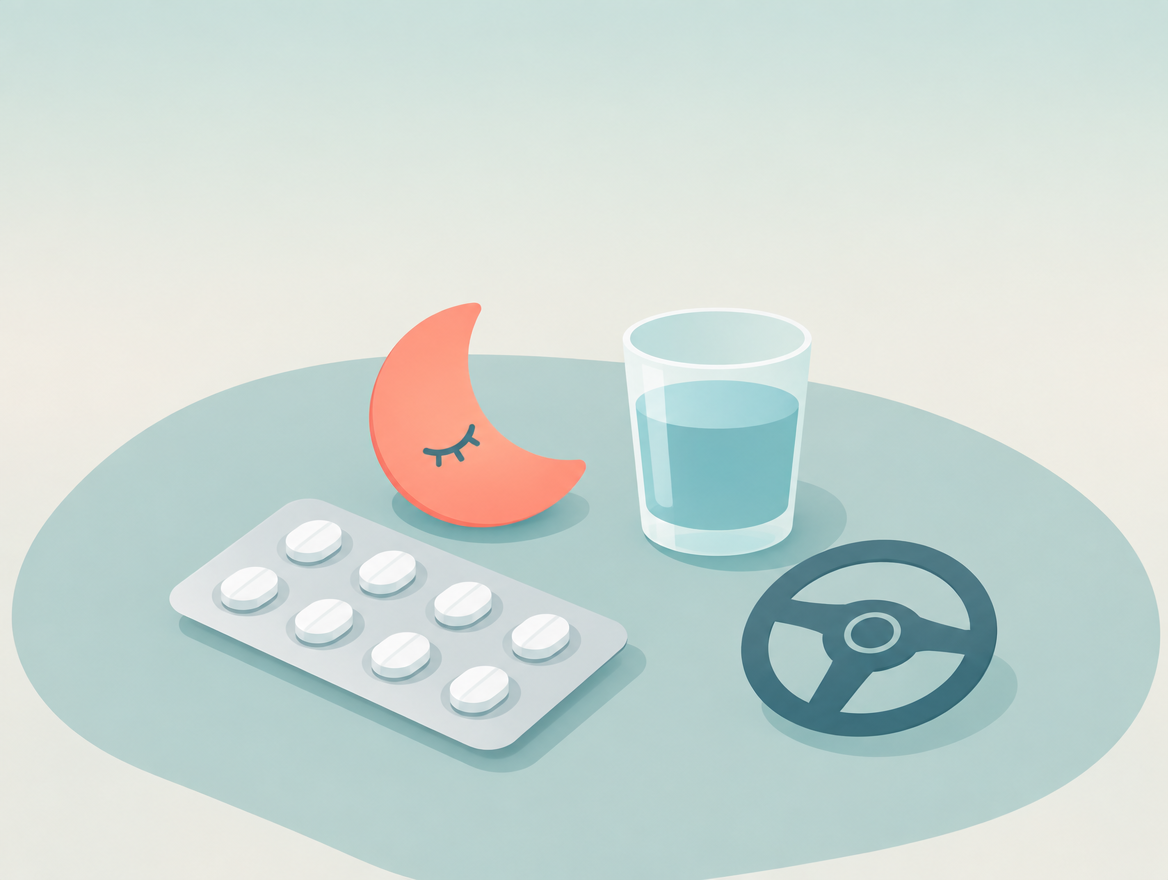
Antihistamine Drowsiness in Cold Medicine: Why Does It Happen?
Antihistamine drowsiness happens because these drugs are fat-soluble enough to cross into the brain. They block histamine, which stops your runny nose, sneezing, and itching — but that same action also dampens the brain’s alertness signals.
An antihistamine is a drug that blocks histamine to reduce runny nose, sneezing, and itching.
Most combination cold medicines and allergy pills sold for seasonal symptoms contain one.
Because these compounds dissolve easily in fat, they cross the blood-brain barrier and reach histamine receptors in your brain. Your nose clears up, but the brain systems that keep you alert get suppressed too — hence the drowsiness. (Source: Korea’s Ministry of Food and Drug Safety, Drug Safety Manual, 2019)
An antihistamine blocks histamine to relieve runny nose, sneezing, and itching. How deep it penetrates the brain determines how much antihistamine drowsiness you feel.
Do First- and Second-Generation Antihistamines Cause Different Drowsiness?
Yes — first-generation antihistamines are much more sedating than second-generation ones. But even second-generation pills can make some people drowsy, so don’t assume you’re in the clear.
First-generation antihistamines like chlorpheniramine and diphenhydramine cross into the brain easily, and their sedating effect is strong enough that they’re sometimes used as sleep aids.
Second-generation antihistamines — cetirizine, loratadine, fexofenadine — were designed with larger molecules that dissolve in water instead of fat, so they enter the brain less and cause less drowsiness.
Even so, antihistamine drowsiness can still show up with second-generation options, so you should still be careful with driving or operating machinery. (Source: Korea’s Ministry of Food and Drug Safety)
| Generation | Common Ingredients | Drowsiness Level | Duration |
|---|---|---|---|
| First-generation | Chlorpheniramine, diphenhydramine | High | 4–6 hours |
| Second-generation | Cetirizine, loratadine, fexofenadine | Lower (varies by person) | 12–24 hours |
Second-generation antihistamines cause less drowsiness than first-generation ones, but “less” doesn’t mean “none.” Check the active ingredient on the box or package insert.
Is It Safe to Drive After Taking Cold Medicine?
If you feel drowsy after taking an antihistamine, skip driving or operating machinery. First-generation ingredients in particular have been shown to measurably impair driving.
In a driving simulator study, people who took diphenhydramine kept their lane worse than those who took fexofenadine — and on some measures, performed worse than people who’d been drinking alcohol. (Source: Weiler JM et al., PubMed, 2000)
The FDA requires diphenhydramine product labels to carry a warning that says drowsiness will occur and you shouldn’t drive or operate machinery. (Source: FDA/DailyMed drug label)
Here’s the catch: taking it at night doesn’t guarantee you’re clear by morning. Carryover drowsiness can linger into the next day, so “I only take it before bed” isn’t automatically a safe assumption.
Mixing a first-generation antihistamine with alcohol makes antihistamine drowsiness even more likely. Since grogginess can carry into the next morning, double-check the ingredient list before an early drive.
How Can You Take Seasonal Allergy Medicine Safely?
The key to managing antihistamine drowsiness is checking the ingredient label and avoiding overlap with alcohol or other cold medicines. Use the checklist below to run through it yourself before you take a dose.
Taking multiple cold or allergy medicines at once can stack antihistamine doses and make you drowsier than either one alone.
If you drive often or antihistamine drowsiness bothers you, ask your pharmacist about a second-generation option instead.
If symptoms are severe or last more than a few days, see a doctor or pharmacist rather than upping your own dose. (Source: Korea Policy Briefing, “Proper Use of Antihistamines During Seasonal Transitions,” 2017)
✅ Check cold and allergy medicine labels for overlapping antihistamine ingredients
✅ Skip alcohol while you’re taking one
✅ Hold off on driving or operating machinery if you feel drowsy
✅ Ask your pharmacist about second-generation options if drowsiness is a concern
✅ See a doctor or pharmacist if symptoms drag on
For more on medication safety during allergy season, check the Medications & Supplements category.
Frequently Asked Questions
1. How do I know if my cold medicine contains an antihistamine?
Check the “active ingredients” section on the box or package insert for names like chlorpheniramine, diphenhydramine, or cetirizine. When in doubt, ask your pharmacist directly.
2. Is it more dangerous to take it with alcohol?
Yes. Antihistamines depress the central nervous system, so combining them with alcohol can intensify both drowsiness and impaired judgment. It’s safest to avoid alcohol while you’re on one.
3. Are there cold medicines that don’t cause drowsiness?
Products without antihistamines, or ones that use only second-generation ingredients, tend to cause less drowsiness. Since it varies by person, it’s worth checking with a pharmacist before you choose.
4. How long should I avoid driving after taking allergy medicine?
There’s no single fixed number — it varies by person. Even if you don’t feel drowsy, it’s safer to hold off on driving for a few hours and pay attention to how you feel, especially before long-distance or early-morning drives.
References
(Korea Ministry of Food and Drug Safety, Drug Safety Nara), “Drug Safety Manual: Take Cold Medicine Properly During Seasonal Transitions” (원제: 의약품 안전사용 매뉴얼), 2019. Link
(Korea Policy Briefing), “Proper Use of Antihistamines During Seasonal Transitions” (원제: 환절기, ‘항히스타민제’ 올바른 사용법), 2017. Link
(U.S. Food and Drug Administration / DailyMed), Diphenhydramine Drug Facts Label. Link
Weiler JM et al., “Effects of Fexofenadine, Diphenhydramine, and Alcohol on Driving Performance,” PubMed, 2000. Link
Cleveland Clinic, “Antihistamine Types & Side Effects.” Link
This article is for general informational purposes only and is not a substitute for professional medical advice, diagnosis, or treatment. Please consult a qualified healthcare provider if you have health concerns.
Leave a Reply