Table of Contents
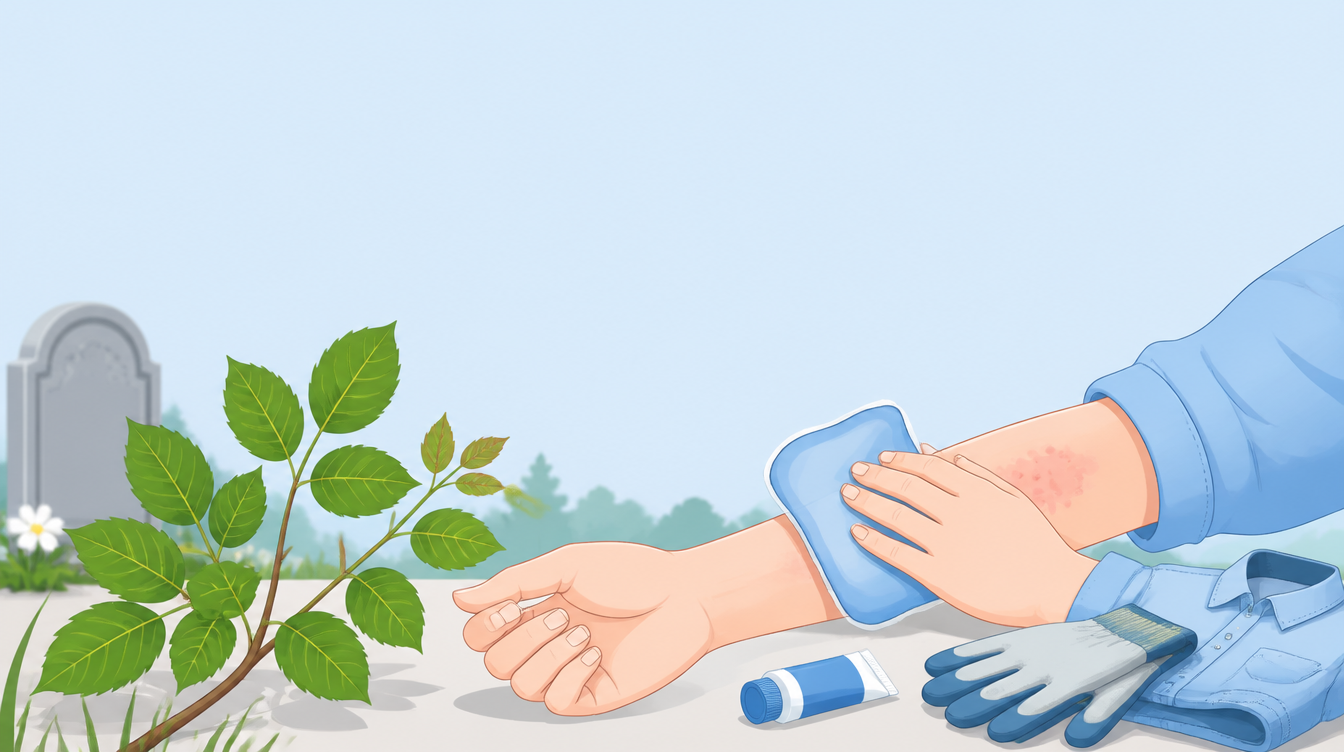
Every year before Chuseok, dermatology clinics in Korea see a spike in patients looking for poison ivy rash treatment after “beolcho” — the traditional grave-cleaning work families do ahead of the holiday — as red rashes and unbearable itching set in.
Most people assume it’s just an insect bite, but it’s often poison ivy-type dermatitis caused by urushiol, the oily compound in Korea’s lacquer tree (옻나무, Toxicodendron vernicifluum).
Left untreated, it can spread into blisters and oozing sores, so early treatment matters.
This guide covers what causes poison ivy rash after grave cleaning, how to spot it, and the poison ivy rash treatment and prevention steps that work.
With prompt washing, cold compresses, and antihistamines, urushiol dermatitis usually clears up in one to two weeks — but if it spreads to your face or eyes, you need a doctor.
Why Does My Skin Itch After Grave Cleaning in Korea?
Brushing against a lacquer tree’s stem, leaves, or sap-covered tools lets urushiol soak into your skin and trigger an allergic reaction.
Poison ivy-type dermatitis is an allergic contact rash caused by exposure to urushiol, the oil found in the lacquer tree.
Urushiol coats the leaves, stems, and roots of the tree, so you don’t have to touch the plant directly — smoke from burning it, or oil transferred onto gloves, clothes, or a sickle, can trigger the same reaction.
Sensitivity varies from person to person, which is why two people doing the same grave-cleaning work can end up with very different reactions. (Source: Seoul Asan Hospital, 2024)
You don’t need direct plant contact to get a rash. Urushiol on gloves, a sickle, or a mower blade can trigger it too — so wash your gear after grave cleaning, not just your skin.
What Are the Symptoms of Poison Ivy-Type Dermatitis?
Symptoms usually start 8 to 48 hours after contact, showing up as a red, streaky rash and itching along the exposure line, which can progress to blisters and oozing in severe cases.
Typical poison ivy rash symptoms are clearly defined redness, swelling, and intense itching right where the skin touched the plant.
Thin-skinned areas like your face, neck, and wrists tend to react more strongly. Scratching can pop blisters and spread fluid to nearby skin.
That fluid doesn’t actually contain urushiol, so it won’t cause new rashes elsewhere — but swelling near the eyes or neck still needs close attention. (Source: MSD Manuals, 2023)
– Rash appeared 8-48 hours after grave cleaning
– Rash forms in streaks or patchy lines, not scattered dots
– Intense itching with blisters or oozing
– Irregular shape, unlike the round welts of an insect bite
If your face swells badly enough that you can barely open your eyes, or you develop trouble breathing or hives all over your body, go to the emergency room right away.
Poison Ivy Rash Treatment: How Do You Treat It After Grave Cleaning?
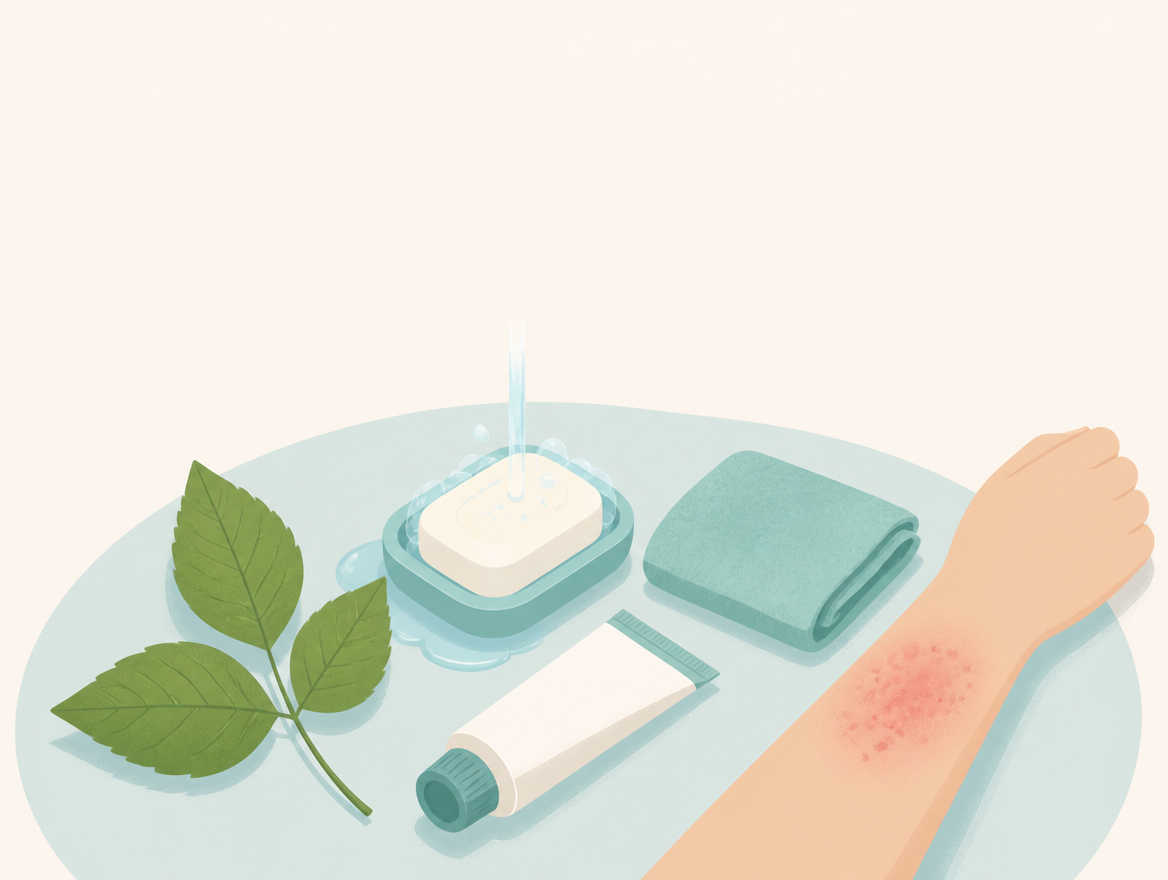
Wash the exposed skin with running water and soap right away to remove the urushiol, then use cold compresses to calm itching and swelling before reaching for an antihistamine or a doctor-prescribed steroid cream if needed. This first-line poison ivy rash treatment works well for most mild cases.
The longer you wait to wash, the deeper urushiol absorbs into your skin, which can make symptoms worse. (Source: Seoul National University Hospital, 2024)
| Do | Don’t |
|---|---|
| Wash immediately with running water and soap | Use hot water to rinse |
| Apply cold compresses or ice packs | Scratch or pop blisters |
| Change into loose, clean clothes | Reuse contaminated clothes or gloves |
| See a dermatologist if symptoms are severe | Apply folk remedies like soybean paste or alcohol |
Over-the-counter antihistamines or a mild steroid cream are usually enough for a safe poison ivy rash treatment at home. If the rash covers your face or a large area, see a doctor instead of relying on self-treatment.
Under national health insurance (건강보험, Korea’s public health insurance system), a dermatology visit for this kind of rash is generally an affordable, covered outpatient visit.
Curious about other skin conditions? Check the Disease Encyclopedia category. (Internal link: to be replaced once a related article is published)
How Can You Prevent Poison Ivy Rash Before Grave Cleaning?
Wearing long sleeves, long pants, and gloves to minimize skin exposure, and learning to spot lacquer trees ahead of time, is your best defense.
Prevention means blocking urushiol contact in the first place through protective clothing and thorough washing before and after the work — but if a rash does break out, starting poison ivy rash treatment right away limits how bad it gets.
Lacquer trees typically have 5 to 7 glossy leaflets growing opposite each other, so it helps to scan the area before you start cutting. (Source: Ministry of the Interior and Safety, 2024)
– Wear long sleeves, long pants, and waterproof gloves
– Avoid touching glossy trees with 5-7 leaflets
– Wash clothes separately and clean skin with soap right after
– Rinse gloves, sickles, and mower blades with water too
– If you’ve had a reaction before, talk to a dermatologist beforehand
Frequently Asked Questions
1. Is poison ivy rash contagious?
No. It’s an allergic reaction to urushiol oil, so the rash and blister fluid itself aren’t contagious. But if someone else touches urushiol still on your clothes or tools, they can develop the same rash.
2. How long does it take to heal?
Mild cases often improve within one to two weeks, though exposure level and individual sensitivity can stretch that to three weeks or more. See a doctor if it hasn’t improved after two weeks.
3. Can I pop the blisters?
It’s best not to. Popping blisters raises your risk of bacterial infection and can slow healing. Manage severe itching with cold compresses or prescribed medication instead.
4. Do I really need to see a doctor for poison ivy rash treatment?
Yes, if swelling spreads near your face or eyes, blisters cover a large area, or oozing skin develops pus and warmth, since that can signal infection. Go to the ER if you develop trouble breathing or hives across your whole body.
References
- Seoul Asan Hospital (서울아산병원), “Poison Ivy Dermatitis (옻 중독),” 2024. Link
- Seoul National University Hospital (서울대학교병원), “Lacquer Poison (옻중독),” 2024. Link
- Ministry of the Interior and Safety of Korea (행정안전부), “Beware of Mower Accidents and Bee Stings Before Chuseok Grave Cleaning,” 2024. Link
- Mayo Clinic News Network, “Itchy, irritating poison ivy rash,” 2023. Link
This article is for general informational purposes only and is not a substitute for professional medical advice, diagnosis, or treatment. Please consult a qualified healthcare provider if you have health concerns.
Leave a Reply