Table of Contents
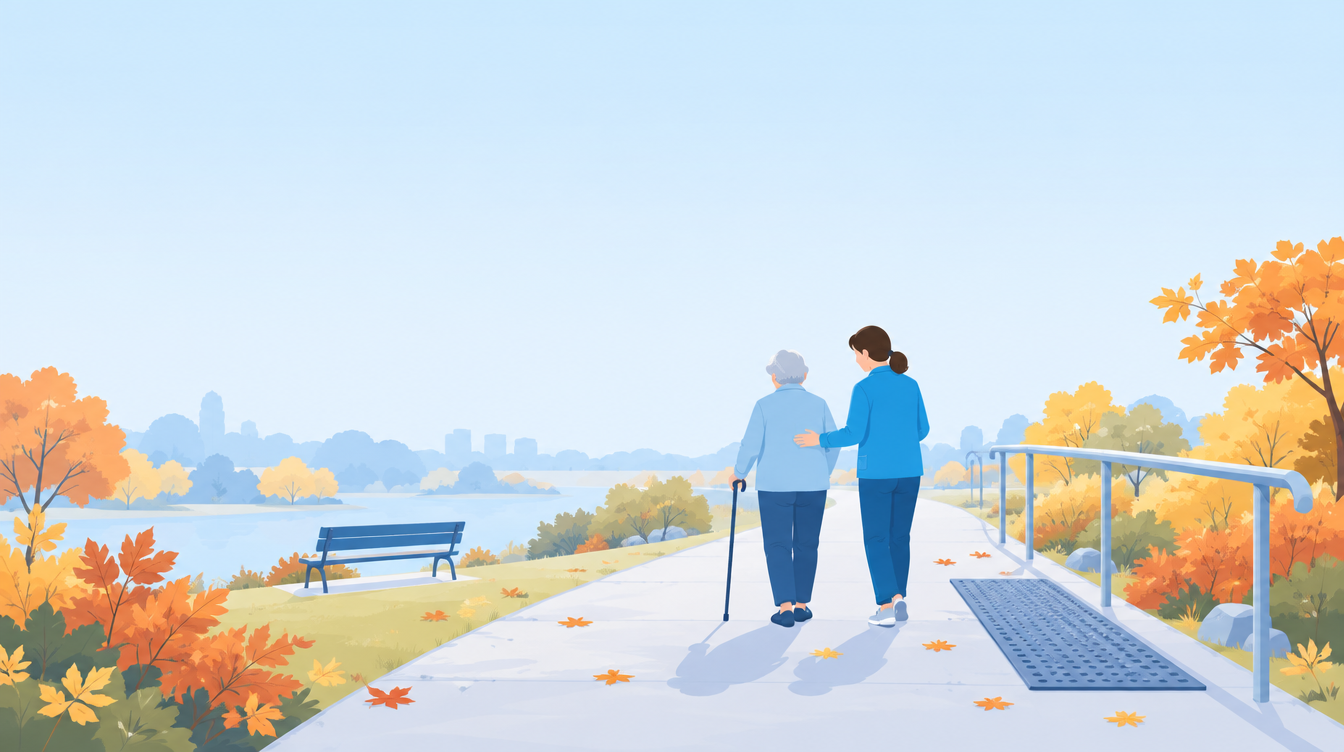
Did you know hip fractures spike right along with the falling leaves?
According to the U.S. CDC, more than one in four adults over 65 falls each year, and over 95% of hip fractures happen because of a fall.
In Korea, falls among people 65+ peak in winter (30.7%) but autumn ranks a close second at 24%, and a hip fracture can carry a mortality rate above 20% within the first year. Cooler mornings, wet leaves, and shorter daylight hours all raise the risk.
This guide covers hip fracture prevention in elderly adults during fall season: why autumn raises fall risk, why hip fracture risk is so serious, practical prevention steps, and warning signs that mean it’s time to see a doctor.
Why do elderly falls increase in autumn?
Temperature swings, wet fallen leaves, and shorter daylight hours all make elderly falls more common in autumn than in summer or spring.
A fall is an unintentional event where a person ends up on the ground or a lower surface. Weak leg muscles and poor balance are the leading causes, and conditions like Parkinson’s disease make walking even less stable.
Autumn adds its own risks: it gets dark earlier, sidewalks stay damp with dew and fallen leaves, and cooler mornings can make joints stiffer than usual.
Falls among people 65+ in Korea peak in winter (30.7%), followed by autumn (24%), summer (22.8%), and spring (22.6%). The share of fall patients aged 70+ rose from 17.1% in 2014 to 35.3% recently — more than double in a decade.
(Source: Korea Disease Control and Prevention Agency, via Hidoc, 2024)
Why is hip fracture risk so high in elderly adults?
A hip fracture can be life-threatening for older adults — Korean data shows a mortality rate above 20% within the first year.
A hip fracture is a break in the upper part of the femur, and falls cause the vast majority of cases. Risk rises sharply after age 80, and women are affected about 2.3 times more often than men.
Long bed rest after surgery can weaken muscles further and raise the risk of complications like pneumonia or pressure sores, creating a difficult cycle.
In Korea, the 2022 hip fracture rate was 100.7 per 10,000 people for those 80 and older — about 50 times higher than the rate for people in their 50s (2.0). Mayo Clinic Proceedings also reports a 24% mortality rate 12 months after hip fracture.
(Source: National Health Insurance Service data via Medical Observer, 2023 / Mayo Clinic Proceedings)
Hip Fracture Prevention in Elderly Adults: Best Fall Safety Tips
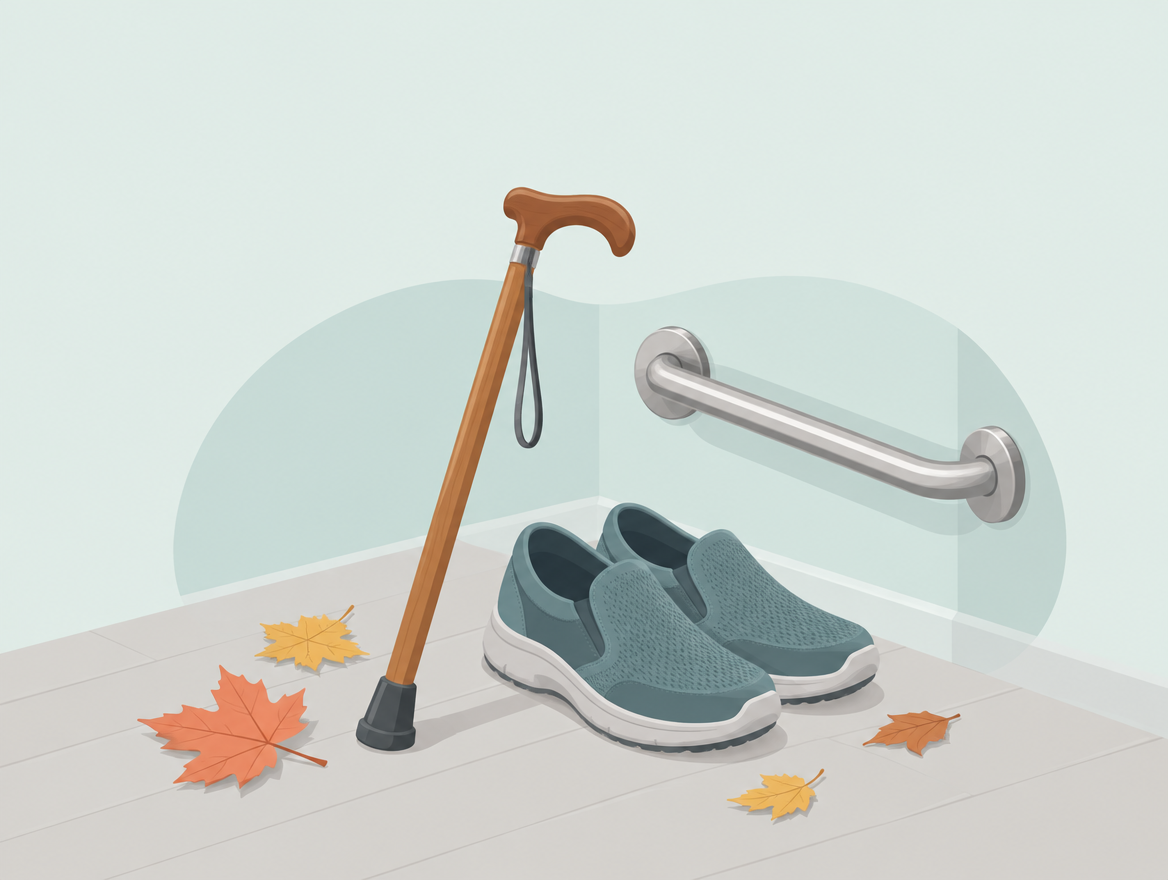
Strength and balance exercises, a safer home layout, and non-slip footwear are the core of hip fracture prevention in elderly adults.
Fall prevention means identifying and reducing the specific hazards that put someone at risk before an accident happens. The CDC reports that more than one in four adults 65 and older falls each year, and over 95% of hip fractures start with a fall — which is exactly why prevention matters so much.
✅ Add non-slip mats in the bathroom and entryway
✅ Install grab bars on stairs and in the bathroom
✅ Do lower-body strength exercises, like squats, 2-3 times a week
It also helps to ask a doctor about vitamin D and calcium intake, and to review vision and any medications that might cause dizziness on a regular basis.
For more on related musculoskeletal conditions, browse our Disease Encyclopedia. (Internal link: replace with a related post once published.)
When should you see a doctor after a fall?
If someone can’t stand or walk because of hip pain after a fall, or their leg looks a different length or shape, they need medical care right away.
Older adults with osteoporosis can fracture a bone even in a minor fall, so regular bone density screening can help catch risk early.
After a fall, don’t move the person and call emergency services or go to the ER right away if you notice:
– Hip or groin pain that prevents standing
– A leg that looks shorter or turned outward
– Rapid, severe swelling or bruising
Frequently Asked Questions
1. Is fall risk in autumn lower than in winter?
Frequency is highest in winter (30.7%), but autumn (24%) ranks second, so it’s not a season to let your guard down. Temperature swings and wet leaves can catch people off guard.
2. Does a hip fracture always require surgery?
Surgery is recommended in most cases, but the right approach depends on overall health. Always discuss options with an orthopedic specialist.
3. What’s the first step in elderly fall prevention?
Clearing obvious hazards at home — loose cords, curled rug edges, wet floors — is a free, easy place to start.
4. When should someone start using a cane or walker?
If balance has declined or a fall has already happened, ask a doctor or physical therapist to help decide the right time to start.
5. At what age should bone density testing begin?
It’s generally recommended for postmenopausal women and men 70 and older, but individual risk factors matter, so check with a healthcare provider.
References
(Korea Disease Control and Prevention Agency, KDCA), “National Health Information Portal – Falls” (국가건강정보포털 – 낙상), 2024. Link
(Hidoc), “Elderly Falls Have More Than Doubled in a Decade” (노인 낙상, 10년 새 2배 이상↑), 2024. Link
(Medical Observer), “Spine and Hip Fractures With High Fatality Rates Are Rising Among Older Patients” (치명률 높은 척추 및 고관절 골절, 고령 환자 ‘증가세’), 2023. Link
(CDC), “STEADI – Older Adult Fall Prevention”, 2024. Link
(Mayo Clinic Proceedings), “Medical Care of Elderly Patients With Hip Fractures”. Link
This article is for general informational purposes only and is not a substitute for professional medical advice, diagnosis, or treatment. Please consult a qualified healthcare provider if you have health concerns.
Leave a Reply