
Table of Contents
After a typhoon or heavy rain, cleanup crews and homeowners rush to clear flooded homes and fields. But once the water recedes, the danger isn’t necessarily gone.
Muddy floodwater can still carry Leptospira bacteria, and even a small cut is enough to let it in. Cases of leptospirosis tend to rise after major flooding, which is why knowing how to prevent leptospirosis after flood cleanup matters for anyone helping with recovery work.
This article covers safety rules for working in flooded areas, the early symptoms of leptospirosis, and what to do if you suspect infection, based on guidance from the CDC and Korea’s disease control authority.
The incubation period is usually 5 to 14 days, and symptoms often start out looking like the flu — which is exactly why people miss it. Simple steps like wearing boots and gloves and covering open wounds can cut your risk significantly.
Why Is Leptospirosis After Flood Cleanup Such a Serious Risk?
The risk of leptospirosis after flood cleanup comes from water or soil contaminated with infected animals’ urine, since that risk spikes in flooded areas.
Leptospirosis is a bacterial infection caused by Leptospira bacteria that spreads through contaminated water or soil. Rats and other rodents, along with livestock, can carry the bacteria chronically and shed it in their urine, contaminating muddy water, standing puddles, and soil.
You can get infected when that contaminated water or soil touches a skin wound or your eyes, nose, or mouth. In Korea, it’s classified as a Class 3 legally notifiable infectious disease that health authorities actively track.
The risk of leptospirosis after flood cleanup lingers because Leptospira bacteria can survive in contaminated water or soil for days after floodwater recedes, entering through open wounds or mucous membranes.
What Are the Early Symptoms of Leptospirosis?
Recognizing the symptoms of leptospirosis after flood cleanup matters early, since symptoms usually appear 5 to 14 days after exposure (up to 30 days in some cases) and start off looking like a common flu.
Sudden fever, chills, headache, severe muscle aches (especially in the calves), red eyes, and vomiting are the classic early signs. Because these symptoms feel so ordinary, many people delay seeing a doctor.
| Phase | Common symptoms |
|---|---|
| Early phase | Fever, chills, headache, calf muscle pain, red eyes, vomiting |
| Severe phase | Jaundice, kidney failure, lung bleeding, meningitis (Weil’s disease) |
If jaundice develops in the severe phase, the case fatality rate is 5 to 15 percent, and it can exceed 50 percent if lung bleeding occurs. Early diagnosis and treatment make the biggest difference.
What Safety Rules Prevent Leptospirosis After Flood Cleanup?
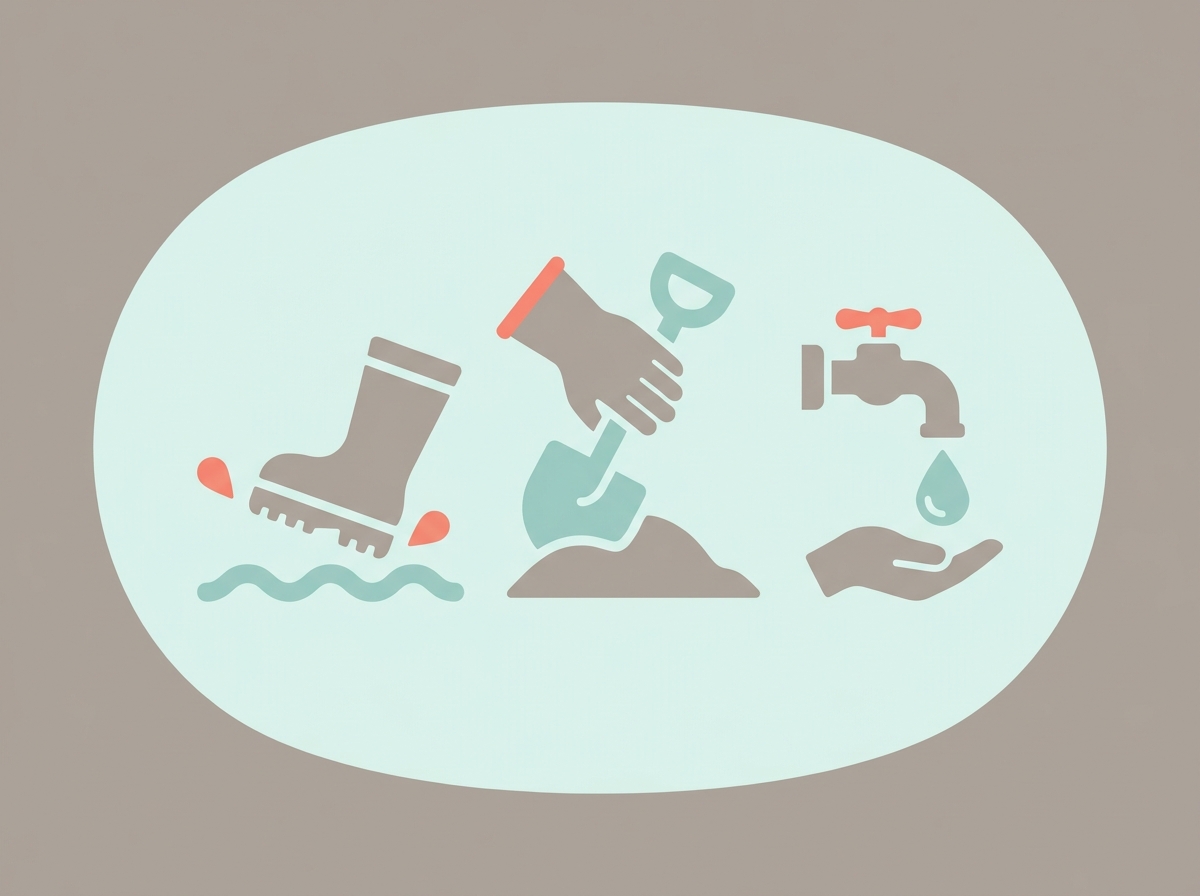
Minimizing skin exposure and covering any wounds is the core of preventing leptospirosis after flood cleanup, and it’s simpler than it sounds.
Never touch contaminated water or mud with bare hands or feet, and always wash thoroughly once you’re done working.
✅ Wear rubber boots and gloves
✅ Cover open wounds with waterproof bandages
✅ Avoid direct contact with contaminated water or soil
✅ Wash your hands and feet with soap right after cleanup
✅ Boil or disinfect drinking water before use
Seal any wounds completely with a waterproof bandage before you start, and wash your work clothes the same day. Disinfect any objects or surfaces that touched floodwater to avoid secondary contamination.
What Should You Do If Symptoms Appear?
If you develop a fever or muscle aches consistent with leptospirosis after flood cleanup work, see a doctor right away and tell them about your exposure to floodwater.
Caught early, leptospirosis is usually treated with oral antibiotics like doxycycline. Severe cases require IV antibiotics such as penicillin G. Don’t try to self-diagnose or self-medicate — always consult a doctor or pharmacist.
If you’re seeking care in Korea, it’s worth knowing about National Health Insurance (NHI, Korea’s public health insurance system that covers most residents and significantly lowers out-of-pocket costs at hospitals and clinics).
Mild-looking symptoms can worsen rapidly within days. If your fever persists, your urine output drops, or your skin or eyes turn yellow, go to an emergency room immediately.
(Internal link: to be replaced once a related article is published) For more on infectious diseases linked to flooding, including leptospirosis after flood cleanup, see the Disease Encyclopedia.
Frequently Asked Questions
1. Can leptospirosis spread from person to person?
Person-to-person spread is very rare — most infections come from contaminated water or soil. Still, see a healthcare provider for an accurate diagnosis and treatment.
2. Is there a vaccine for leptospirosis?
There’s no vaccine in widespread public use in Korea. Avoiding exposure is the most important prevention strategy. People in high-risk occupations should discuss options with a doctor.
3. If I have no symptoms during the incubation period, am I in the clear?
Not necessarily. The incubation period varies by person and can run up to 30 days, so keep monitoring your health for about a month after any floodwater exposure.
4. Can pets get leptospirosis too?
Yes, dogs and other pets can be infected and can pass it to people, so limit close contact when working alongside pets in flood-affected areas.
5. Am I safe if I don’t have any visible wounds?
Not necessarily. Infection can also occur through tiny, unnoticed cuts or mucous membranes, so protective gear like boots and gloves is recommended regardless of visible wounds.
References
(Korea Disease Control and Prevention Agency, KDCA), “Leptospirosis” (렙토스피라증), National Health Information Portal, 2026, Link
(Asan Medical Center), “Leptospirosis” (렙토스피라증), Disease Encyclopedia, 2026, Link
(CDC), “Preventing Leptospirosis after Hurricanes or Flooding”, 2026, Link
(CDC), “About Leptospirosis”, 2026, Link
This article is for general informational purposes only and is not a substitute for professional medical advice, diagnosis, or treatment. Please consult a qualified healthcare provider if you have health concerns.
Leave a Reply