Table of Contents
Between 2013 and 2025, South Korea recorded 2,345 cases of SFTS (Severe Fever with Thrombocytopenia Syndrome) — and 422 people died from it. That’s a cumulative fatality rate of 18%, among the highest of any notifiable disease in the country. In 2026, the first case of the year was confirmed in a man in his 70s in Ulsan, likely infected during farm work. How can one small tick carry a disease this dangerous?
This guide covers the SFTS symptoms to watch for, how to spot a tick bite mark, and which tick repellents actually work outdoors. If you develop a high fever with digestive symptoms after outdoor activity, tell your doctor about the tick exposure right away.
What Is SFTS, and Why Is It So Dangerous?
SFTS is a tick-borne viral infection with an 18% cumulative fatality rate in Korea. SFTS is an acute infection caused by the SFTS virus, transmitted through the bite of an infected Haemaphysalis longicornis tick (also called the Asian longhorned tick). It’s been a notifiable disease in Korea since 2013, with cases reported almost every year from spring through fall.
2,345 cumulative cases and 422 deaths in Korea (2013–2025), an 18.0% fatality rate.
The main vector tick is most active from April through November.
Source: Korea Disease Control and Prevention Agency (KDCA), 2026.
What Are the SFTS Symptoms After a Tick Bite?
After a 5-to-14-day incubation period, high fever and digestive symptoms usually appear first. In severe cases, it can progress to multi-organ failure. Early SFTS symptoms are a high fever of 38–40°C along with fatigue, loss of appetite, nausea, vomiting, diarrhea, and abdominal pain. Blood tests typically show a drop in both platelets and white blood cells.
| Stage | Key Symptoms |
|---|---|
| Early symptoms | High fever (38–40°C), fatigue, loss of appetite, nausea/vomiting/diarrhea/abdominal pain, swollen lymph nodes |
| Severe symptoms | Multi-organ failure, bleeding tendency, neurological signs such as confusion or speech difficulty |
A high fever combined with digestive symptoms is the classic warning sign of SFTS symptoms.
Falling platelet and white blood cell counts can only be confirmed with a blood test, not by self-diagnosis.
Source: KDCA, National Health Information Portal, 2026.
What Does a Tick Bite Mark Look Like?
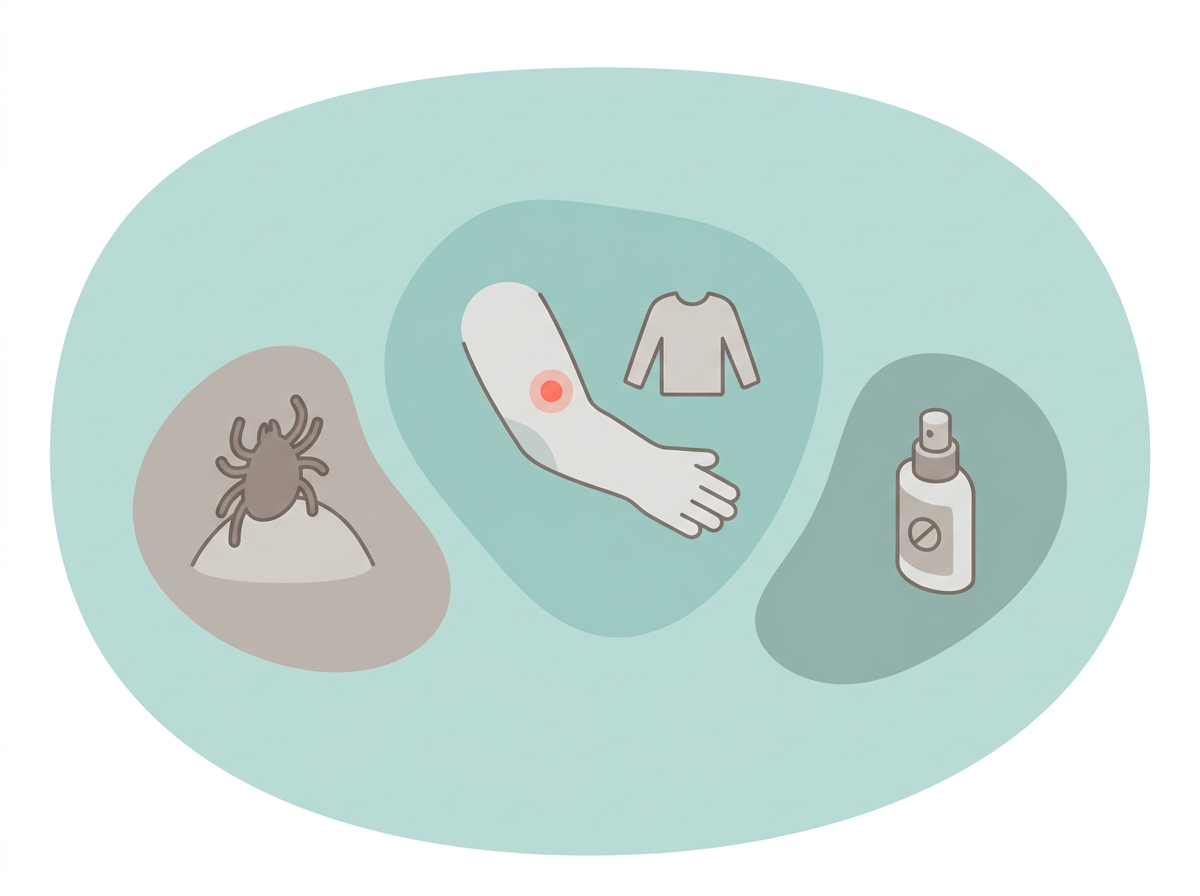
Most bite marks from the ticks that carry SFTS are small and painless, so they’re easy to miss. The site often looks like nothing more than a small red bump or slight swelling — it doesn’t always leave the dark, crusted mark you might expect. Only a small fraction of ticks in Korea actually carry the SFTS virus, so a bite alone doesn’t mean infection.
Many patients don’t even remember being bitten because the mark is so subtle.
If a tick is still attached, don’t pull it off with your fingers — remove it with fine-tipped tweezers, gripping close to the skin without squeezing the body.
If a high fever or digestive symptoms appear within 2 weeks of outdoor activity, tell your doctor about possible tick exposure right away.
Which Tick Repellent Should You Use Outdoors?
Apply a repellent containing DEET or picaridin — both approved by Korea’s Ministry of Food and Drug Safety — to exposed skin and clothing, and reapply every 4 to 5 hours. A tick repellent is a quasi-drug product formulated with DEET, picaridin, PMD, or IR3535 to keep ticks from landing on you. Products with 10% or less DEET are approved from 6 months of age; those with 10–30% DEET from age 12. If you’re also wearing sunscreen, apply that first, then the repellent on top.
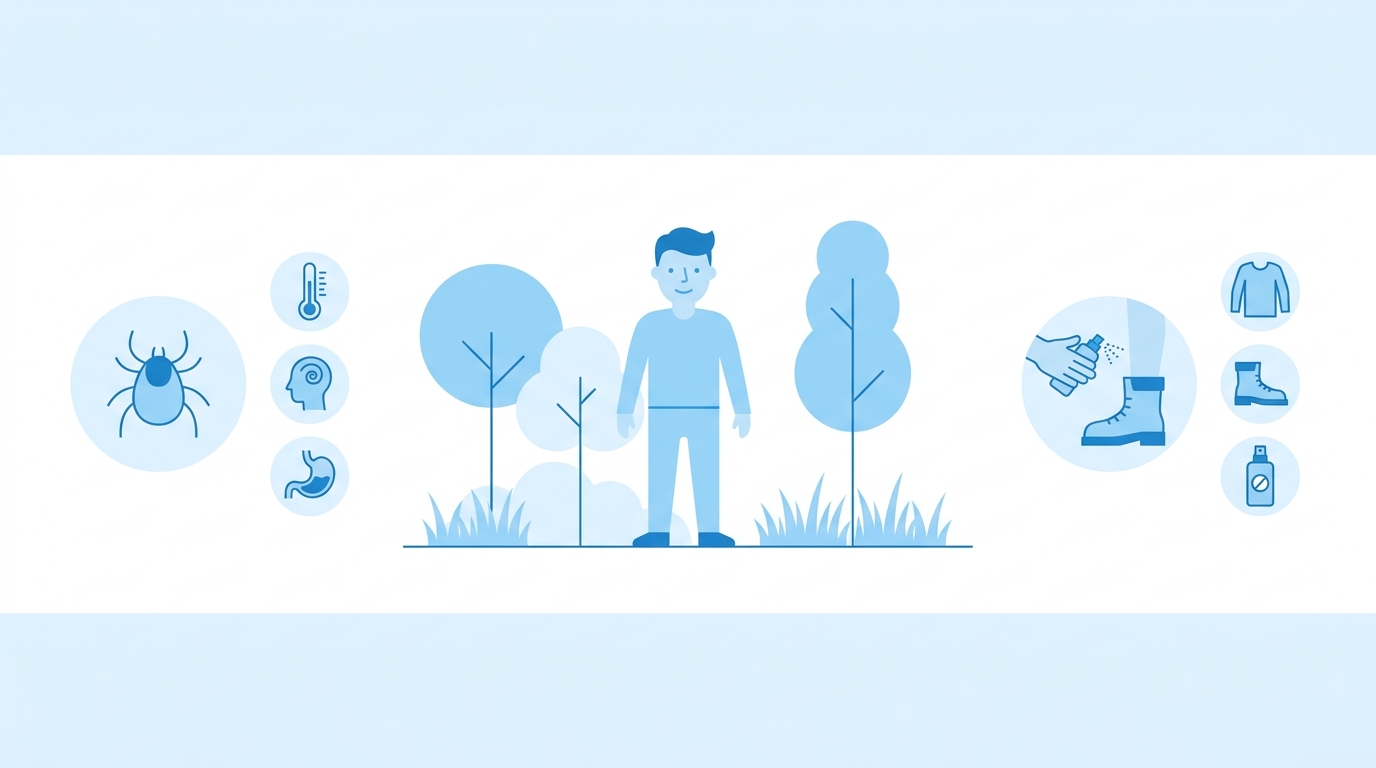
✅ Wear long sleeves and pants, tucking pant legs into your socks
✅ Choose light-colored clothing so ticks are easier to spot
✅ Apply repellent to skin and clothing, reapplying every 4–5 hours
✅ Avoid sitting or lying directly on grass
✅ Shower right after you get home and wash your clothes immediately
See more tick-borne disease information here: Disease Encyclopedia (Internal link: replace with related post once published)
Frequently Asked Questions
1. Do SFTS symptoms show up right after a tick bite?
No. Symptoms usually appear after a 5-to-14-day incubation period, and you may feel completely fine during that window.
2. Can SFTS spread between people?
It doesn’t spread through casual contact, but direct exposure to an infected patient’s blood or body fluids carries some risk, so caregivers and medical staff need to take precautions.
3. Is there a treatment for SFTS?
Historically, only supportive care — fever reducers and IV fluids — was available. The KDCA recently fast-tracked an antiviral drug that has improved treatment options, though there’s still no vaccine. If you’re treated in Korea, emergency care costs are partly covered under the National Health Insurance (NHIS), Korea’s mandatory public health insurance covering most residents.
4. Can I just pull a tick off with my fingers?
Pulling too hard can crush the tick’s body or leave its mouthparts embedded in your skin. Use tweezers to grip it close to the skin and pull straight up slowly, then see a doctor afterward.
References
Korea Disease Control and Prevention Agency (KDCA), “Severe Fever with Thrombocytopenia Syndrome (SFTS)” (원제: 중증열성혈소판감소증후군), National Health Information Portal, 2026. Link
KDCA, “First SFTS Case of the Year Confirmed” (원제: 올해 중증열성혈소판감소증후군(SFTS) 첫 환자 발생), Press Release, Apr 23, 2026. Link
Taiwan Centers for Disease Control, “Severe Fever with Thrombocytopenia Syndrome (SFTS).” Link
This article is for general informational purposes only and is not a substitute for professional medical advice, diagnosis, or treatment. Please consult a qualified healthcare provider if you have health concerns.
Leave a Reply