Table of Contents
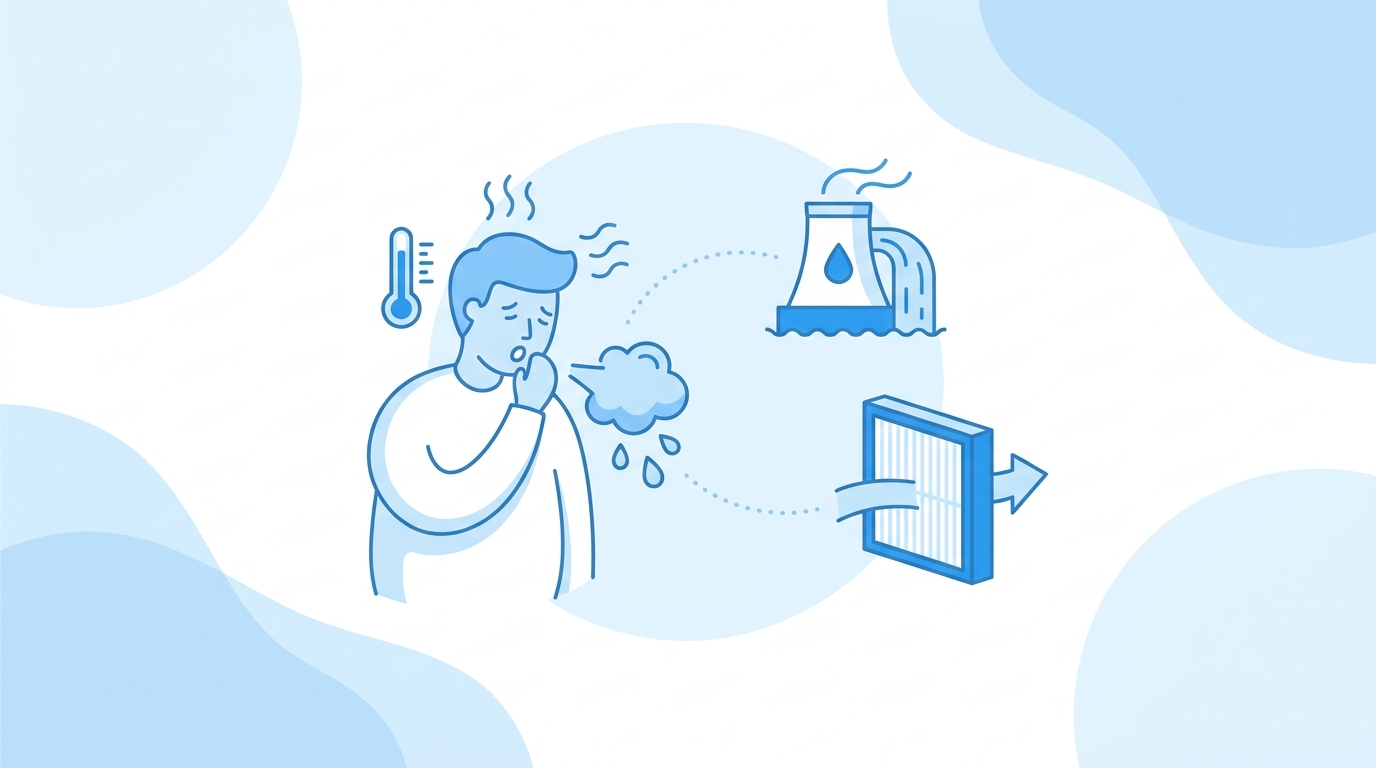
You’ve had the AC running for days, and suddenly a high fever and dry cough hit. It’s easy to blame it on a summer cold. But contaminated water inside cooling towers or air conditioning systems can breed Legionella bacteria, the cause of Legionnaires’ disease. In July 2026, a cooling tower-linked outbreak on Manhattan’s Upper East Side sickened more than 90 people. Knowing the early Legionnaires’ disease symptoms — and how to prevent them — can help protect you this summer.
Legionnaires’ disease happens when you inhale water droplets contaminated with Legionella bacteria, causing pneumonia-like symptoms such as high fever, chills, and a dry cough. This guide covers Legionnaires’ disease symptoms, cooling tower Legionella testing rules, and how often to clean your AC filter to lower your risk.
What Is Legionellosis?
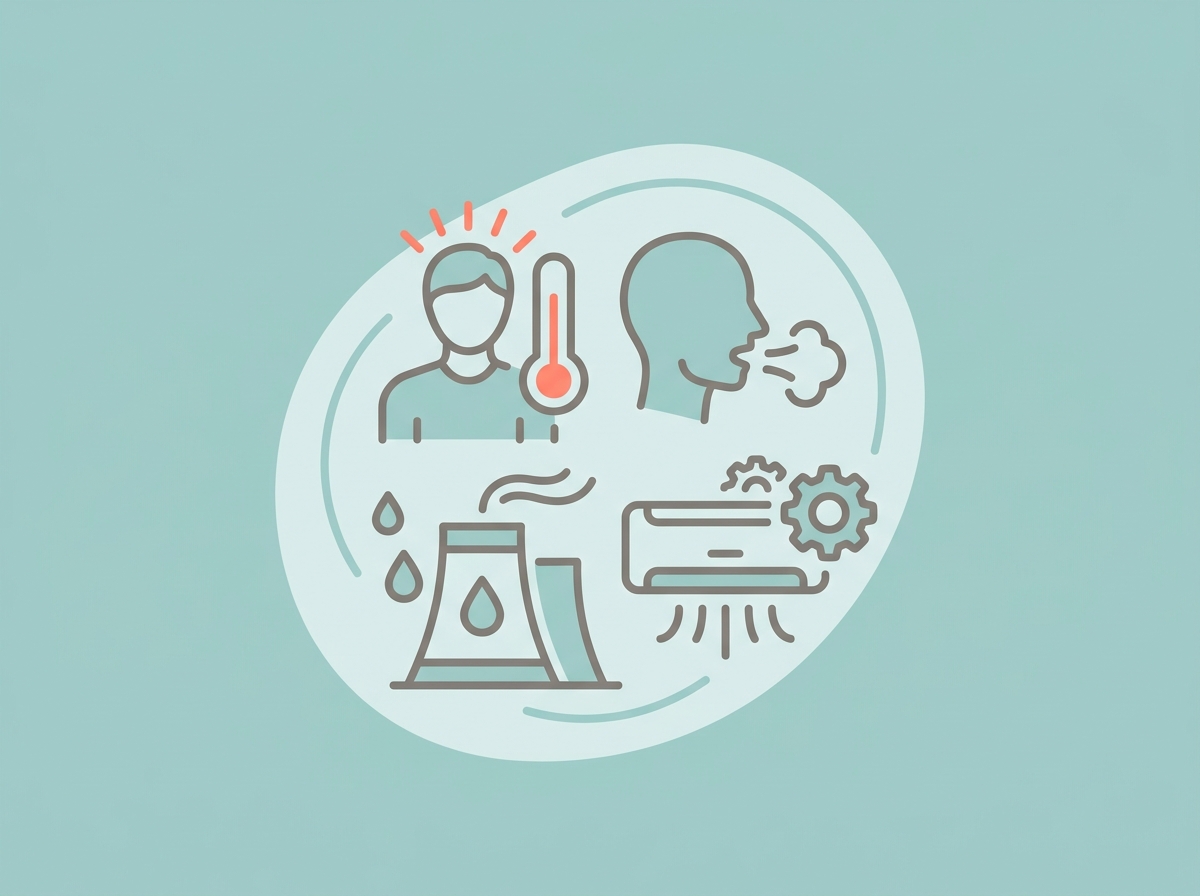
Legionellosis is a respiratory infection you get by inhaling tiny water droplets contaminated with Legionella bacteria. Cooling towers, building hot and cold water systems, hot tubs, fountains, and spa pools can all harbor the bacteria.
There are two forms of the illness. Legionnaires’ disease is the severe, pneumonia-causing form. Pontiac fever is a milder, flu-like illness that doesn’t cause pneumonia. Person-to-person spread is rarely reported — you’re mainly at risk when you breathe in contaminated mist.
Legionellosis doesn’t spread person to person. You get it by breathing in mist from contaminated water. Keeping cooling towers, AC systems, and hot water tanks clean is your best defense.
(Source: CDC, KDCA)
Legionnaires’ Disease Symptoms: What to Watch For
Legionnaires’ disease symptoms usually include high fever, chills, and a dry cough. Pontiac fever causes milder flu-like aches that clear up on their own within days.
Legionnaires’ disease is a severe form of pneumonia marked by fever, chills, a dry cough, muscle aches, and fatigue. Severe cases can lead to respiratory failure or kidney problems.
Symptoms typically show up 2 to 10 days after exposure, averaging around a week. Pontiac fever symptoms appear faster, usually within 24 to 48 hours, and go away within a few days without treatment. Older adults, smokers, and people with weakened immune systems or chronic lung disease face a higher risk of severe illness.
| Type | Incubation | Main Symptoms |
|---|---|---|
| Legionnaires’ disease | 2-10 days (avg. 7) | High fever, chills, dry cough, muscle aches, fatigue |
| Pontiac fever | 24-48 hours | Muscle aches, fever, headache (resolves in 2-5 days) |
See a doctor right away if a high fever comes with shortness of breath, chest pain, or confusion. Older adults and people with underlying conditions can worsen quickly.
(Source: KDCA, CDC, Mayo Clinic)
Why Is Cooling Tower Legionella Testing Necessary?
Cooling towers in large buildings create ideal conditions for Legionella to grow, so South Korea legally requires regular testing and disinfection of cooling tower water.
Cooling tower Legionella testing is a routine environmental check that samples cooling tower water to detect Legionella contamination.
Under Korea’s Infectious Disease Control and Prevention Act, building managers must collect at least 1 liter of cooling tower water in a sterile bottle, refrigerate it at 4-10°C, and send it to a lab within 24 hours. Testing and disinfection should happen more often during summer, when cooling towers run constantly. The stakes are real: in July 2026, officials investigating an Upper East Side, Manhattan outbreak tested 183 cooling towers across 160 buildings and confirmed 92 cases and 7 deaths linked to contaminated towers.
Large buildings in Korea must test and disinfect cooling towers on a regular schedule by law. You can ask your building management for recent test and disinfection records.
(Source: Korea’s National Law Information Center, CNN)
How Often Should You Clean Your AC Filter?
Clean a home AC filter about every two weeks, and at least once a month during heavy summer use. Shared spaces like offices or clinics need more frequent cleaning.
AC filter cleaning is routine maintenance that removes dust and bacteria buildup to protect cooling efficiency and indoor air quality.
Wiping the outer plastic filter isn’t enough on its own. The evaporator coil inside, where moisture collects, needs periodic disinfection too, since that’s where bacteria tend to grow. Running the fan-only mode after use helps dry out the unit and may discourage bacterial growth.
✅ Clean the filter every 2 weeks to 1 month
✅ Check the drain pan and hose for clogs
✅ Run fan-only mode to dry the unit after use
✅ Schedule professional servicing for shared-space units
(Source: KDCA)
For more on infectious diseases like this one, browse our Disease Encyclopedia category. (Internal link: replace with related post after publishing)
Frequently Asked Questions
1. Does Legionnaires’ disease spread from person to person?
No. Person-to-person transmission is rarely reported. You typically catch it by inhaling mist from contaminated water sources.
2. How long is the incubation period?
Legionnaires’ disease usually develops within 2 to 10 days (average about a week), while Pontiac fever appears within 24 to 48 hours.
3. What’s the difference between Legionnaires’ disease and Pontiac fever?
Legionnaires’ disease is a severe pneumonia that needs antibiotic treatment, while Pontiac fever is milder and usually resolves on its own within days.
4. Is Legionnaires’ disease a notifiable disease in Korea?
Yes. It’s classified as a Class 3 nationally notifiable infectious disease in Korea (a category requiring reporting to health authorities, similar to how national health insurance — Korea’s universal public health coverage system — tracks reportable conditions), so doctors must report confirmed cases.
References
(KDCA), “Legionellosis” (레지오넬라증), 2026. Link
(KDCA), “Legionellosis Often Mistaken for Summer Cold” (냉방병으로 오해하기 쉬운 레지오넬라증). Link
(CDC), “About Legionnaires’ Disease”. Link
(Mayo Clinic), “Legionnaires’ disease – Symptoms & causes”. Link
(WHO), “Legionellosis” Fact Sheet, 2022. Link
(Korea’s National Law Information Center), Enforcement Decree of the Infectious Disease Control and Prevention Act, Article 24. Link
(CNN), “Dozens of New York cooling towers test positive for Legionnaires’ bacteria as outbreak reaches 63 cases”, 2026. Link
This article is for general informational purposes only and is not a substitute for professional medical advice, diagnosis, or treatment. Please consult a qualified healthcare provider if you have health concerns.
Leave a Reply